 Save
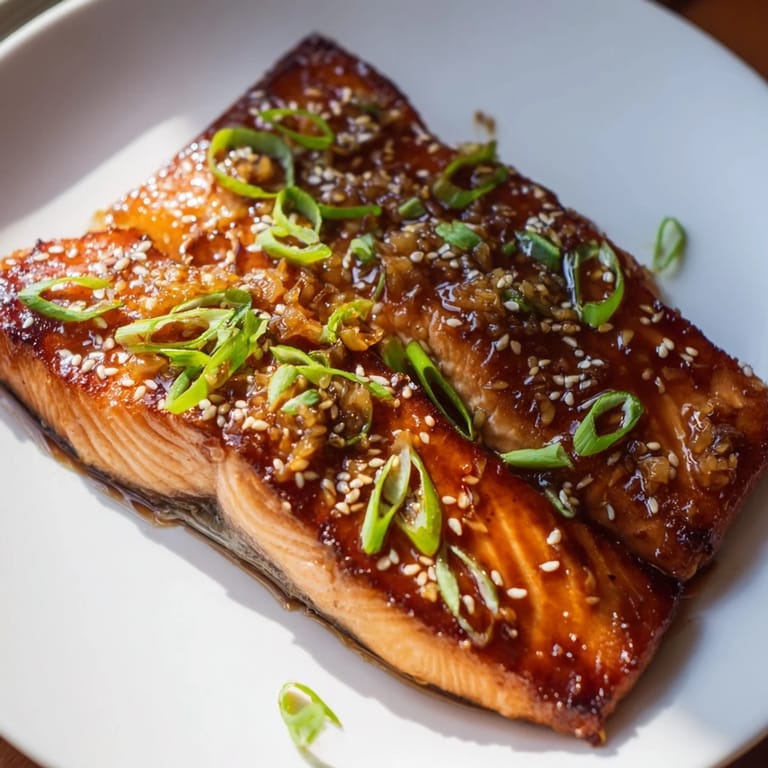
Save There's something about the sizzle of salmon skin hitting a hot pan that makes me pause everything else. I was cooking this on a random Tuesday when the smell of ginger and soy filled my kitchen so completely that my neighbor knocked to ask what was happening. That moment made me realize this wasn't just a quick weeknight dinner—it was the kind of dish that announces itself, that turns a simple evening into something worth remembering.
I made this for friends who claimed they didn't like fish, and watching them go quiet mid-bite, then immediately ask for the recipe, taught me that it's rarely the ingredient—it's the technique and the care you put into it. The glaze does the heavy lifting, turning something that feels fancy into something completely approachable.
Ingredients
- Salmon fillets (6 oz each, skin-on): The skin-on part matters more than you'd think; it protects the flesh and gets crackling crispy if you don't move it around.
- Kosher salt and black pepper: Season generously on both sides—this is your foundation before anything else happens.
- Low-sodium soy sauce: Use low-sodium so you're controlling the saltiness, not the bottle.
- Honey: This sweetens the glaze and helps it catch and caramelize on the fish.
- Fresh ginger: Grate it yourself if you can; the difference in brightness is noticeable the moment it hits the pan.
- Garlic cloves, minced: Two is just right—enough to be present without overpowering the ginger.
- Rice vinegar: This keeps the glaze from becoming one-note sweet and adds a gentle tang.
- Sesame oil: A small amount goes a long way; it's the secret note that makes people ask what's different.
- Sesame seeds and green onions (optional): These finish the dish with texture and color, but they're not required if you're in a rush.
Tired of Takeout? 🥡
Get 10 meals you can make faster than delivery arrives. Seriously.
One email. No spam. Unsubscribe anytime.
Instructions
- Dry and season your salmon:
- Pat each fillet completely dry with paper towels—moisture is the enemy of crispy skin. Season both sides with salt and pepper, then let them sit for a minute so the seasoning sticks.
- Build your glaze:
- Whisk soy sauce, honey, ginger, garlic, rice vinegar, and sesame oil together in a bowl. Taste it—it should hit all four notes: salty, sweet, sour, and nutty. Adjust if something feels off.
- Get your pan hot:
- Use a large skillet (cast iron is ideal but nonstick works) and heat it over medium-high until it's properly hot. You want to hear a sizzle the moment the fish touches down, not a gentle sizzle.
- Sear the skin side:
- Place salmon skin-side down and leave it alone for 4 minutes. This is the hardest part—don't poke it, don't flip it, don't check on it. The skin will turn golden and crispy.
- Flip and finish cooking:
- Flip the fillets gently and cook for 2-3 minutes on the other side until the flesh is mostly opaque but still has a slight blush of color in the thickest part.
- Apply the glaze:
- Lower the heat to medium-low and pour the glaze over the salmon. Spoon it over the fillets repeatedly for 2-3 minutes so it coats and reduces slightly. The sauce will thicken and cling to the fish.
- Plate and finish:
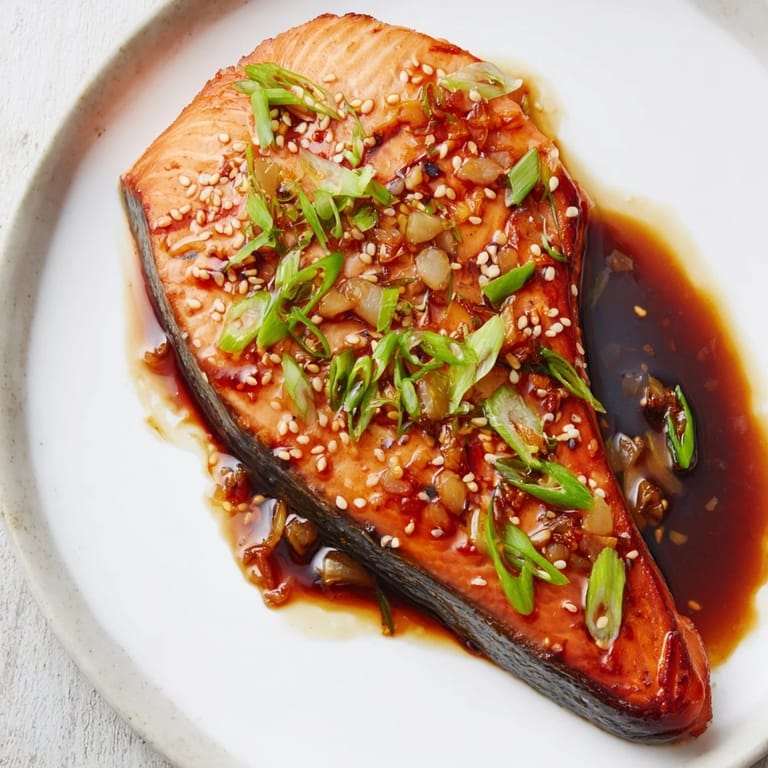
- Transfer to plates and spoon the remaining glaze from the pan over each fillet. Top with sesame seeds and green onions if you have them, and add a wedge of lemon or lime on the side.
 Save
Save I once overcomplicated this dish by trying to make everything from scratch and ended up with a stressed evening. The next time, I gave myself permission to use what I had on hand and trust the process, and that's when this became the recipe I reach for constantly. It taught me that elegant doesn't mean complicated.
Why This Glaze Works
The combination of soy and ginger is old wisdom, but adding honey and vinegar creates something that tastes both familiar and surprising. The sesame oil whispers in the background, making everything feel more intentional than it actually is. This isn't a reduction that takes forever—it just needs to coat and warm, which happens fast.
Timing Is Everything
The whole dish comes together in 22 minutes, which means you can prep ingredients while the pan heats and still have time to set the table. I usually slice the green onions and get the sesame seeds ready while the salmon cooks, so finishing feels effortless. The window between perfectly cooked and overdone is small, but that's actually an advantage—it forces you to stay present and cook with intention.
Pairing and Serving
Serve this with steamed rice if you want something gentle, or roasted vegetables if you want your plate to feel more substantial. A simple cucumber salad cuts through the richness beautifully, and if you're feeling fancy, a crisp white wine complements everything without competing. The dish is rich enough that you don't need much else, which is part of why I keep coming back to it.
- Pair with jasmine rice or sushi rice to soak up the extra glaze.
- Add a sautéed spinach or bok choy for color and nutrition without fuss.
- A squeeze of fresh lime just before eating brightens everything up.
 Save
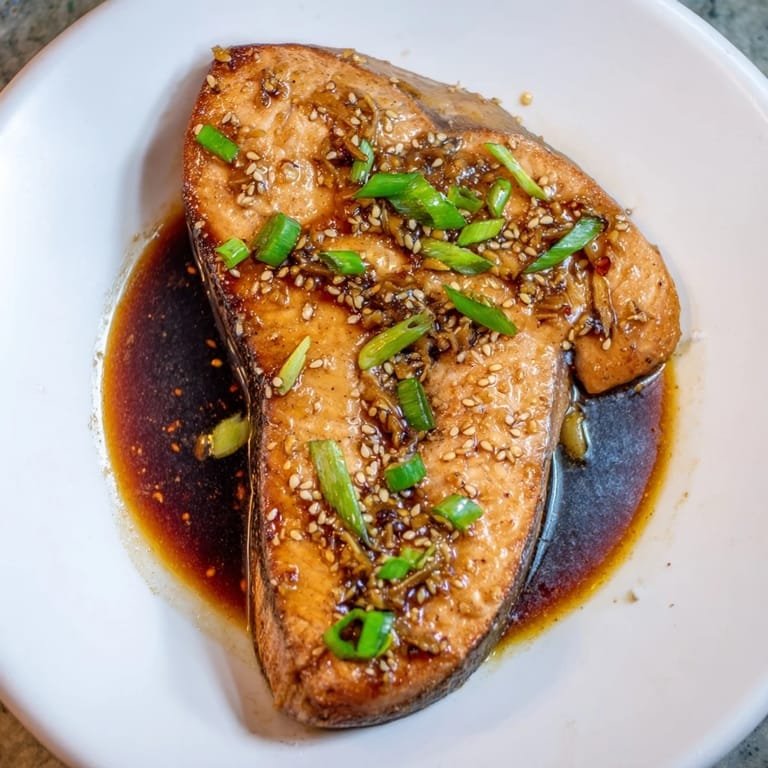
Save This recipe became my go-to because it tastes like you tried harder than you actually did. Once you understand that crispy salmon skin and a good glaze are all you need, you'll find yourself making this on nights when you want something beautiful but don't have the energy for complicated.
Recipe Questions & Answers
- → How do you achieve crispy salmon skin?
Pat salmon dry and cook skin-side down in a hot nonstick or cast iron skillet without moving for several minutes until the skin crisps.
- → What is the best way to make the ginger-soy glaze?
Whisk low-sodium soy sauce, honey, freshly grated ginger, minced garlic, rice vinegar, and sesame oil until well combined before spooning over the salmon.
- → Can I adjust the sweetness of the glaze?
Yes, substitute honey with maple syrup or brown sugar to vary the sweetness and flavor profile.
- → What sides pair well with this salmon?
Steamed rice, sautéed greens, or roasted vegetables complement the savory and sweet notes of the glazed salmon.
- → Is sesame oil necessary in the glaze?
Sesame oil adds a nutty aroma and depth but can be omitted or replaced with a mild oil if preferred.