 Save
Save The first time I made chicken sushi bake, it was purely out of convenience—I had leftover sushi rice, some shredded chicken, and absolutely no energy to roll anything by hand. I threw together what I had in a baking dish, slid it into the oven, and twenty-five minutes later, my kitchen smelled like a Japanese-American dream I didn't know I needed. My roommate walked in, took one look at the golden, bubbly cheese, and asked for seconds before I'd even finished plating the first.
I've made this dish for potlucks twice now, and both times it disappeared before anything else on the table. There's something about baked comfort food with sushi flavors that just works—people feel like they're eating something adventurous, but it's warm and familiar enough that everyone goes back for thirds.
Ingredients
- Sushi rice: Use short-grain sushi rice, not regular white rice—the starch content keeps it slightly sticky and gives you that signature sushi texture even in casserole form.
- Rice vinegar, sugar, and salt: These three ingredients are essential for seasoning the rice properly; don't skip this step or the whole dish tastes flat.
- Cooked chicken breast: Shredded or diced works fine; rotisserie chicken adds more flavor if you don't have time to cook it yourself.
- Mayonnaise: Japanese Kewpie mayo is creamier and more flavorful than American mayo, and it makes a real difference in the chicken mixture.
- Cream cheese: This binds everything together and adds a subtle richness that sriracha alone can't achieve.
- Sriracha and soy sauce: Adjust sriracha to your heat preference; the soy sauce adds umami depth without making it overly salty.
- Green onions: These add a fresh bite that cuts through all the creaminess and mayo.
- Mozzarella cheese: It melts beautifully and turns golden in the oven, creating that satisfying cheese pull.
- Furikake seasoning: This Japanese seasoning blend brings nori, sesame, and umami together in one sprinkle.
- Avocado: Add it after baking so it stays creamy and doesn't oxidize during cooking.
- Nori and sesame seeds: These final toppings give you the sushi identity and textural contrast.
Tired of Takeout? 🥡
Get 10 meals you can make faster than delivery arrives. Seriously.
One email. No spam. Unsubscribe anytime.
Instructions
- Start with the rice foundation:
- Rinse your sushi rice until the water runs clear—this removes excess starch that would make the rice gluey. Cook it with the exact amount of water, cover it, and let it rest; this passive time is when the rice finishes cooking and absorbs all the moisture evenly.
- Season the rice while it's still warm:
- Mix your vinegar, sugar, and salt together first to dissolve the sugar completely, then gently fold it into the hot rice. Gentle is key here—you want to coat each grain without mashing them into a mushy mess.
- Build the creamy chicken layer:
- Combine your chicken with mayo, cream cheese, sriracha, soy sauce, and green onions in one bowl until it's smooth and cohesive. Taste it before the oven goes in; this is when you can adjust the heat level or seasonings.
- Assemble in the baking dish:
- Spread the seasoned rice in an even, compact layer across the bottom of your greased 9x9 dish. Sprinkle furikake over the rice, then layer the chicken mixture evenly on top, and finish with mozzarella and the rest of the furikake.
- Bake until golden and bubbly:
- At 400°F, the cheese melts and browns in about 20–25 minutes; you're looking for golden edges and visible bubbling around the sides. Don't open the oven door constantly or you'll lose heat and extend the cooking time.
- Cool and top with fresh elements:
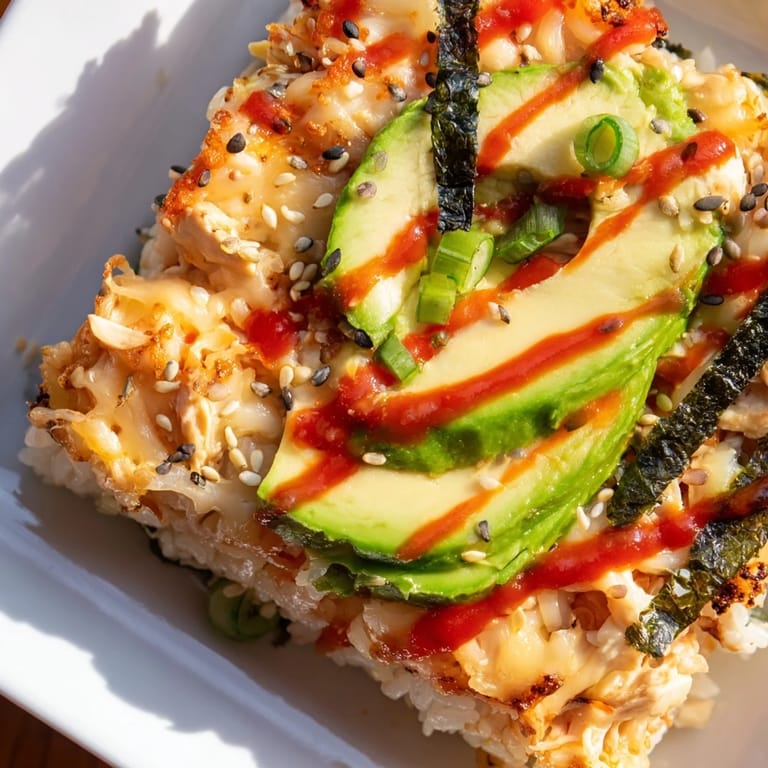
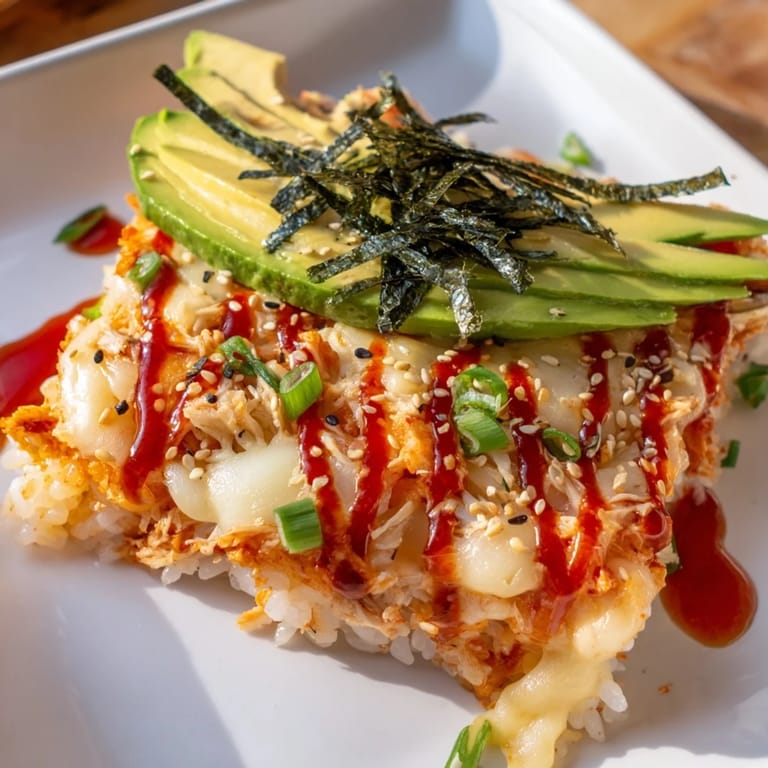
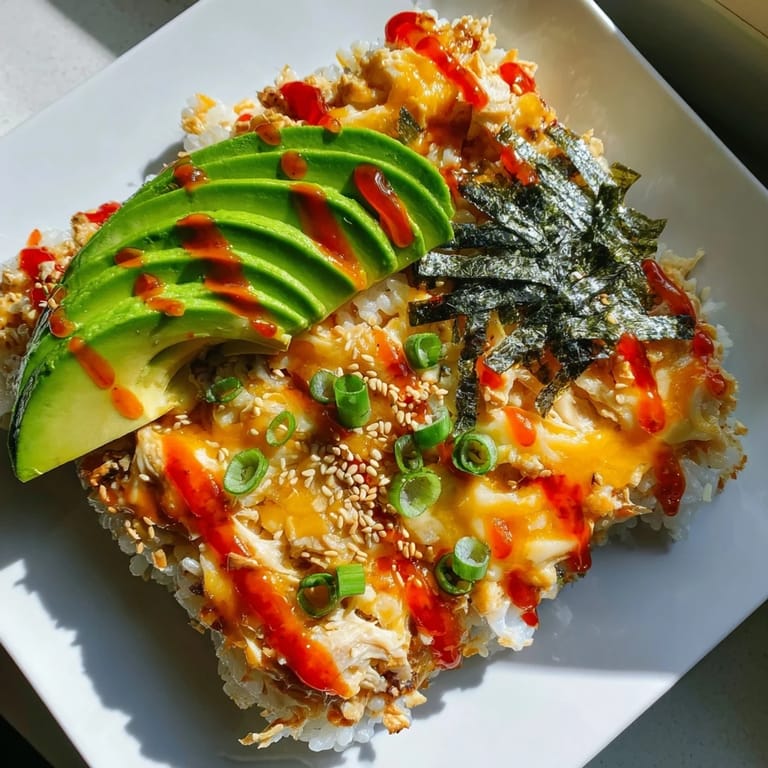
- Let it rest for five minutes so the layers set slightly, then add your avocado, nori strips, sesame seeds, and any extra sriracha or mayo drizzles. The contrast between the warm, creamy casserole and the cool, fresh avocado is what makes this dish sing.
 Save
Save There was one evening when my partner came home exhausted from work, and I pulled this warm casserole out of the oven just as he walked through the door. The smell alone made him stop complaining about his day, and watching someone genuinely light up while eating something you made—that's when I realized this dish wasn't just fusion food, it was comfort.
Why Rotisserie Chicken Changes Everything
If you buy a rotisserie chicken from the grocery store instead of cooking one yourself, you're not cutting corners—you're making a smart choice. The meat is already seasoned, smoky, and way more flavorful than plain poached chicken, which means your filling tastes richer without you adding extra ingredients. Plus, shredding it takes maybe two minutes, and you've just saved yourself thirty minutes of stovetop time.
The Mayo Question
I get it—Japanese Kewpie mayo sounds pretentious, but it's genuinely worth seeking out. It has a higher egg yolk ratio and a touch of umami that makes the creamy layer taste more sophisticated and less like a mayo-heavy deli sandwich. If your grocery store doesn't carry it, order it online, because once you've tasted the difference, regular mayo tastes flat by comparison.
Customization and Serving Ideas
This recipe is endlessly adaptable depending on what you have in your kitchen or what mood you're in. I've added diced cucumber for a fresh crunch, scattered crispy bacon bits for smokiness, and even stirred sriracha into the mayo mixture itself for extra heat distribution. The beauty of a bake is that it's forgiving—mix and match toppings, adjust the spice level, layer in whatever sushi-adjacent ingredients inspire you.
- Try adding diced cucumber or pickled ginger between the rice and chicken layers for brightness.
- Increase sriracha if you like heat, or skip it entirely for a milder version that lets the umami shine.
- Serve it family-style right in the baking dish with a big spoon, or scoop portions onto small plates and let people add their own nori and sesame garnish.
 Save
Save This dish proves that fusion cooking doesn't have to be complicated—it just has to be honest and delicious. Make it once, and it'll become a regular in your rotation.
Recipe Questions & Answers
- → Can I use different types of rice for this dish?
While sushi rice gives the proper sticky texture, short-grain rice can be a substitute. Avoid long-grain varieties as they may alter the dish's consistency.
- → How do I adjust the spiciness level?
Modify the amount of sriracha in the chicken mixture and for drizzling to suit your preferred heat level.
- → Is it possible to prepare this in advance?
Yes, assemble it ahead and refrigerate. Bake just before serving for best melted cheese and fresh toppings.
- → What are good toppings to enhance the flavor?
Furikake seasoning, sliced avocado, nori strips, and toasted sesame seeds add layers of texture and umami.
- → Can rotisserie chicken be used instead of cooking chicken from scratch?
Absolutely, rotisserie chicken adds convenience and extra flavor, making preparation quicker.