 Save
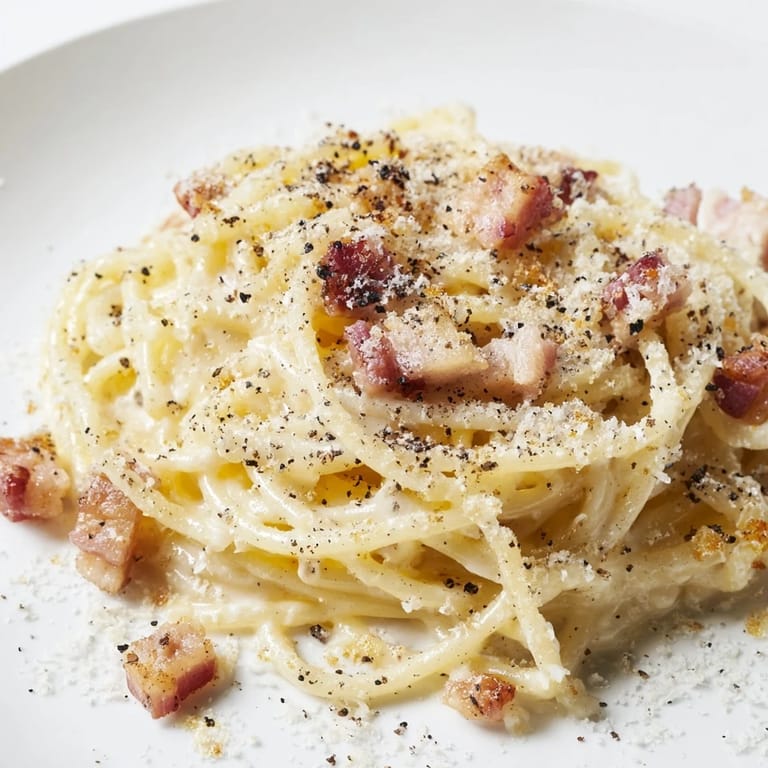
Save There's something magical about the first time you nail carbonara without overthinking it. I was in a tiny Roman kitchen years ago, watching my friend toss hot pasta with raw eggs and bacon fat, and something clicked—no cream needed, just the science of heat and timing working in perfect harmony. Now I make this at home whenever I want that luxurious, silky result in under twenty minutes, and every time it reminds me that the best meals don't require hours of fussing.
I made this for a friend who claimed he'd never had proper carbonara, and watching his face when he took that first bite—when he realized it was creamy and rich with absolutely no heavy cream involved—that moment made the dish feel special in a whole new way. He's made it every week since, and now he's the one evangelizing about how simple it really is.
Ingredients
- Dried spaghetti: Two hundred grams gives you enough substance without feeling heavy; this weight is the sweet spot for silky coating.
- Large eggs: These are your sauce base, so room temperature is your friend—they emulsify so much better than cold ones.
- Freshly grated Parmesan: Forty grams of the real thing, please; pre-grated cheese has anti-caking agents that stop it from melting smoothly into the pasta.
- Freshly ground black pepper: A quarter teaspoon in the sauce plus more for finishing; it's the backbone of the flavor here.
- Bacon or pancetta: One hundred grams diced small, so every bite has crispy, salty bits woven throughout.
- Extra Parmesan and black pepper: For the final flourish at the table.
Tired of Takeout? 🥡
Get 10 meals you can make faster than delivery arrives. Seriously.
One email. No spam. Unsubscribe anytime.
Instructions
- Boil your pasta water generously:
- Fill a large pot with salted water—it should taste almost like the sea. Bring it to a rolling boil before adding spaghetti, and don't skip reserving that starchy pasta water; it's the secret ingredient that makes everything silky.
- Get the pasta to al dente:
- Cook it according to package timing but taste it a minute early—you want it tender but still with the tiniest bit of resistance in the center. Drain it well, keeping that reserved water nearby.
- Whisk your egg mixture:
- In a bowl, beat together room temperature eggs, grated Parmesan, and black pepper until completely smooth and well combined. Set it aside and try to use it within a minute or two of cooking.
- Crisp the bacon:
- Heat your skillet over medium heat and add diced bacon, stirring occasionally until the edges are golden and the fat has rendered—three to four minutes usually does it. Remove the pan from the heat while the bacon is still in it.
- Toss everything together off heat:
- Add the drained pasta directly to the bacon and fat, then immediately pour in the egg mixture while tossing constantly and vigorously. Add pasta water slowly, a splash at a time, until the sauce becomes creamy and coats every strand.
 Save
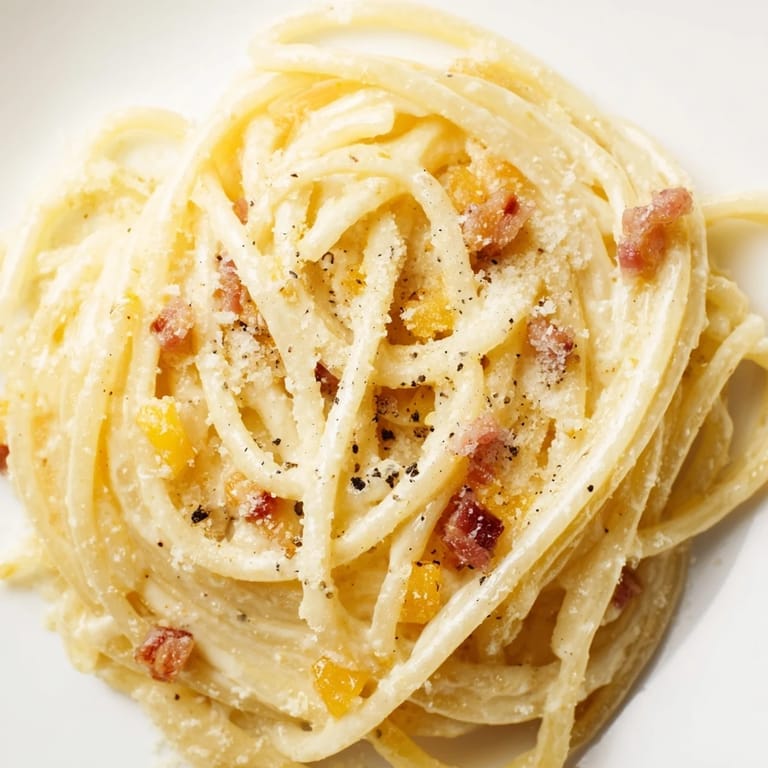
Save I once served carbonara to someone who'd been skeptical about my cooking, and something shifted that evening when they asked for seconds. It was just pasta and eggs and bacon, but it somehow opened a door to feeling like I knew what I was doing in the kitchen.
The Magic of Pasta Water
That reserved pasta water does more than loosen the sauce—it brings starch that emulsifies the egg and fat into something silky rather than grainy. I learned this the hard way after using regular water once and ending up with something that looked separated and sad. Now I always set it aside before draining, and it's saved countless batches.
Why This Works Without Cream
The trick is understanding that emulsification comes from the starchy water, the egg proteins, and the rendered fat all working together. It's physics more than cooking, really—heat and movement transform simple ingredients into something luxurious without needing a single splash of cream. Once you trust the process, you'll never look back.
Timing and Temperature Matter
This dish lives and dies by heat management—too hot and the eggs scramble, too cool and the sauce splits. The key is removing the skillet from heat before the pasta hits it, letting everything come together gently. I always have my ingredients prepped and ready so there's no fumbling when the moment arrives.
- Room temperature eggs emulsify better than cold ones from the fridge.
- If the sauce seems too thick, add pasta water a teaspoon at a time—it comes together faster than you'd expect.
- Serve immediately in warmed bowls to keep everything silky through that first bite.
 Save
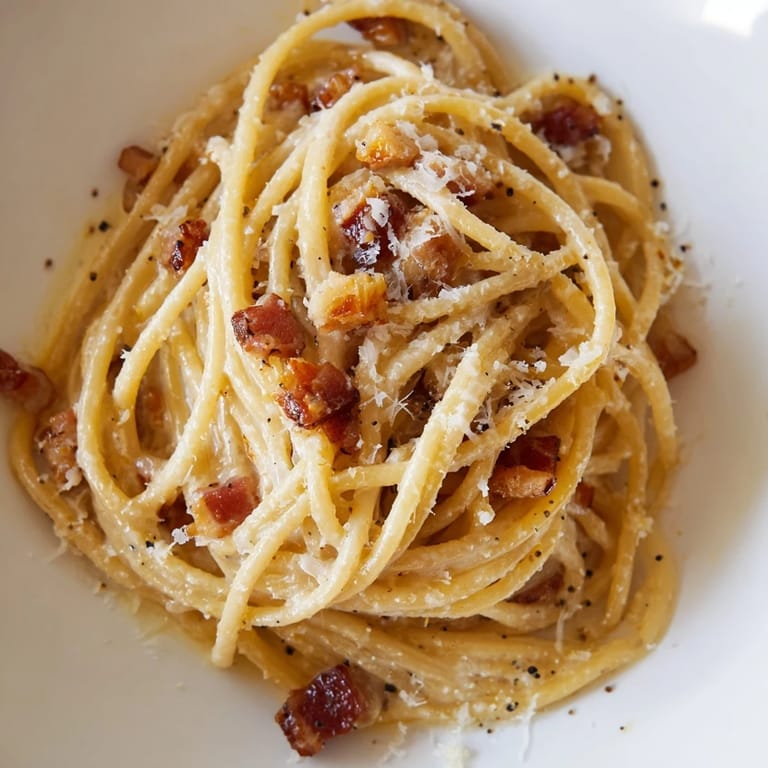
Save Carbonara taught me that the best meals are often the simplest ones, made faster than you'd think possible. It's become my go-to when I want something restaurant-quality but completely on my own terms.
Recipe Questions & Answers
- → How do I prevent the eggs from scrambling?
Toss the pasta with the egg and cheese mixture off the heat and add reserved pasta water gradually to achieve a creamy, silky sauce without scrambling.
- → Can I substitute Parmesan with other cheeses?
Pecorino Romano is a great alternative that adds a sharper, more authentic flavor to the sauce.
- → What kind of bacon works best?
Diced bacon or pancetta both provide a crispy, savory bite. Cook over medium heat until golden for best results.
- → Is garlic recommended in this dish?
Adding minced garlic to the bacon while frying can boost aroma and depth, but remove it before mixing to keep the sauce smooth.
- → How can I make the sauce creamier?
Reserve some pasta water and add it slowly while tossing the pasta and egg mixture to create a luscious, creamy coating.