 Save
Save I discovered this dish on a weeknight when I had nothing but tofu and a jar of gochujang staring at me from the pantry. My friend texted asking what I was making for dinner, and without thinking, I threw those cubes into a hot pan. By the time they arrived, the kitchen smelled like caramelized honey and chili heat, and suddenly this simple combination became something I couldn't stop making. That spontaneous kitchen moment turned into a recipe I reach for whenever I want something that feels both impressive and effortless.
I remember serving this to my partner after they'd had a rough day at work, and watching their face light up when they tasted that sticky, glossy coating was worth every second of pan time. They ended up eating half the batch straight from the skillet while we sat on the kitchen counter talking about nothing in particular. That's when I realized this dish had become comfort food in the best way—not heavy, but genuinely nourishing and oddly soothing.
Ingredients
- Firm tofu (400 g): Press it well—I mean really press it—because that's where the crispiness magic happens, and wet tofu will just steam instead of fry.
- Cornstarch (2 tbsp): This is your secret weapon for that golden, crispy exterior that shatters slightly when you bite into it.
- Salt (1/2 tsp): Seasons the tofu itself so every bite tastes intentional, not just like you fried plain cubes.
- Neutral oil (2 tbsp): Use something with a high smoke point—canola or sunflower work best, and they let the flavors shine without any oily aftertaste.
- Gochujang (2 tbsp): This Korean chili paste is the backbone here, bringing depth and complexity that regular hot sauce just can't match.
- Honey (2 tbsp): Balances the heat and creates that glossy coating that makes everything look restaurant-quality.
- Soy sauce (1 tbsp): Adds umami and saltiness that ties all the flavors together into something cohesive.
- Rice vinegar (1 tbsp): A splash of brightness that keeps the sauce from feeling one-note or heavy.
- Sesame oil (1 tbsp): Just enough to add that toasted, nutty warmth without overpowering the other flavors.
- Garlic and ginger (2 cloves and 1 tsp): Fresh versions only—they wake up the whole sauce with their aromatic sharpness.
- Water (2 tbsp): Helps the sauce come together and prevents it from reducing too fast and burning.
- Sesame seeds and green onions (for garnish): These aren't just decoration; they add textural contrast and a fresh note that balances the richness.
Tired of Takeout? 🥡
Get 10 meals you can make faster than delivery arrives. Seriously.
One email. No spam. Unsubscribe anytime.
Instructions
- Press your tofu like you mean it:
- Wrap it in a clean kitchen towel, place it on a plate, and weight it down with something heavy—a cast iron pan, some canned goods, whatever you have. Let it sit for 10 minutes while you gather everything else. You're removing moisture so it can get crispy, not soggy.
- Coat and season:
- Toss your tofu cubes with the cornstarch and salt in a bowl, making sure every surface gets a light, even coating. This is easier if you do it in batches rather than all at once.
- Get the pan screaming hot:
- Heat your oil over medium-high heat until it shimmers and moves easily around the pan. You'll know it's ready when a cube of tofu sizzles immediately when it hits the surface.
- Fry with patience:
- Add your tofu cubes and don't touch them for the first couple of minutes—let them develop that golden crust on one side. Then turn them occasionally so all sides get equally crispy and golden. This takes about 8 to 10 minutes total, and yes, you need to actually wait.
- Build your sauce:
- While the tofu cooks, whisk together the gochujang, honey, soy sauce, rice vinegar, sesame oil, garlic, ginger, and water in a small bowl. Taste it—it should taste bold and balanced, spicy but not overwhelming.
- Simmer the sauce:
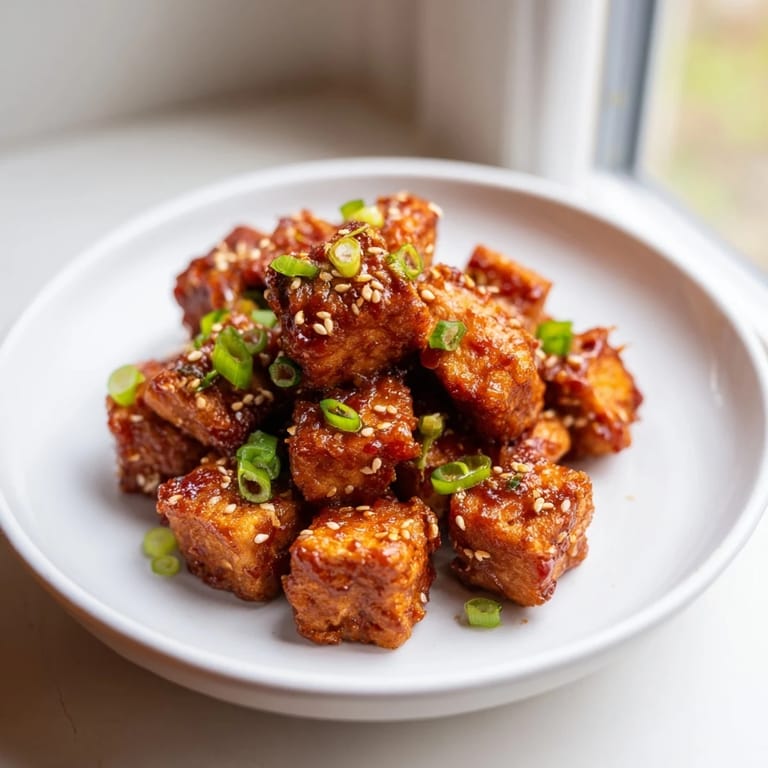
- Pour it into the hot pan (the tofu is already out, remember) and let it bubble gently for 2 to 3 minutes, stirring occasionally. You'll see it thicken slightly as the ingredients meld together.
- Bring them back together:
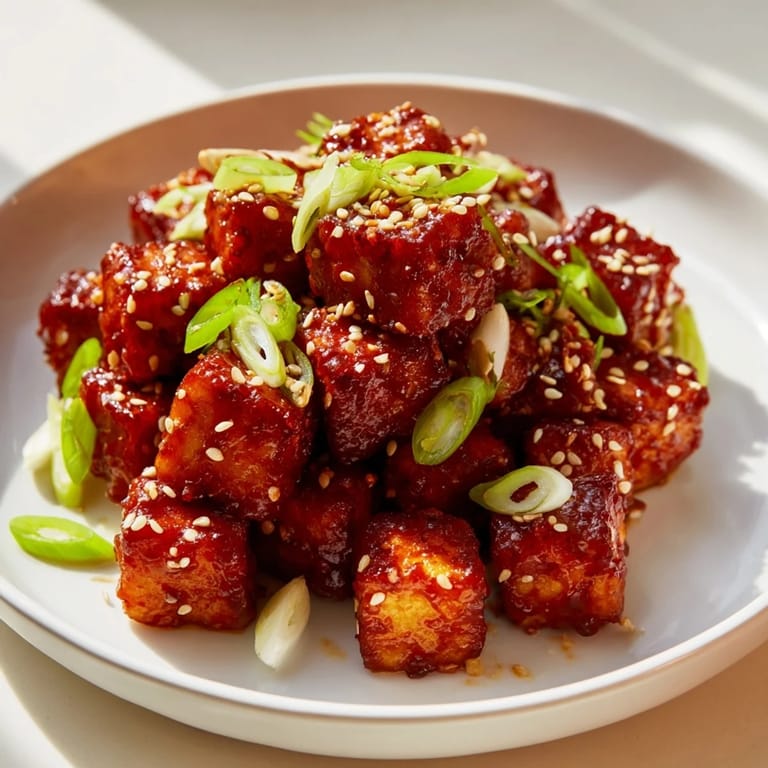
- Return your crispy tofu to the pan and toss everything together until each cube is coated in that glossy, sticky sauce. Another 2 minutes on the heat and you're done—it's that simple.
- Finish and serve:
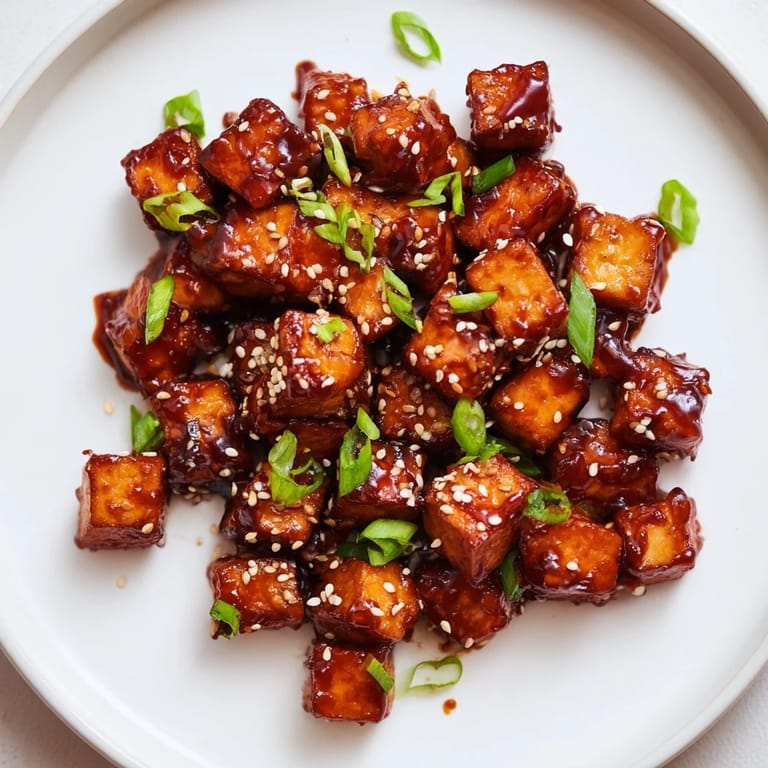
- Transfer to a plate and sprinkle with toasted sesame seeds and fresh green onion slices while it's still hot. Serve as an appetizer, over rice, or honestly just eat it straight from the pan when no one's looking.
 Save
Save There's something about the sound of that tofu hitting hot oil that makes me feel like I'm actually cooking something special, not just putting together a weeknight dinner. The way the kitchen fills with that warm, spicy-sweet smell is its own kind of storytelling—it tells people that care and attention went into what's on their plate, even if the whole thing took less time than ordering delivery.
Flavor Balance and Why It Works
The beauty of this dish is that nothing overpowers anything else—the heat from the gochujang plays nicely with the sweetness of honey, the umami from soy sauce keeps it from being one-dimensional, and the rice vinegar and sesame oil add complexity that makes you want to take another bite. I've learned that this balance is actually pretty forgiving; you can adjust the ratios slightly based on what you like, and it still tastes intentional. The key is tasting your sauce before you add the tofu, so you know exactly what you're working with.
Serving Ideas That Actually Work
Over steamed white rice, this is basically a complete meal—protein, sauce, and carbs all in one bowl. But I've also done it over quinoa when I'm trying to feel virtuous, or tucked into lettuce wraps when I want something lighter and more interactive. It's even good at room temperature the next day, which makes it a solid lunch option if you have leftovers, though honestly that rarely happens in my house.
Making It Your Own
Once you understand how this sauce works, you can start playing with it—add a teaspoon of sesame seeds to the sauce itself instead of just sprinkling them on top, throw in some minced scallion whites at the beginning for extra onion flavor, or use a blend of gochujang and regular chili paste if you want less fermented funk and more straightforward heat. The cornstarch on the tofu is what makes it crispy, but you could also try panko if you want extra crunch, or skip it entirely if you just want a simple glaze.
- Swap the honey for maple syrup or agave nectar if you're vegan and want to keep everything plant-based.
- Adjust the gochujang up or down depending on how much heat you actually enjoy, not how much you think you should enjoy.
- Serve it hot, room temperature, or even chilled if you're using it in a grain bowl the next day.
 Save
Save This recipe taught me that sometimes the best dishes come from happy accidents and not overthinking things. Every time I make it, I'm reminded that good food doesn't need to be complicated to bring people together.
Recipe Questions & Answers
- → How do I achieve crispy tofu cubes?
Press the tofu to remove excess moisture, then toss cubes with cornstarch and salt before pan-frying in hot oil until golden and crispy on all sides.
- → Can I adjust the spice level?
Yes, vary the amount of gochujang to suit your heat preference. Reduce it for milder flavor or add more for extra spice.
- → What are good serving suggestions?
Serve the glazed tofu over steamed rice, quinoa, or wrapped in lettuce leaves for a light, satisfying meal.
- → How can I make a vegan-friendly version?
Substitute honey with maple syrup or agave nectar to keep it free from animal products.
- → Which garnishes enhance the dish?
Toasted sesame seeds and thinly sliced green onions add flavor contrast and a pleasant crunch to the final dish.