 Save
Save Last November, I stood in my kitchen watching the first real frost creep across the window, and realized I'd been eating the same sad winter salads for weeks. That's when I decided to stop pretending rabbit food was exciting and actually roast something golden and sweet instead. This salad happened almost by accident, born from leftover squash and a jar of tahini I kept meaning to use. The moment those roasted vegetables hit the butter bean hummus, I knew I'd stumbled onto something worth making again and again.
I served this to my sister during a surprise lunch visit, and she actually asked for the recipe before finishing her plate, which almost never happens. What got me wasn't just that she loved it, but how she kept going back for more hummus, scraping it off her plate like she'd discovered treasure. That's when I realized this wasn't just food, it was the kind of dish that makes people slow down and actually taste what they're eating.
Ingredients
- Butternut squash: The star that caramelizes into honeyed sweetness when roasted, bringing warmth and substance to every bite.
- Sweet potatoes: These add earthiness and silky texture once they soften, doubling down on that cozy comfort factor.
- Red bell peppers: Sliced thick enough that they hold their shape, they turn glossy and slightly charred at the edges.
- Olive oil: Use a good quality one for roasting and another for the hummus, they're different jobs.
- Butter beans: Creamier than chickpeas and less assertive in flavor, they let other ingredients shine while adding protein and body.
- Tahini: This is where the magic lives, creating that silky foundation only sesame paste can deliver.
- Lemon juice: Brightens everything and keeps the hummus from feeling heavy or one-dimensional.
- Garlic: Crushed, not minced, so it distributes evenly through the hummus without overpowering.
- Ground cumin: Just enough to whisper warmth, not shout spice.
- Mixed seeds: Toast them yourself, that fragrant moment when they're about to burn is exactly when they're perfect.
- Fresh parsley: The green finish that makes everything look alive and reminds you why you cooked in the first place.
- Smoked paprika: Optional but honestly worth the small effort, adds a hint of sophistication and color.
Tired of Takeout? 🥡
Get 10 meals you can make faster than delivery arrives. Seriously.
One email. No spam. Unsubscribe anytime.
Instructions
- Get your oven ready:
- Heat to 200°C (400°F) and let it come fully to temperature, it makes a real difference in how the vegetables caramelize.
- Prep and toss the vegetables:
- Cube the squash and sweet potatoes into roughly the same size so they cook evenly, slice the peppers thick enough to matter. Toss everything together with olive oil, salt, and pepper until each piece glistens.
- Roast until golden:
- Spread them on a baking tray in a single layer and let the oven work for 30 to 35 minutes, stirring halfway through. You're looking for the edges to turn deep golden and the insides to yield to a fork.
- Make the hummus magic:
- While vegetables roast, throw butter beans, tahini, lemon juice, crushed garlic, olive oil, and cumin into a food processor and blend until completely smooth. Add water a tablespoon at a time until it reaches that perfect creamy consistency that spreads but doesn't run.
- Toast those seeds:
- In a dry skillet over medium heat, swirl the mixed seeds around for 2 to 3 minutes until they smell toasted and start to pop slightly. This takes three minutes but transforms them from plain to essential.
- Come together on the plate:
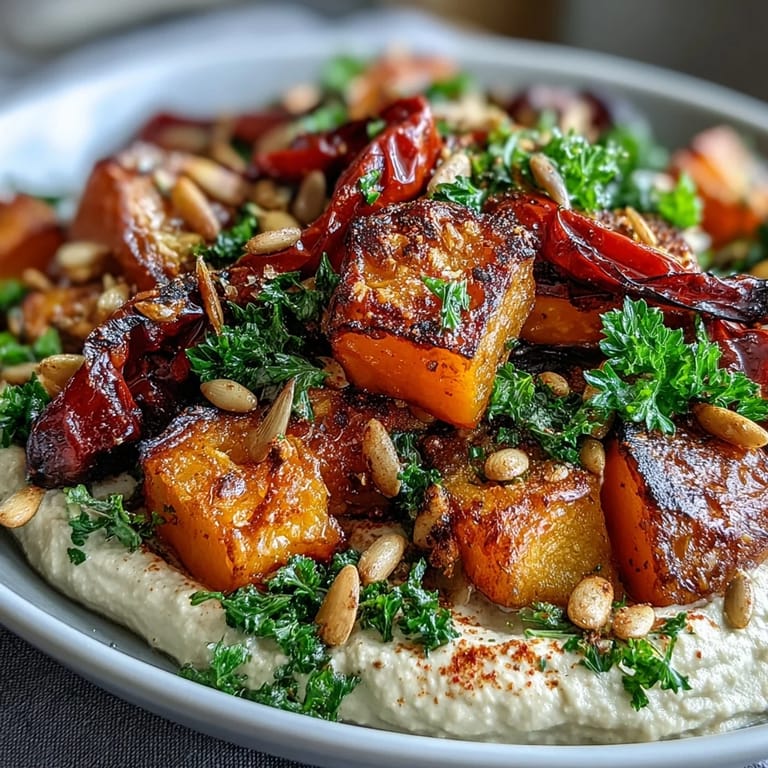
- Spread hummus generously across the plate, pile roasted vegetables on top in whatever arrangement makes you happy, then shower with toasted seeds, parsley, and paprika if you're feeling fancy.
 Save
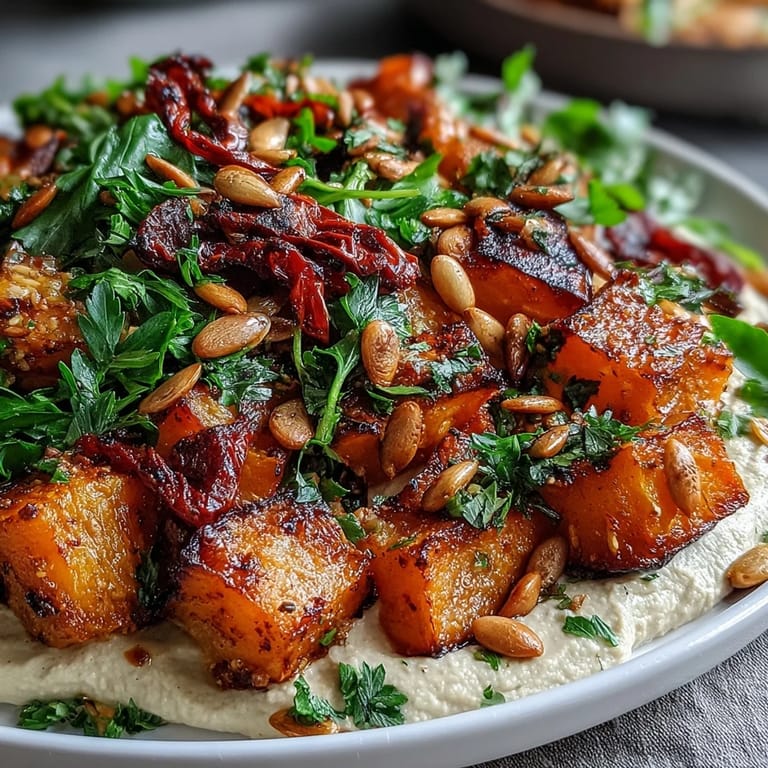
Save There's a specific moment when you first taste this salad that makes everything click, when the warmth of roasted vegetables meets the cool creaminess of hummus and something just works. That's the moment you know you've found something worth repeating.
The Hummus Hack Nobody Talks About
Most people blitz hummus until it's completely smooth, but I discovered that if you leave it just slightly chunky, it has more character and texture interest. The tahini and lemon should balance equally, not fight for dominance, and if you taste it and think 'hmm, needs something,' usually it's more lemon juice, not salt. Start conservative with cumin because it's easy to add more but impossible to take back, and taste as you go like you're having a conversation with the food.
Why This Works as a Main Course
The protein from the butter beans and seeds actually satisfies in a way that vegetable salads usually don't, and the roasted vegetables bring enough substance that you're not looking for something else thirty minutes later. This isn't a side dish pretending to be dinner, it's genuinely nourishing and grounding, the kind of meal that stays with you.
Building Flavor Through Layers
Each element brings something distinct: the hummus is earthy and creamy, the roasted vegetables are caramelized and slightly charred, the seeds add crunch and nuttiness, and the parsley brings freshness that ties it all together. The magic isn't in any single ingredient but in how they speak to each other on the plate. This is the principle that separates interesting food from forgettable food.
- Taste the hummus before assembling and adjust seasoning aggressively, it's the foundation everything else builds on.
- Roast the vegetables just until they're tender with caramelized edges, not soft and mushy throughout.
- Toast your seeds fresh each time, they lose their magic after sitting around and that moment is worth protecting.
 Save
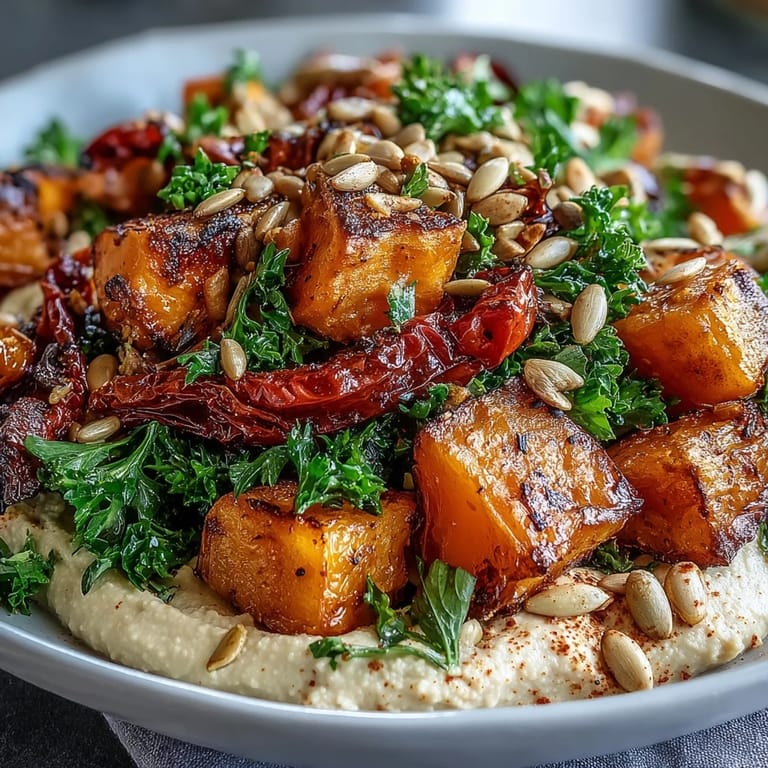
Save This salad reminded me that winter food doesn't have to be heavy or boring, it just needs to be made with intention. Some of my best meals have come from working with what's in season and letting the ingredients guide the conversation.
Recipe Questions & Answers
- → Can I make this ahead of time?
Absolutely. The roasted vegetables and hummus can be prepared up to 2 days in advance. Store them separately in airtight containers and assemble when ready to serve, adding the toasted seeds just before eating to maintain their crunch.
- → What vegetables work best for roasting?
Butternut squash and sweet potatoes are ideal because they hold their shape well and develop natural sweetness when roasted. You can also add carrots, parsnips, or red onions. Just ensure all vegetables are cut into similar-sized cubes for even cooking.
- → How do I achieve the smoothest hummus?
Blend the butter beans thoroughly, scraping down the sides of the processor bowl several times. Add the water gradually—start with 2 tablespoons and increase only if needed. The hummus should be creamy and spreadable, not stiff or watery.
- → Can I use chickpeas instead of butter beans?
Yes, chickpeas make an excellent substitute and will create a more traditional hummus flavor. The texture will be slightly denser, but equally delicious. You may need a touch more water to achieve the same creamy consistency.
- → What seeds work best for the topping?
Pumpkin seeds (pepitas) add the most crunch, while sunflower seeds bring nutty flavor. Sesame seeds toast quickly and provide subtle richness. Use whatever combination you prefer or have on hand—toasting them enhances their natural flavor significantly.
- → Is this suitable for meal prep?
This dish meal preps beautifully. Portion the roasted vegetables and hummus into separate containers for up to 4 days. When ready to eat, simply reheat the vegetables slightly or enjoy them at room temperature, then assemble with the hummus and fresh toppings.