 Save
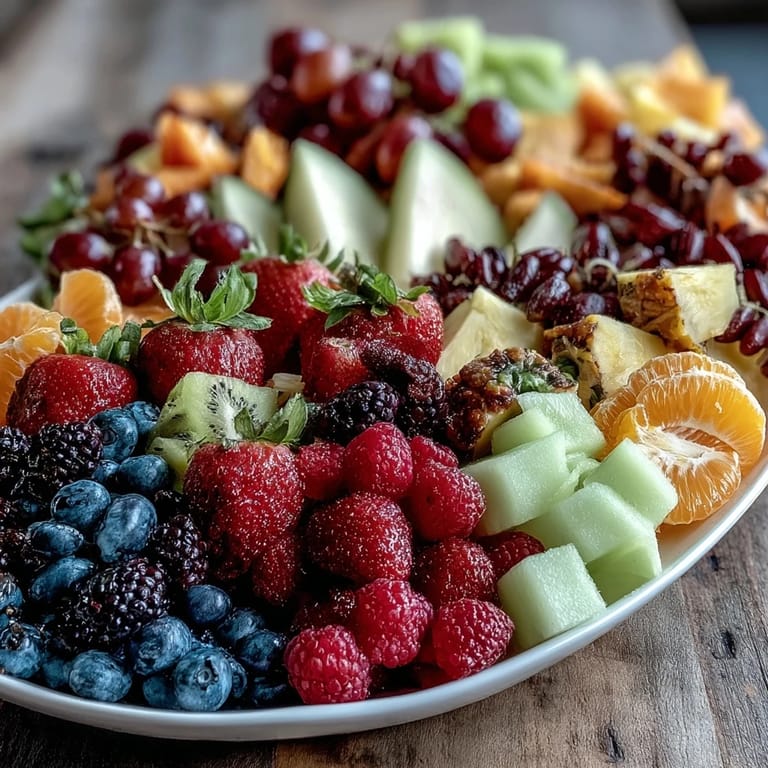
Save My friend texted me two weeks before her daughter's graduation with a panic: "I need something that looks Instagram-worthy but won't stress me out." That's when I remembered the year I discovered that a fruit table could be just as show-stopping as a tiered cake, and infinitely more forgiving. We spent an afternoon arranging berries and melon balls like we were curating an art installation, and honestly, watching guests light up when they saw it was worth every second of prep.
Setting up this fruit table at my cousin's backyard party, I realized halfway through that the afternoon heat was wilting my carefully arranged mint leaves, so I started tucking them in just before people arrived instead. That small adjustment changed everything—suddenly the table looked alive and intentional rather than pre-made. It became the thing people actually gathered around instead of just passing by.
Ingredients
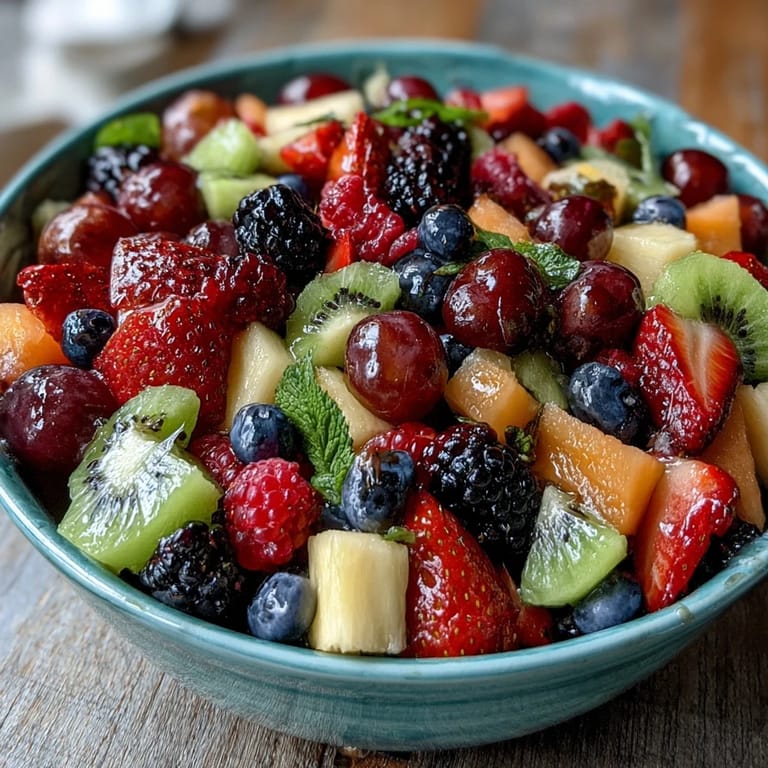
- Seedless green and red grapes (6 cups total): These are your reliable anchors—they fill gaps, add pops of color, and won't bruise easily if you prep them ahead.
- Strawberries (2 cups, hulled and halved): Choose ones that are firm and bright red; soft berries get weepy and look sad by the time guests arrive.
- Pineapple (2 cups, bite-sized): Fresh pineapple tastes infinitely better than canned, and the golden color is crucial for visual balance.
- Watermelon and cantaloupe (4 cups combined): A melon baller makes uniform pieces that look intentional and elegant, though wedges work beautifully too.
- Blueberries and raspberries (4 cups combined): These delicate berries are best added last and tucked into crevices where they won't get squished by other fruits.
- Kiwis and oranges (4 pieces combined): Kiwi's jewel-toned interior and orange's sunny segments add visual variety and textural interest.
- Edible flowers (1 cup, pesticide-free): Pansies, violas, and nasturtiums are your safest bets—always verify they're food-grade and never from a florist.
- Fresh mint leaves (optional): These act as visual greenery and release their fragrance when guests brush past the table.
- Lemon slices (optional): Use these sparingly for garnish and to prevent certain fruits from browning if you're prepping hours ahead.
Tired of Takeout? 🥡
Get 10 meals you can make faster than delivery arrives. Seriously.
One email. No spam. Unsubscribe anytime.
Instructions
- Wash and dry everything thoroughly:
- Run all fruits and edible flowers under cool water and pat completely dry with paper towels—water droplets will make the display look damp and bedraggled. This matters more than you'd think.
- Cut fruits into graceful, bite-sized pieces:
- Slice strawberries in half lengthwise, use a melon baller for cantaloupe and watermelon (or cut into wedges), peel kiwis and slice them into thin coins, and segment oranges over a bowl to catch the juice. Consistency in size makes everything look intentional.
- Choose your canvas and plan your layout:
- Lay out a large, clean serving board or table—this is your stage. Step back and envision how you'll arrange colors in sections or a flowing pattern so no two similar colors sit directly adjacent. It only takes a moment of planning.
- Build your fruit display with purpose:
- Start with the larger pieces and work toward smaller ones, creating clusters and slightly overlapping sections. Think of it like painting with produce—you're aiming for rhythm and balance, not perfection.
- Tuck in the flowers and mint for the final flourish:
- Nestle edible flowers and fresh mint leaves between fruit clusters, letting them peek out like little surprises. Add lemon slices if you'd like, but use restraint—a few scattered slices look elegant, while too many look cluttered.
- Chill until the moment of truth:
- Keep the table in a cool location or even in the refrigerator if you have space, pulling it out just before guests arrive so everything stays crisp and glistening. The fresher it looks, the more people will actually eat it.
 Save
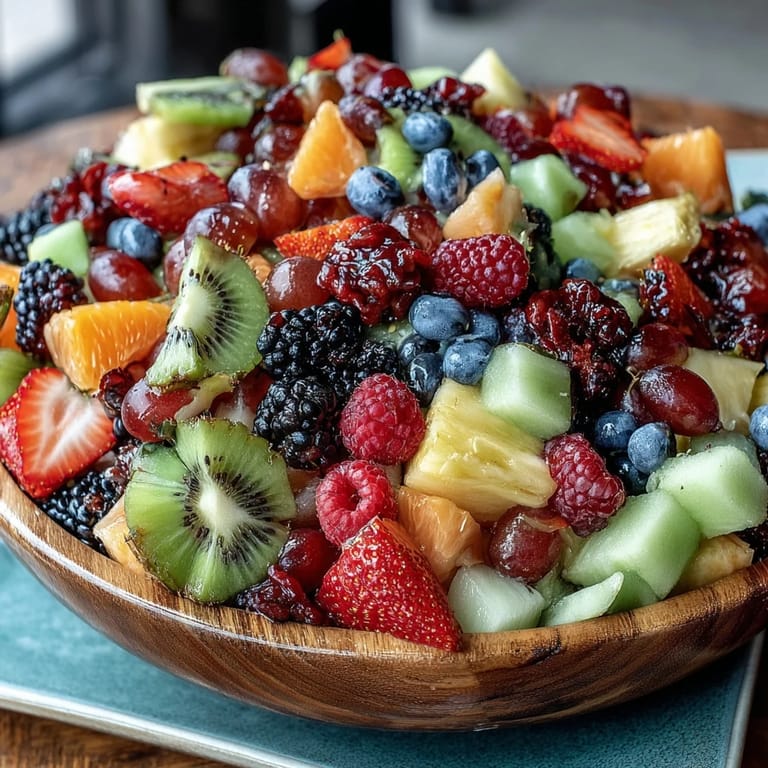
Save At one graduation party, an elderly aunt spent nearly ten minutes just looking at the fruit table before selecting anything—she told me later it made her think of a garden at sunrise, and that meant something to her. That's when I understood this isn't just appetizer logistics; it's creating a moment where people pause and feel celebrated.
Choosing Your Fruits by Season
Summer graduation parties practically demand watermelon and berries, but don't feel locked into those. I've built stunning tables in early spring with strawberries, kiwis, and pineapple, and in fall with grapes, pears, and pomegranate seeds swapped in. The key is choosing whatever's actually ripe and flavorful at the market that week—forced, out-of-season fruit will taste mealy and underwhelming, no matter how pretty it looks.
The Edible Flower Moment
Edible flowers feel like the secret ingredient that elevates everything from functional to memorable. Nasturtiums have a peppery bite and bright orange blooms that catch light beautifully, while pansies and violas are milder and come in almost any color you can imagine. The moment someone notices they're edible and tries one, the whole table feels less like catering and more like an experience.
Setting the Scene and Serving Smart
The beauty of a fruit table is that it works as both centerpiece and actual food—people can graze throughout the party without needing plates or utensils. I've learned to position it somewhere guests naturally pass by, where the colors and flowers catch their eye. If you want to be thoughtful, set out small appetizer plates and forks nearby so people don't feel awkward grabbing berries with their hands.
- Prep harder fruits (melons, pineapple, oranges) up to 4 hours ahead and store them in airtight containers in the fridge.
- Slice softer fruits like kiwis and strawberries no more than 2 hours before serving to prevent browning and weeping.
- Add edible flowers and mint leaves in the final 15 minutes before guests arrive for maximum visual and aromatic impact.
 Save
Save This fruit table became my go-to move for any celebration because it says "I care enough to make this beautiful" without requiring you to be a baker or chef. Your guests will remember the color and joy of it long after the last berry is gone.
Recipe Questions & Answers
- → What types of fruits work best for this display?
Use a mix of colorful, firm fruits like grapes, strawberries, melons, berries, kiwis, and oranges to create a visually appealing and fresh assortment.
- → How do I prepare edible flowers safely?
Ensure flowers are food-grade, pesticide-free, and thoroughly washed before arranging with the fruit for safe consumption.
- → Can I prepare the fruit table in advance?
Arrange the fruit shortly before serving to avoid wilting, though washing and cutting can be done a few hours prior and kept chilled.
- → Are there any recommended garnishes to enhance flavor?
Fresh mint leaves and lemon slices add aroma and a subtle zest that complements the sweet fruits and flowers.
- → What dips pair well with this fruit display?
Consider mild sweet dips like honey-yogurt or dairy-free coconut dips to accompany the fruity flavors without overpowering them.
- → How can I customize the fruit selection with seasons?
Swap fruits out based on availability by including mango, papaya, or cherries for different seasonal colors and tastes.