 Save
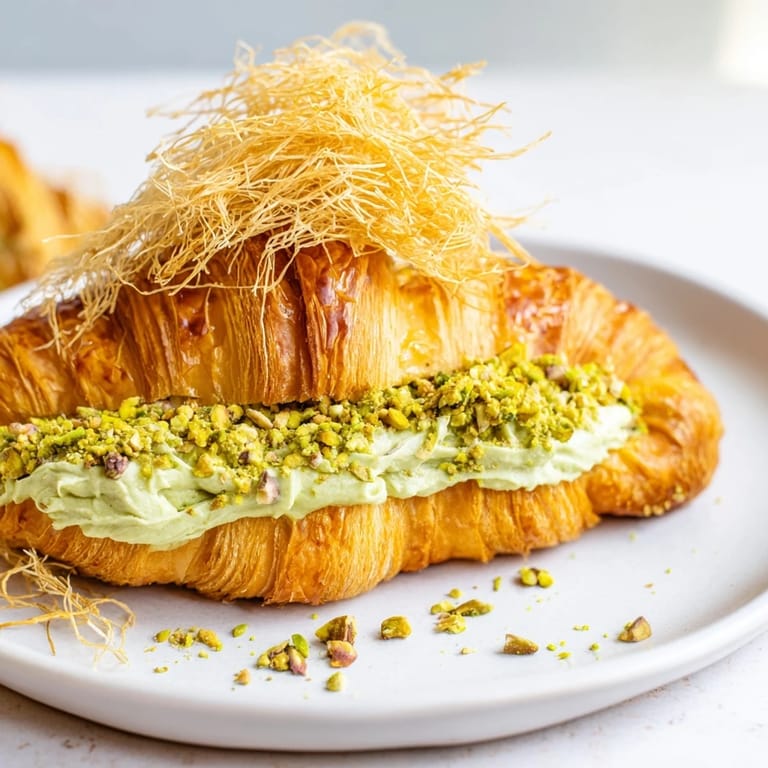
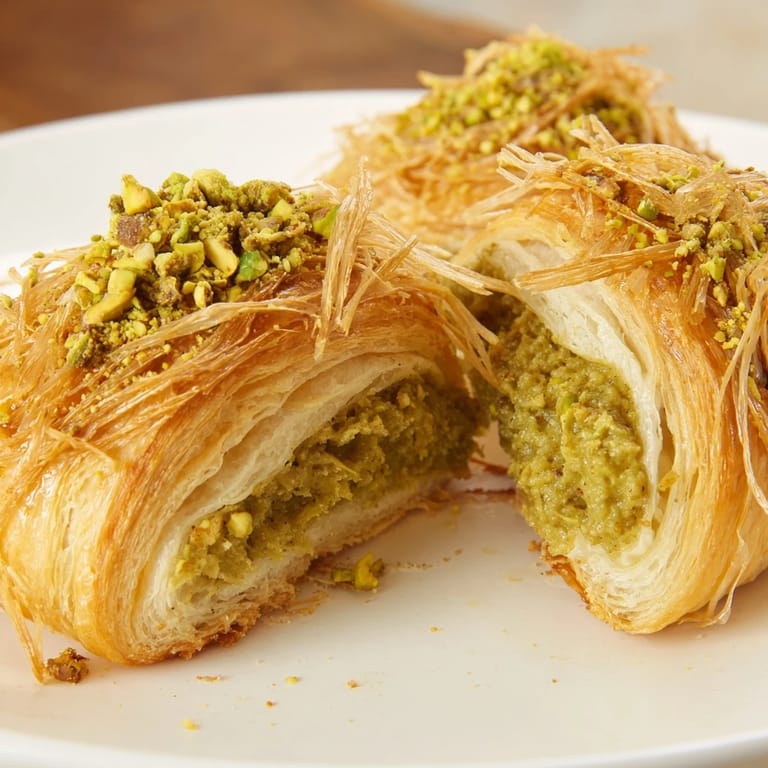
Save There's something about the smell of butter hitting a hot oven that makes me lose track of time. I discovered pistachio croissants quite by accident—I'd grabbed what I thought were plain ones from the bakery, and when I bit into that creamy green center, something shifted. Now I make them at home, and every time I do, that first moment of surprise comes rushing back, except this time it's intentional, layered with crispy phyllo and the deep nuttiness of pistachios.
I made these for my sister's birthday breakfast, and I watched her expression go from sleepy to absolutely alive in one bite. She sat at the kitchen counter with coffee getting cold while she worked through her croissant slowly, savoring it, and I realized that good pastry is one of the few things that stops people mid-conversation. That's when I knew this recipe had to stay in rotation.
Ingredients
- All-butter croissants: Day-old works best because they have less moisture and won't deflate under the weight of the cream, but fresh ones still work if you're patient with them.
- Unsalted pistachios: Shelled saves time, but if you shell them yourself, you'll taste the difference—use that energy and let it be your meditation.
- Granulated sugar: Keeps the cream smooth and the phyllo crackling; don't skip it thinking honey will work better, I learned that the hard way.
- Unsalted butter: Softened means room temperature, which means the pistachio cream will actually emulsify instead of looking greasy.
- Heavy cream: Adds silkiness without making it runny; two tablespoons is precise for a reason.
- Vanilla extract: A small anchor that doesn't announce itself but makes people wonder what they're tasting.
- Phyllo dough: Thawed slowly in the fridge, not rushed on the counter—patience prevents tearing.
- Orange blossom water: Optional but shifts the whole dish into a different elegance if you have it on hand.
Tired of Takeout? 🥡
Get 10 meals you can make faster than delivery arrives. Seriously.
One email. No spam. Unsubscribe anytime.
Instructions
- Heat your oven and prep your workspace:
- Set the oven to 180°C and line your baking sheet with parchment—this keeps the phyllo from sticking and the bottom from burning.
- Make the syrup first:
- Water and sugar in a saucepan, stirring until the sugar disappears into warmth, then cool it completely so it won't wilt your croissants when you brush it on.
- Build the pistachio cream:
- Pulse pistachios and sugar until they look like fine breadcrumbs, then add butter and let the food processor do the work until it's pale and fluffy. Crack in the egg, pour in cream and vanilla, and blend until it feels like velvet.
- Open the croissants with care:
- A sharp knife makes a horizontal slit, leaving the top attached like a hinge so the structure stays intact. Brush the inside with syrup—just enough to kiss the surface, not soak it.
- Fill generously but not carelessly:
- Spoon pistachio cream inside and close each one gently, then arrange them on the baking sheet like they're being tucked into bed.
- Create the phyllo shreds:
- Layer phyllo sheets, brushing melted butter and sprinkling sugar between each one, then roll loosely and slice thinly so you get irregular, golden pieces rather than neat strips.
- Crown each croissant:
- Pile phyllo shreds on top and scatter chopped pistachios over everything for color and crunch.
- Bake until golden:
- Fifteen to eighteen minutes, watching for the phyllo to turn amber and the croissants to warm through. The kitchen will smell like butter and nuts and possibility.
- Rest and serve:
- A few minutes cooling makes them easier to handle and lets the cream set just slightly.
 Save
Save There was a moment last spring when my nephew, who's usually suspicious of anything green, bit into one of these without asking questions first. He went quiet, then looked at me with genuine surprise and asked if I'd made them. That single moment—where a pastry became proof that something unfamiliar could be delicious—changed how I think about cooking for people.
Why These Croissants Remind Me of Elegance
There's a certain confidence in serving a pastry that looks complicated but tastes like pure indulgence. These croissants feel like something from a Parisian morning, except they're made in your own kitchen on a Saturday that started like any other. The combination of flake, cream, and crunch speaks a language that doesn't require translation—it just requires butter and attention.
The Magic of Texture Contrast
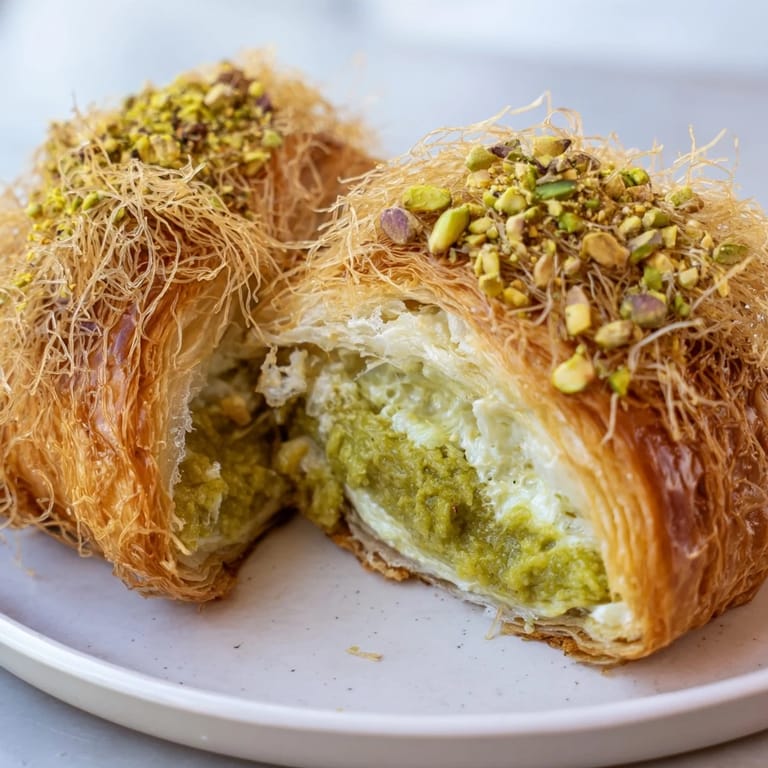
Phyllo dough is its own kind of alchemy; those paper-thin sheets become something entirely different once they hit heat. When they're layered with butter and sugar, they transform into something shatteringly crisp, and when you pile them on top of a soft, creamy croissant, the contrast is what people remember. Every bite has three different textures happening at once, and that's not accidental—it's the whole point.
Timing and Temperature Matter More Than You'd Think
Baking is a conversation between ingredients and heat, and with these croissants, the conversation needs to be just right. Too hot and the phyllo burns before the croissants warm through; too cool and everything stays pale and slightly damp. The oven temperature of 180°C is the sweet spot where butter crisps without charring, cream stays stable, and the whole thing comes together in under twenty minutes. Small adjustments make enormous differences.
- If your phyllo browns too quickly, tent it loosely with foil for the last few minutes.
- Fresh croissants need slightly less time than day-old ones, so watch the first batch and adjust accordingly.
- Let them cool on the baking sheet for at least a minute before transferring; they'll firm up enough to move without breaking.
 Save
Save These croissants are best eaten the day they're made, still warm enough that the cream is soft and the phyllo crackles with purpose. Pair them with strong coffee or a glass of Moscato d'Asti, and suddenly it's not breakfast anymore—it's a moment you've earned.
Recipe Questions & Answers
- → How do you make the pistachio cream smooth?
Blend shelled pistachios with sugar until finely ground, then add softened butter, egg, cream, vanilla, and salt, processing until the mixture is creamy and smooth.
- → What is the purpose of the syrup in this preparation?
The syrup adds moisture and a subtle sweetness to the croissants, helping to enhance the overall flavor and texture.
- → How is the phyllo crunch prepared and used?
Phyllo sheets are brushed with melted butter and sprinkled with sugar, then rolled and sliced into thin shreds to create a crunchy topping for the croissants.
- → Can I use store-bought pistachio paste instead of making cream?
Yes, store-bought pistachio paste can be used as a shortcut for the cream filling, saving preparation time.
- → What is the best way to store these croissants?
Store in an airtight container and consume within 2 days to maintain freshness and texture.
- → Are these croissants suitable for vegetarians?
Yes, they contain no meat ingredients and align with a vegetarian diet.