 Save
Save My mother has always been the quiet type—the kind who'd rather watch you enjoy something than take credit for making it. So when Mother's Day rolled around last year, I decided the pavlova needed to be perfect, not because she'd demand it, but because she'd notice the effort in every crispy, marshmallow-soft bite. I'd never made one before, and my kitchen felt like a laboratory that afternoon, with egg whites being whisked into clouds and my fingers crossed that humidity wouldn't betray me.
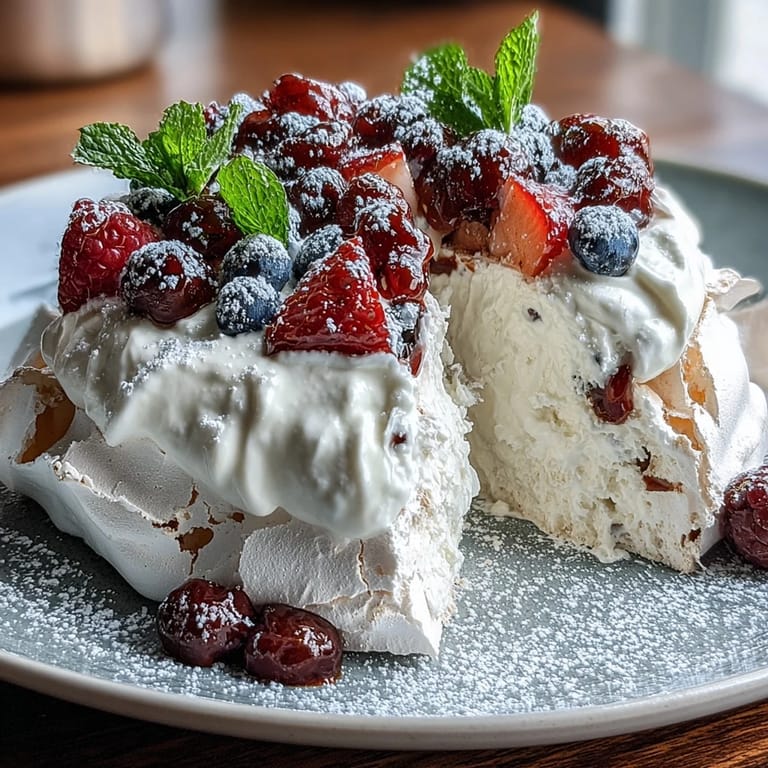
I'll never forget my mother's face when she walked into the kitchen and saw the pavlova sitting there, crowned with berries that caught the late afternoon light. She didn't say much—just reached over and squeezed my hand—but that moment felt like the whole point of cooking, honestly. No fancy plating technique could've beaten that quiet recognition.
Ingredients
- Egg whites (4 large, room temperature): Room temperature is non-negotiable here; cold eggs won't whip up into those glossy peaks, and you need every bit of volume for that signature airy texture.
- Superfine sugar (1 cup): This dissolves faster than regular sugar, which means your meringue stays glossy and stable instead of grainy—the difference is real.
- Cornstarch (1 tsp): This tiny amount is your secret weapon for keeping the center soft and marshmallowy while the outside stays crisp.
- White vinegar (1 tsp): It stabilizes the meringue and adds subtle tang that plays beautifully against the sweetness.
- Pure vanilla extract (1 tsp): Don't skip the pure stuff; imitation vanilla tastes like chemicals next to this.
- Salt (pinch): Enhances all the flavors without announcing itself.
- Heavy whipping cream (1 cup, chilled): Cold cream whips faster and holds its peaks better, so chill it in the freezer for 10 minutes before whipping if you're in a hurry.
- Powdered sugar (2 tbsp for cream, 1 tbsp for dusting): Powdered sugar dissolves instantly into cream, avoiding any grittiness.
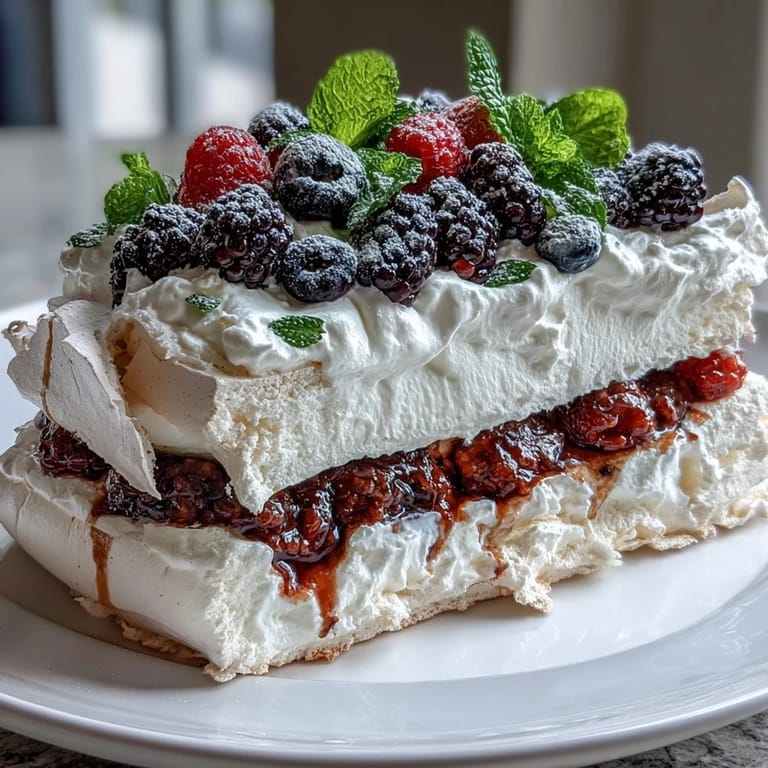
- Mixed berries (4 cups total): Use whatever's at peak ripeness in your market; strawberries, raspberries, blueberries, and blackberries create a gorgeous, tart-sweet balance.
- Fresh mint (1 tbsp, optional): A small handful of mint adds color and a whisper of freshness that bridges the sweetness beautifully.
Tired of Takeout? 🥡
Get 10 meals you can make faster than delivery arrives. Seriously.
One email. No spam. Unsubscribe anytime.
Instructions
- Set yourself up for success:
- Preheat your oven to 250°F (120°C) and line a baking sheet with parchment paper. Use a bowl or a 9-inch cake pan to trace a circle as your guide—this keeps the pavlova looking intentional and impressive.
- Create glossy peaks:
- In a completely clean, dry bowl (any grease will sabotage you), beat the egg whites with a pinch of salt until soft peaks form. This takes about 2–3 minutes with a mixer, and you'll see the transformation instantly.
- Build the meringue magic:
- Add the superfine sugar one tablespoon at a time while beating, allowing each addition to fully incorporate before adding the next. This patience rewards you with a glossy, stable meringue—about 5–6 minutes total.
- Fold in the hidden weapons:
- Gently fold in the cornstarch, white vinegar, and vanilla extract using a rubber spatula with a light hand. You want to keep all those air bubbles intact, so no aggressive stirring.
- Shape the nest:
- Spoon the meringue onto your parchment circle and shape it into a nest with slightly raised edges, creating a shallow well in the center. Use the back of a spoon to smooth it slightly, leaving it rustic rather than perfect.
- The long, gentle bake:
- Bake for 1 hour 15 minutes at 250°F—the pavlova should turn pale golden but still look mostly white. This low temperature dries it out rather than browning it.
- The crucial cooling moment:
- Turn off the oven and crack the door open slightly, letting the pavlova cool completely inside for at least an hour. This gradual temperature change prevents cracking, which is the baker's secret to a pristine shell.
- Whip the cloud topping:
- While the pavlova cools, chill your bowl and whisk, then whip the heavy cream with powdered sugar and vanilla until soft peaks form. This takes about 2–3 minutes and should feel airy and luxurious.
- The beautiful assembly:
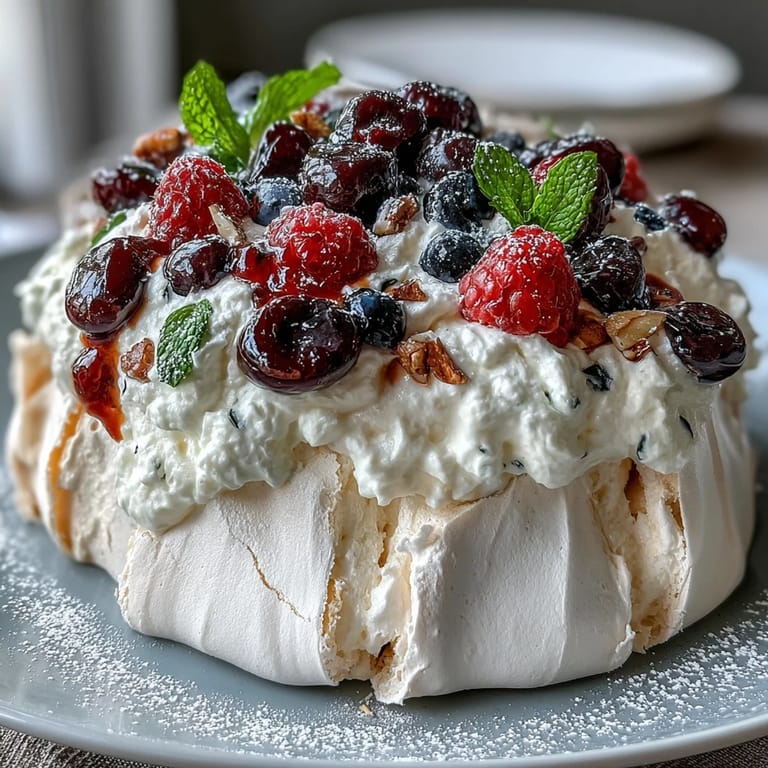
- Transfer the cooled pavlova to your serving platter, top generously with whipped cream, then arrange the mixed berries on top. If using mint, scatter it now for color and freshness.
- The final flourish:
- Dust lightly with powdered sugar just before serving if you like—it catches the light and makes everything look even more special.
 Save
Save There's something almost spiritual about how a pavlova brings people together—everyone wants to understand how it works, how something so delicate and impressive came from your own hands. That dessert became the thing people asked about for months afterward, more than any dinner I'd served before.
Why This Dessert Feels Special
Pavlova occupies this unique space in cooking where it looks impossible but tastes effortless, which is exactly why people love it. The contrast between that shattering outer shell and the soft, yielding center is textural drama in every spoonful, and it never gets old no matter how many times you make it. It's also the kind of dessert that works equally well at a casual Sunday lunch or a formal dinner party—it adapts to whatever occasion you need it for.
Choosing and Preparing Your Berries
The berries are where you can really play with the seasons and what your market has at peak ripeness. Strawberries in spring, mixed berries in summer, and stone fruits in early fall all work beautifully—the key is using whatever tastes the sweetest at that moment. I usually taste a berry from each container before committing, because nothing ruins a pavlova faster than mealy or bland fruit on top of all that effort.
Beyond the Classic Topping
Once you've mastered the basic pavlova, you can riff endlessly on what goes on top. Passion fruit curd and whipped cream creates a tartness that's absolutely divine, while a drizzle of salted chocolate and crushed pistachios takes it in a totally different direction. Even swapping out the berries for poached rhubarb or grilled peaches shifts the whole mood of the dish.
- For a chocolate lover's version, fold 2 tablespoons of sifted cocoa powder into the meringue before shaping and baking.
- Make it ahead by baking the pavlova shell the day before and storing it in an airtight container; assemble just before serving.
- If berries are out of season, fresh kiwi slices, peaches, or even a generous dollop of lemon curd work beautifully in place of mixed berries.
 Save
Save Pavlovas remind me that the best desserts aren't about complexity; they're about understanding a few basic principles and executing them with care. Make this for someone you want to impress, or make it for yourself on a day when you deserve something that feels both elegant and exciting.
Recipe Questions & Answers
- → How do I achieve a crisp meringue shell with a marshmallow center?
Beat egg whites to stiff peaks, gradually add superfine sugar until glossy, then gently fold in cornstarch and vinegar. Bake at low temperature for over an hour and cool slowly inside the oven with the door ajar.
- → Can I substitute the mixed berries with other fruits?
Yes, seasonal fruits like kiwi, peaches, or passionfruit work well to provide a fresh and vibrant topping.
- → What is the role of cornstarch and vinegar in the meringue?
Cornstarch helps create a soft, marshmallow-like center while vinegar stabilizes the egg whites to maintain structure.
- → How do I prepare the whipped topping for the pavlova?
Chill heavy cream and whip it with powdered sugar and vanilla extract until soft peaks form, then spread gently over the cooled meringue.
- → Are there any tips to prevent meringue from becoming sticky?
Prepare on a dry day and allow the pavlova to cool completely inside the oven with the door slightly open to maintain texture.