 Save
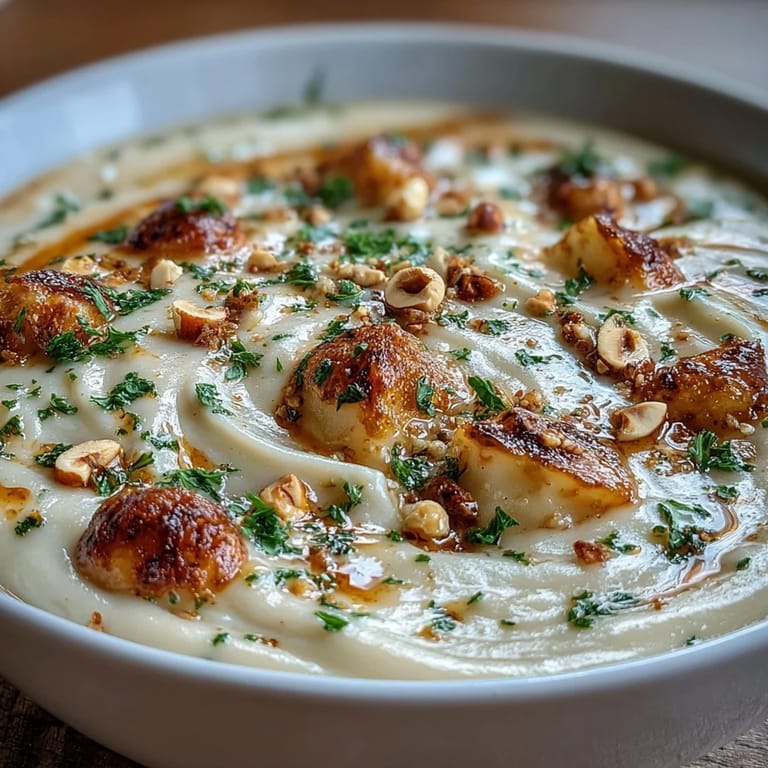
Save There's something almost magical about celeriac that most people overlook until they taste it roasted. I stumbled upon this soup on a gray autumn afternoon when my farmer's market haul felt uninspired, and I decided to gamble on this knobby root vegetable. The moment it hit the oven, my kitchen filled with this nutty, caramelized aroma that stopped me in my tracks, and I knew I'd found something worth repeating.
My partner wasn't convinced until I served this to them on a chilly evening with crusty bread and a glass of Pinot Gris. Watching them take that first spoonful and close their eyes told me everything I needed to know—this had become a new house favorite without them even realizing it.
Ingredients
- Celeriac (700 g): This is the star, and roasting it brings out a deep, nutty sweetness that you simply can't achieve by boiling alone.
- Onion and garlic: The flavor foundation that builds as they soften in the pot, creating a subtle backdrop for the celeriac to shine.
- Potato (150 g): Acts as a gentle thickener and adds body without overwhelming the delicate earthiness of the dish.
- Vegetable broth (900 ml): Use something flavorful here—it makes a real difference in the final depth.
- Olive oil: Two tablespoons split between roasting and sautéing ensures everything develops proper color.
- Heavy cream or plant-based alternative (100 ml): The optional finishing touch that adds silk and richness; feel free to skip it if you want to keep things lighter.
- White pepper and salt: White pepper is quieter and more delicate than black, letting the celeriac's flavor speak clearly.
- Hazelnuts (70 g): Choose whole nuts and chop them yourself—they toast more evenly and taste fresher than pre-ground.
- Butter and sea salt for the crumble: This small amount creates a glorious, crispy topping that contrasts beautifully with the soup's velvet texture.
Tired of Takeout? 🥡
Get 10 meals you can make faster than delivery arrives. Seriously.
One email. No spam. Unsubscribe anytime.
Instructions
- Get your oven ready:
- Set it to 200°C (390°F) so it's hot and waiting when you need it.
- Prepare and roast the celeriac:
- Peel that knobby celeriac carefully, cube it into roughly 2-cm pieces, and toss with 1 tablespoon olive oil, salt, and pepper. Spread everything on a baking tray in a single layer and let it roast for 25 to 30 minutes, turning the pieces halfway through so they caramelize evenly on all sides until golden and completely tender.
- Build the flavor base:
- While celeriac roasts, warm 1 tablespoon olive oil in a large pot over medium heat. Sauté your chopped onion for about 4 minutes until it turns translucent and smells sweet, then add the minced garlic and diced potato, stirring for another 2 minutes so everything gets coated and begins to soften.
- Combine and simmer:
- Add the roasted celeriac to the pot along with your vegetable broth, bring everything to a gentle boil, then reduce the heat and let it simmer quietly for 15 to 20 minutes until every vegetable is completely soft and falls apart when you press it with a spoon.
- Toast the hazelnuts:
- In a separate dry skillet over medium heat, toast your chopped hazelnuts for 3 to 4 minutes, stirring frequently, until they smell incredible and turn golden. Add the butter and sea salt, stirring constantly until the nuts are fully coated in melted butter, then remove from heat and let cool slightly—they'll continue toasting and crisping as they cool.
- Blend until silky:
- Using an immersion blender, purée the soup directly in the pot, moving it around in steady motions until everything is silky and completely smooth. If you prefer a countertop blender, work in batches, being careful with the hot liquid, and return everything to the pot once finished.
- Finish and serve:
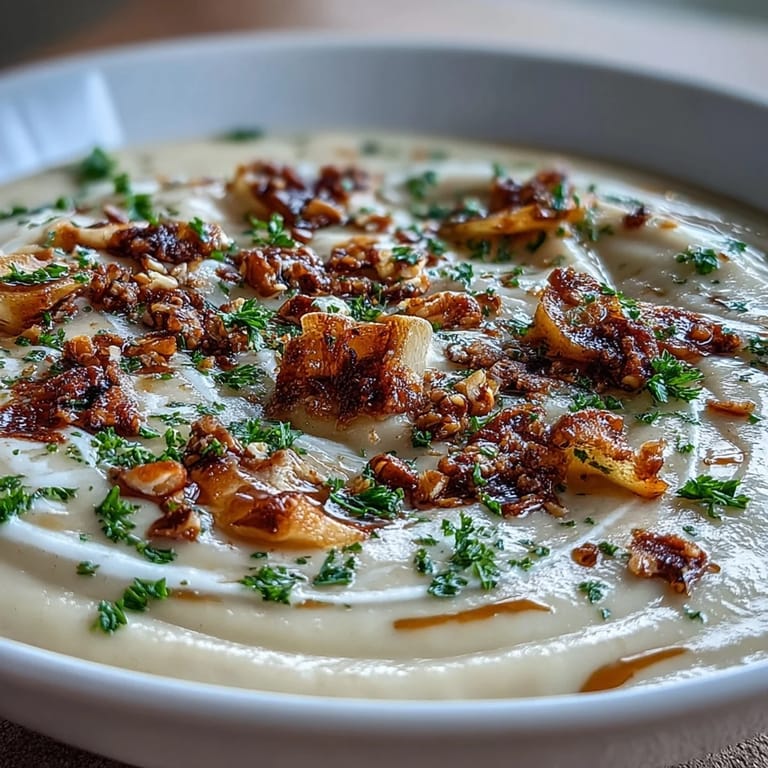
- Stir in the cream if you're using it, taste the soup, and adjust salt and pepper to your preference. Ladle into bowls and top each serving generously with that crispy hazelnut crumble and a small handful of fresh parsley if you have it.
 Save
Save The real turning point came when a friend who avoids heavy soups asked for a second bowl. That's when I realized this soup manages to feel indulgent and light at the same time, which is a trick worth knowing.
Why Roasting Changes Everything
The difference between boiled and roasted celeriac is honestly night and day. When you expose those cubes to direct heat, the natural sugars caramelize and concentrate, creating depth and sweetness that the vegetable doesn't possess on its own. I learned this the hard way after making a watery version in a hurry, and now I never skip this crucial step, even if I'm short on time.
The Hazelnut Crumble Factor
This soup would be lovely without the crumble, but with it, something magical happens. The moment those warm, buttery nuts hit the cool cream, they stay crispy instead of softening, creating this textural contrast that makes every spoonful interesting. I've experimented with toasting them longer and shorter, and that sweet spot of 3 to 4 minutes with a minute or two more in the butter gives you the best result.
Making It Your Own
This is a soup that welcomes customization without demanding it. Some versions I've made include a whisper of fresh thyme stirred in at the end, or a squeeze of lemon juice for brightness if the soup feels too earthy for your mood. The vegan version works beautifully with oat cream or coconut cream, though I prefer the subtle richness of something like cashew cream for this particular dish.
- Try adding a teaspoon of crispy sage leaves on top instead of parsley for an autumn twist.
- A small drizzle of truffle oil over each bowl elevates this to dinner-party territory if you're feeling fancy.
- Leftover crumble keeps in an airtight container for three days and makes a great salad topper.
 Save
Save Celeriac soup has become my reliable comfort on days when I need something grounding yet elegant, and I hope it becomes one of those dishes you make again and again without even thinking about it. The fact that it's naturally vegetarian, easy to adapt, and genuinely delicious makes it a keeper.
Recipe Questions & Answers
- → What does celeriac taste like?
Celeriac has a mild, earthy flavor with subtle celery notes and a slight sweetness. When roasted, these flavors deepen and become more concentrated, creating a rich, savory base perfect for soups.
- → Can I make this soup ahead of time?
Absolutely. The soup base keeps well in the refrigerator for up to 3 days and freezes beautifully for up to 3 months. Store the hazelnut crumble separately and add just before serving to maintain its crisp texture.
- → What can I substitute for hazelnuts?
Walnuts, pecans, or toasted pumpkin seeds work well as alternatives. Each brings a different flavor profile—walnuts add earthiness, pecans contribute sweetness, while pumpkin seeds offer a lighter crunch.
- → Is this soup suitable for freezing?
Yes, the soup freezes exceptionally well. Cool completely before transferring to airtight containers, leaving space for expansion. Thaw overnight in the refrigerator and reheat gently, adding splash of broth if needed.
- → How do I achieve the smoothest texture?
Roasting the celeriac until completely soft is key—this breaks down fibers before blending. Use an immersion blender for 2-3 minutes, or a high-speed blender in batches. For restaurant-quality results, pass through a fine-mesh sieve after blending.