 Save
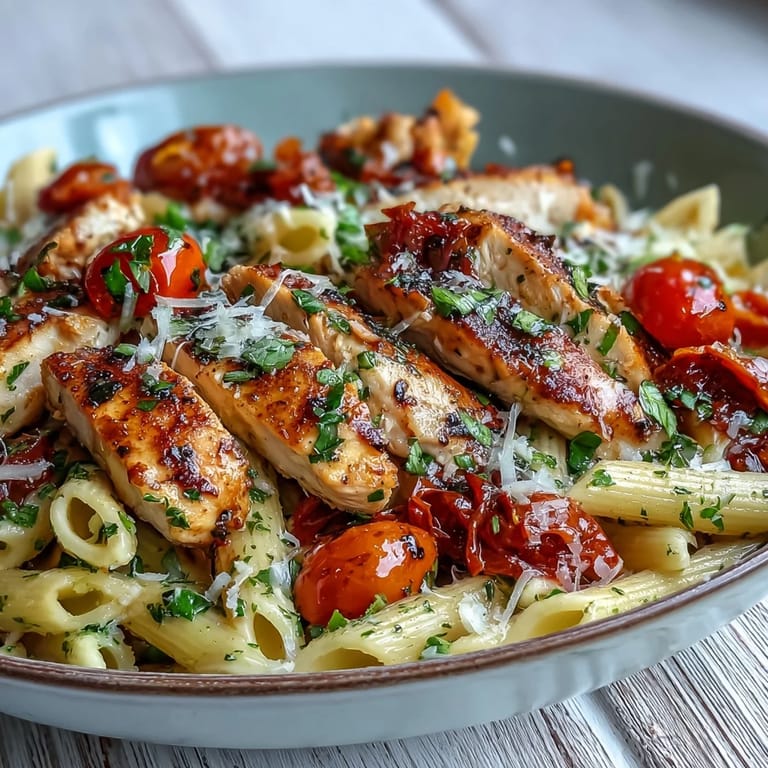
Save Summer hit hard one Thursday evening, and I stood in the kitchen with a basket of cherry tomatoes from my neighbor's garden and no plan. I remembered a bruschetta appetizer I'd had at a wedding years ago—bursting tomatoes, fresh basil, that sweet-tart balsamic drip—and thought, why not turn that into dinner? I tossed in some chicken, cooked a pot of penne, and let the tomatoes do their magic in the skillet. It worked so well that now, every time tomatoes are in season, this is the first thing I make.
I made this for my sister when she came to visit with her kids, and they devoured it. My nephew, who usually picks tomatoes out of everything, ate three bowls and asked if we could make it again for breakfast. I didn't argue. The next morning, we reheated it in a skillet with a fried egg on top, and it became a family legend.
Ingredients
- Penne or fusilli pasta: The ridges and tubes catch all the tomato juices and little bits of basil, so every bite is full of flavor.
- Boneless, skinless chicken breasts: Searing them whole keeps them juicy, and slicing after resting makes all the difference in tenderness.
- Garlic and shallot: Shallots are sweeter and more delicate than onions, and they don't overpower the tomatoes.
- Cherry tomatoes: Use the ripest ones you can find because they become the sauce, bursting and caramelizing in the skillet.
- Extra-virgin olive oil: Don't skimp here, it adds richness and ties everything together with a fruity finish.
- Balsamic vinegar: Just a tablespoon brings a subtle sweetness and tang that makes the tomatoes sing.
- Fresh basil and parsley: The basil is the star, but parsley adds a bright, grassy note that balances the richness.
- Parmesan and mozzarella: Parmesan gives you that nutty, salty bite, and mozzarella melts into creamy pockets throughout the pasta.
- Kosher salt, black pepper, and red pepper flakes: Season boldly, and add the flakes if you want a gentle kick that sneaks up on you.
- Pasta cooking water: This starchy liquid is magic for loosening the dish and making everything cling together.
Tired of Takeout? 🥡
Get 10 meals you can make faster than delivery arrives. Seriously.
One email. No spam. Unsubscribe anytime.
Instructions
- Boil the pasta:
- Bring a large pot of salted water to a rolling boil, then cook the pasta until al dente. Before draining, scoop out a mugful of that starchy water and set it aside.
- Season and sear the chicken:
- Pat the chicken dry, season both sides with salt and pepper, then sear in shimmering olive oil until deeply golden and cooked through. Let it rest on a board while you build the sauce.
- Sauté the aromatics:
- In the same skillet, add a bit more oil and cook the shallot and garlic until they smell sweet and toasty. Don't walk away or they'll burn.
- Cook the tomatoes:
- Toss in the halved cherry tomatoes and let them blister and break down, releasing their juices into the pan. Stir in the balsamic and red pepper flakes if you like a little heat.
- Combine everything:
- Slice the rested chicken, return it to the skillet with the pasta, and toss gently. Add splashes of pasta water until the sauce coats every piece.
- Finish with herbs and cheese:
- Off the heat, stir in the basil, parsley, Parmesan, and mozzarella until the cheese starts to melt and the herbs perfume the whole dish. Taste and adjust seasoning as needed.
- Serve:
- Plate it up, garnish with extra Parmesan and a drizzle of olive oil, and serve immediately while the mozzarella is still melty.
 Save
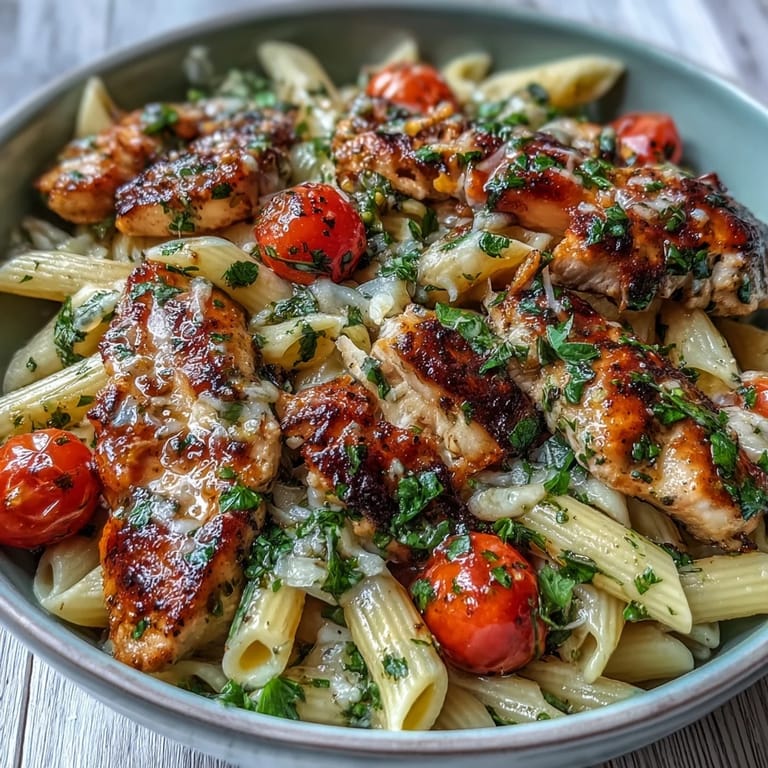
Save One night I served this to friends on the back patio with a bottle of chilled white wine, and we sat there until the citronella candles burned out. Someone said it tasted like vacation, and I realized that's exactly what it is: a little escape in a bowl, no plane ticket required.
How to Pick the Best Tomatoes
Look for cherry tomatoes that feel heavy for their size and have a deep, even color with no green shoulders. If they smell sweet and a little earthy at the stem, they're ready to burst with flavor in your skillet. I've learned the hard way that pale, rock-hard tomatoes will never cook down into that jammy, saucy goodness you want.
Make It Your Own
If you want to skip the chicken, try white beans or chickpeas for protein, or just double the mozzarella and add a handful of arugula at the end. I've also stirred in sun-dried tomatoes when fresh ones weren't in season, and it gave the dish a deeper, almost smoky sweetness. You can swap the penne for any short pasta you have on hand, rigatoni and cavatappi both work beautifully.
Storing and Reheating
Leftovers keep in the fridge for up to three days in an airtight container, and they taste even better once the flavors have had time to marry. Reheat gently in a skillet over medium-low heat with a splash of water or broth to bring back the moisture, stirring often so nothing sticks. I've also eaten it cold straight from the fridge as a pasta salad, and it's surprisingly good that way too.
- Add a squeeze of fresh lemon juice when reheating to brighten up the flavors.
- If the pasta has absorbed too much liquid overnight, stir in a little olive oil or more pasta water.
- For a crispy twist, spread leftovers in a baking dish, top with extra mozzarella, and broil until bubbly.
 Save
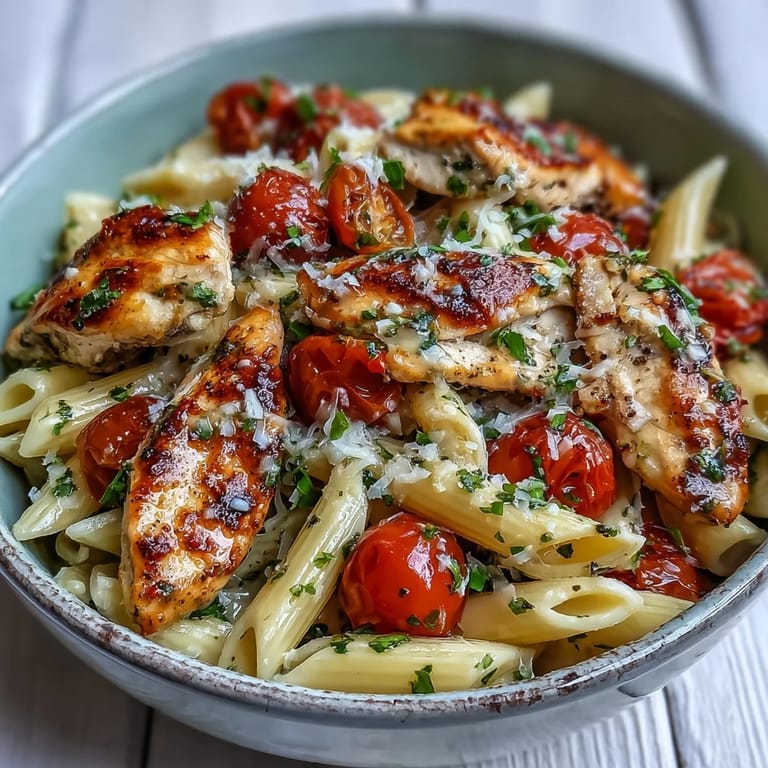
Save This dish has become my go-to when I want something that feels special but doesn't ask too much of me. It's proof that the best meals often come from letting a few good ingredients do what they do best.
Recipe Questions & Answers
- → Can I make this dish vegetarian?
Yes, simply omit the chicken and add protein alternatives like white beans, chickpeas, or increase the amount of mozzarella and Parmesan for a satisfying vegetarian version.
- → What type of pasta works best?
Penne or fusilli are ideal because their shapes hold the sauce well, but any short pasta with ridges or grooves will work beautifully with this preparation.
- → How do I store leftovers?
Store in an airtight container in the refrigerator for up to 3 days. Reheat gently with a splash of olive oil or water to refresh the sauce.
- → Can I use dried basil instead of fresh?
Fresh basil is essential for authentic flavor, but if unavailable, use 1 teaspoon dried basil added during the tomato cooking step rather than as a garnish.
- → What can I substitute for balsamic vinegar?
Red wine vinegar adds similar acidity, or use a splash of white wine with a pinch of sugar for a lighter variation that still provides depth.
- → How do I know when the chicken is done?
Use a meat thermometer to check that the internal temperature reaches 165°F (74°C). The chicken should feel firm and spring back when touched, with no pink in the center.