 Save
Save My friend Marcus swore by his grandmother's Hoppin John tradition every New Year's, but when he went vegetarian, he thought that ritual was over. So one January first, I decided to crack the code myself, swapping the meat for smoked paprika and doubling down on the vegetables. The kitchen filled with that unmistakable Southern perfume of celery, onion, and thyme, and when he tasted it, he got quiet for a moment before asking for seconds. That's when I knew this version wasn't a substitute, it was its own thing entirely.
I made this for a potluck once where half the guests were vegan and half weren't, and it vanished before the collard greens even came out of someone's slow cooker. A guy who'd never eaten a plant-based meal in his life asked if there was meat in it, and when I said no, he looked genuinely shocked. That's the moment I realized this recipe had crossed over from being good for a vegetarian dish to just being good, period.
Ingredients
- Olive oil: Just a tablespoon is all you need to get the vegetables singing without making the dish heavy.
- Medium onion, diced: This is your flavor foundation, so don't skip it or rush the sauté.
- Green bell pepper, diced: It adds sweetness and body that rounds out the earthiness of the peas.
- Celery stalks, diced: Two stalks give you that classic holy trinity depth that makes this taste authentically Southern.
- Garlic, minced: Three cloves seems like a lot until you realize they're your secret weapon against blandness.
- Black-eyed peas: Canned works beautifully here, and rinsing them removes excess sodium so you control the seasoning.
- Smoked paprika: This is non-negotiable if you want that smoky depth that usually comes from meat.
- Dried thyme and oregano: Together they create a warm, herbal backbone that holds everything together.
- Ground cumin: A teaspoon adds earthiness and complexity that makes people wonder what your secret ingredient is.
- Cayenne pepper: Keep it optional if you're cooking for mixed heat tolerances, but add it if you want that gentle Southern kick.
- Sea salt and black pepper: Taste as you go because these two do heavy lifting at the end.
- Bay leaves: They disappear during cooking but leave behind a subtle bitterness that keeps things interesting.
- Low-sodium vegetable broth: Use the good stuff if you can because it's basically your liquid seasoning.
- Soy sauce or tamari: A tablespoon adds umami that makes people swear there's meat in this dish.
- Long-grain rice: White or brown, fluffy and warm to nest the peas on top of.
- Fresh parsley or cilantro: The brightness at the end transforms this from good to memorable.
- Green onions and lemon: These finishes are optional but they're what make it feel special rather than routine.
Tired of Takeout? 🥡
Get 10 meals you can make faster than delivery arrives. Seriously.
One email. No spam. Unsubscribe anytime.
Instructions
- Get your base going:
- Heat olive oil in a large pot over medium heat, then add your diced onion, bell pepper, and celery. Let them soften for five to six minutes, stirring occasionally so they cook evenly without browning too much. You'll know they're ready when the onion turns translucent and the whole pot smells incredible.
- Wake up the aromatics:
- Stir in your minced garlic and let it cook for about a minute until it's fragrant but not browned. This brief moment matters because it softens the garlic's bite and lets it blend into everything else.
- Toast the spices:
- Add smoked paprika, thyme, oregano, cumin, cayenne if using, black pepper, and salt all at once. Stir constantly for about thirty seconds so the spices toast slightly and coat every vegetable piece, which is what releases their oils and deepens the flavor.
- Build the stew:
- Pour in your drained black-eyed peas, vegetable broth, and soy sauce, then tuck in the bay leaves. Give everything a good stir to combine, making sure nothing sticks to the bottom of the pot.
- Let it simmer and mellow:
- Bring the mixture to a gentle simmer, then lower the heat and let it cook uncovered for twenty to twenty five minutes, stirring occasionally. You're looking for the liquid to reduce slightly and the flavors to get cozy with each other, not for a rolling boil that splatters everywhere.
- Finish and taste:
- Remove the bay leaves and take a taste, adjusting salt, pepper, or spices as needed. Remember that the rice will be mild and will let the peas shine, so season boldly.
- Plate it up:
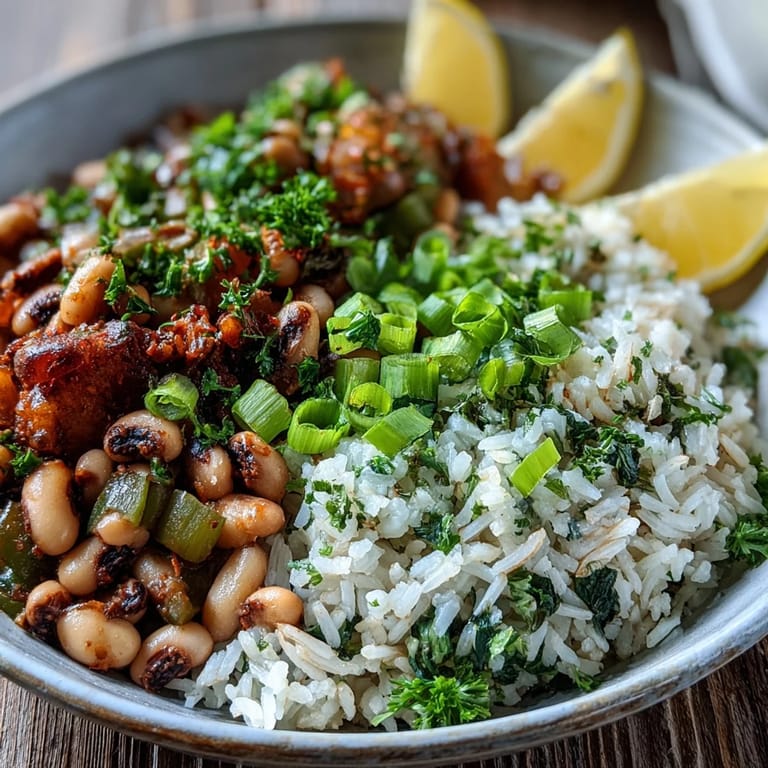
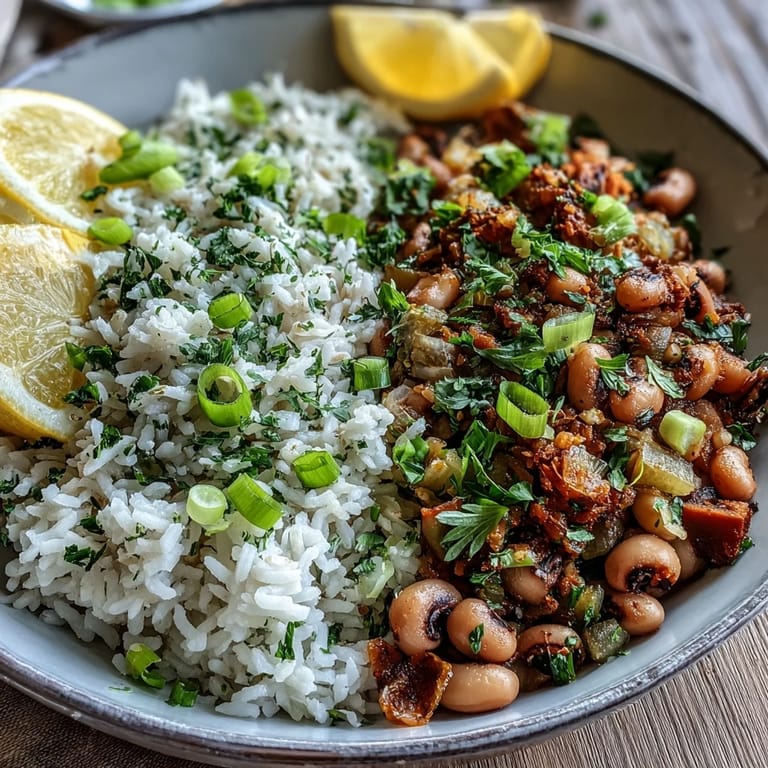
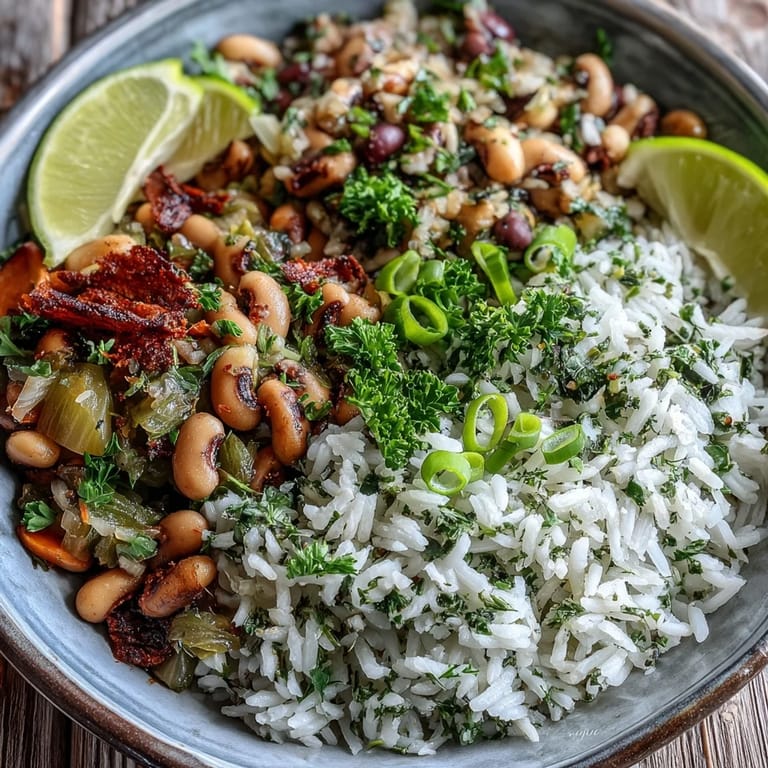
- Spoon the Hoppin John over warm cooked rice, then shower it with fresh parsley or cilantro, sliced green onions, and a squeeze of lemon if you're using it. The brightness makes all the difference.
 Save
Save There's something about cooking a recipe that's supposed to honor tradition but making it entirely your own that feels like you're in on a secret. This version of Hoppin John taught me that vegetarian cooking isn't about replacing something, it's about building flavors from the ground up in a way that stands completely on its own merit.
Why This Works Without Meat
The magic here comes from layering your flavors instead of relying on one main component to carry the dish. Smoked paprika gives you that deep, savory smokiness, the bay leaves add subtle bitterness, the cumin brings earthiness, and the soy sauce hits you with umami that makes your brain think something richer is happening. When you combine all of that with the natural creaminess of black-eyed peas and the sweetness of bell pepper, you end up with something complex enough that nobody notices or cares that there's no meat involved.
Make It Your Own
I've made this recipe a dozen different ways depending on what's in my pantry and what I'm craving. Sometimes I add a splash of liquid smoke if I'm feeling extra, other times I swap the cayenne for smoked chipotle powder and suddenly it's got a different personality altogether. Some people in my kitchen have swapped black-eyed peas for pinto beans or kidney beans and it's still delicious, just a slightly different texture and earthiness.
Serving Suggestions and Storage
This dish is best served warm over rice with fresh herbs piled on top and lemon ready to squeeze, but honestly it's even better the next day when everything has gotten to know each other in the fridge overnight. Leftovers reheat beautifully on the stovetop with a splash of water if needed, and they keep for about four days covered in the fridge. If you want to make it feel like a full meal, serve it alongside collard greens, hot sauce on the side for people to customize their own heat level, and maybe some cornbread if you're feeling generous.
- Make a big batch and freeze half in containers for future you to thank present you.
- Serve it with different toppings for different people, since some folks like lots of lemon and herbs while others want hot sauce.
- Leftovers get even more flavorful as they sit, so don't hesitate to make this a day ahead if you're cooking for guests.
 Save
Save This is the kind of food that brings people together without anyone thinking about what's missing from the plate. It's warm, it's filling, and it tastes like someone who knows what they're doing made it for you.
Recipe Questions & Answers
- → What makes this dish authentically Southern?
The combination of black-eyed peas with the holy trinity of Southern cooking—onion, bell pepper, and celery—along with traditional spices like smoked paprika and bay leaves creates that authentic Southern flavor profile. The simmering method allows these ingredients to meld together into the rich, comforting dish that's been a staple in Southern kitchens for generations.
- → Can I make this ahead of time?
Absolutely. The flavors actually develop and deepen when made ahead, making it perfect for meal prep. Store the pea mixture separately from the rice in airtight containers in the refrigerator for up to 4 days. Reheat gently on the stove, adding a splash of water or broth if needed to loosen the consistency.
- → What rice works best?
Long-grain white rice creates the traditional fluffy texture, but brown rice adds nutty flavor and extra fiber. Just adjust cooking time accordingly—brown rice takes longer to cook. For the most authentic experience, use Carolina Gold rice if you can find it, as it's the traditional rice used in Southern cuisine.
- → How do I add more smoky flavor?
Beyond the smoked paprika called for in this dish, you can add a few drops of liquid smoke during simmering, or substitute chipotle powder for some or all of the cayenne. Some cooks also like to add a smoked sea salt at the end for an extra layer of smokiness without additional heat.
- → What should I serve alongside?
Collard greens or mustard greens braised with vinegar make a classic pairing. Cornbread, skillet corn, or okra are also traditional Southern sides. For a lighter touch, a simple green salad with vinaigrette balances the hearty richness. Hot sauce on the table lets everyone customize their preferred heat level.
- → Is this freezer-friendly?
Yes, both the pea mixture and cooked rice freeze well. Portion into freezer-safe containers, leaving some space for expansion. The pea mixture will keep for up to 3 months, while rice is best used within 1 month for optimal texture. Thaw overnight in the refrigerator and reheat on the stove with a splash of liquid to refresh the consistency.