 Save
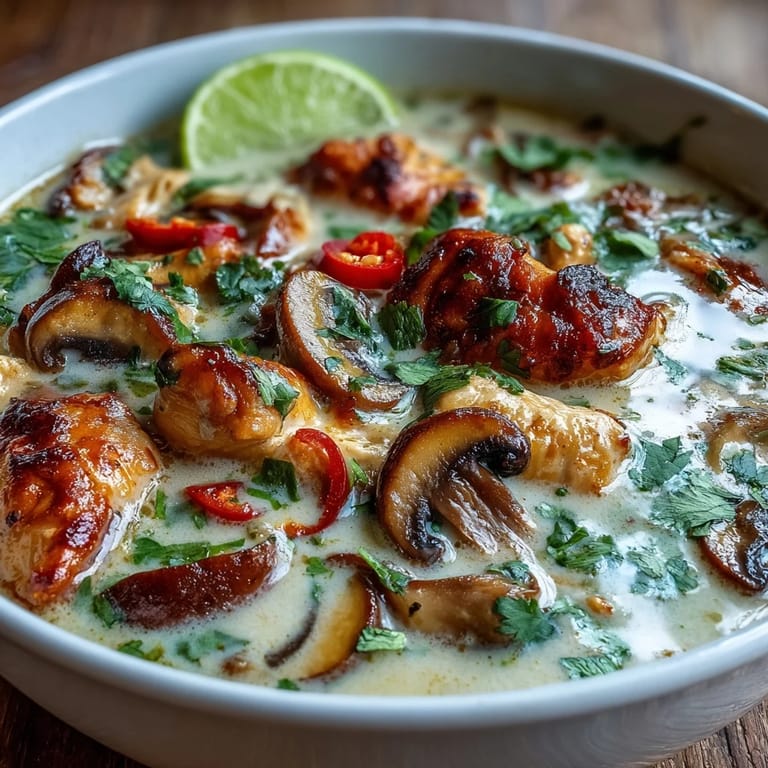
Save The scent of lemongrass and ginger filled my kitchen on a rainy Tuesday when I first attempted this Thai Coconut Curry Soup. Outside my window, raindrops tapped against glass while inside, steam billowed from my pot, creating a tropical microclimate that transported me from dreary Seattle to the bustling streets of Bangkok. The recipe came from a cooking class I took after returning from Thailand, where the instructor insisted that good curry should dance on your tongue—spicy, sweet, sour, and savory all at once. Her wisdom changed how I approached Asian cooking forever.
Last winter, when my cousin was recovering from surgery, I packed this soup into mason jars and delivered it to her doorstep. She texted me later saying she actually cried after the first spoonful, not from the gentle heat of the chili, but because it was the first thing that had tasted good to her in weeks. Food has this incredible power to heal, to comfort, to connect us when we need it most.
Ingredients
- Red curry paste: The heart and soul of this soup, offering complexity without hours of grinding individual spices—I learned that different brands vary wildly in heat level, so start conservatively and adjust upward.
- Coconut milk: Please use full-fat here, as the lighter versions tend to separate when simmered and lack that velvety richness that makes this soup special.
- Chicken thighs: Their higher fat content compared to breast meat means they stay juicy and tender even when reheated, making this soup excellent for leftovers.
- Lemongrass: This fibrous stalk releases its citrusy perfume gradually, but remember to bruise it first by pressing with the flat side of your knife to release those fragrant oils.
- Fish sauce: Though it smells pungent in the bottle, it transforms magically when cooked, adding that elusive umami depth that makes Thai food so satisfying.
Tired of Takeout? 🥡
Get 10 meals you can make faster than delivery arrives. Seriously.
One email. No spam. Unsubscribe anytime.
Instructions
- Build your aromatic base:
- Heat a tablespoon of oil in your pot and add the onions, garlic, and ginger, letting them sizzle gently until the kitchen fills with their sweet fragrance. This foundation layer is where the magic begins, so give them a full 2-3 minutes to soften and release their flavors.
- Wake up your curry paste:
- Stir in that vibrant red curry paste and let it cook briefly—you should notice the aroma intensify as the heat activates all those complex spices. The oil might take on a beautiful reddish hue, which is exactly what you want.
- Brown the chicken:
- Add your chicken pieces and stir to coat them in that fragrant curry mixture. The meat doesnt need to cook through yet, just get a bit of color and flavor from that spice paste.
- Create your brothy canvas:
- Pour in your chicken stock, bringing everything to a gentle simmer before adding the vegetables, lemongrass, and lime leaves. The liquid should be bubbling just enough to coax flavor from all those ingredients but not so vigorously that it toughens the meat.
- Let the rice work its magic:
- Add the jasmine rice and let it simmer uncovered, absorbing flavors while simultaneously thickening the soup. Youll notice the rice grains plump up and the broth becoming slightly more substantial.
- Enrich with coconut:
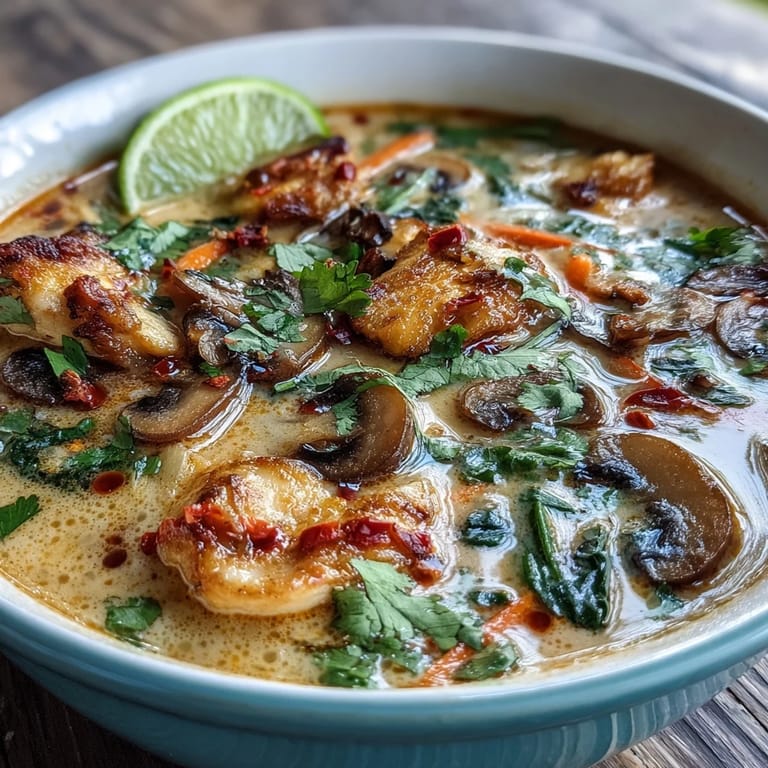
- Stir in the coconut milk along with fish sauce and sugar, creating that signature Thai balance of creamy, salty, and sweet. The soup will lighten in color, taking on a beautiful golden-orange hue that promises comfort.
- Balance the flavors:
- Remove those aromatic lemongrass pieces and lime leaves before finishing with fresh lime juice. Taste and adjust here—this is where you personalize the soup to your preference, adding more fish sauce for salt, lime for brightness, or even a touch more curry paste for heat.
- Garnish generously:
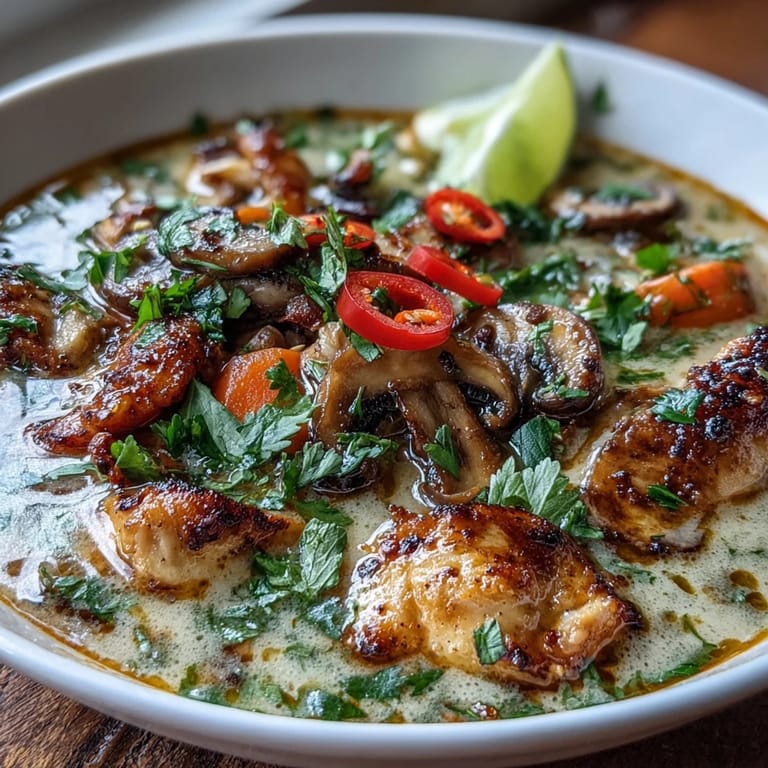
- Ladle into bowls and top with fresh herbs and lime wedges for squeezing. The cilantro adds a fresh counterpoint to the rich soup, while optional chili slices offer customizable heat.
 Save
Save During graduate school finals week, I invited five stressed classmates over for an impromptu dinner, serving this soup with extra rice on the side and cold beer. The conversation started as academic shop talk but gradually shifted to childhood stories, future dreams, and belly laughs as the warmth of the curry worked its magic. Years later, one friend still mentions that evening as the moment our group became more than just study partners.
Make It Your Own
One weekend when snow unexpectedly trapped us at home with limited groceries, I discovered how flexible this recipe truly is. No chicken? I used frozen shrimp added in the final minutes. Missing lemongrass? A strip of lime zest provided a reasonable substitute. When the power flickered threateningly, I even finished a partially cooked batch using a camping stove on the porch, the steam rising dramatically against the snowy backdrop.
Serving Suggestions
Though perfect on its own, this soup transforms into a feast when paired thoughtfully. My family loves when I serve it alongside a simple cucumber salad dressed with rice vinegar and sesame oil—the cool crunch perfectly complements the soupy warmth. For guests, I sometimes add crispy wonton strips as a textural garnish, watching with satisfaction as they catch bits of them with each spoonful.
Storage and Leftovers
The flavor development that happens overnight in the refrigerator borders on culinary alchemy—somehow the spices mellow yet deepen, the coconut becomes more integrated, and the entire soup tastes more harmonious. When reheating, I found that gentle stovetop warming preserves the texture better than microwaving, which can make the chicken rubbery. For freezing portions, I learned to slightly undercook the vegetables so they dont turn mushy during the second heating.
- Store leftover soup in airtight containers in the refrigerator for up to 3 days, but expect the rice to continue absorbing liquid, thickening the soup substantially.
- When freezing, leave about an inch of headspace in your container as the soup will expand slightly as it freezes.
- Consider freezing the base without rice and adding freshly cooked rice when reheating if texture is particularly important to you.
 Save
Save This soup has traveled with me through seasons of life—from hurried weeknights to leisurely weekend gatherings, from solo comfort meals to celebrations with friends. Each time I make it, the familiar scents rising from the pot remind me that good food is about more than just sustenance—its about creating moments that nourish body and spirit alike.
Recipe Questions & Answers
- → Can I make this soup ahead of time?
Yes, this soup actually tastes better the next day as flavors have time to meld. Store in an airtight container in the refrigerator for up to 3 days. Reheat gently on the stove, adding a splash of coconut milk if needed to restore creaminess.
- → What can I substitute for fish sauce?
For a vegetarian version, replace fish sauce with soy sauce or tamari. You can also use coconut aminos for a soy-free option. The flavor profile will shift slightly but remain delicious.
- → Is red curry paste very spicy?
Red curry paste provides moderate heat. Start with 2 tablespoons and taste before adding more. The coconut milk helps temper the spice level, making it approachable for most palates while still delivering authentic Thai flavors.
- → Can I use brown rice instead of jasmine?
Brown rice works but requires longer cooking time. Add it 10 minutes before the vegetables and chicken, or cook separately and stir in at the end. Jasmine rice is traditional for its delicate aroma that complements the coconut broth.
- → What protein alternatives work well?
Shrimp cooks quickly—add during the last 5 minutes. Firm tofu cubes absorb the curry beautifully. For a vegetarian version, combine tofu with extra vegetables like baby corn, bell peppers, or snow peas.
- → How do I store leftovers?
Cool completely and refrigerate in a sealed container for up to 3 days. The rice will absorb some liquid, so add more broth or water when reheating. Freeze without rice for up to 2 months for best texture.