 Save
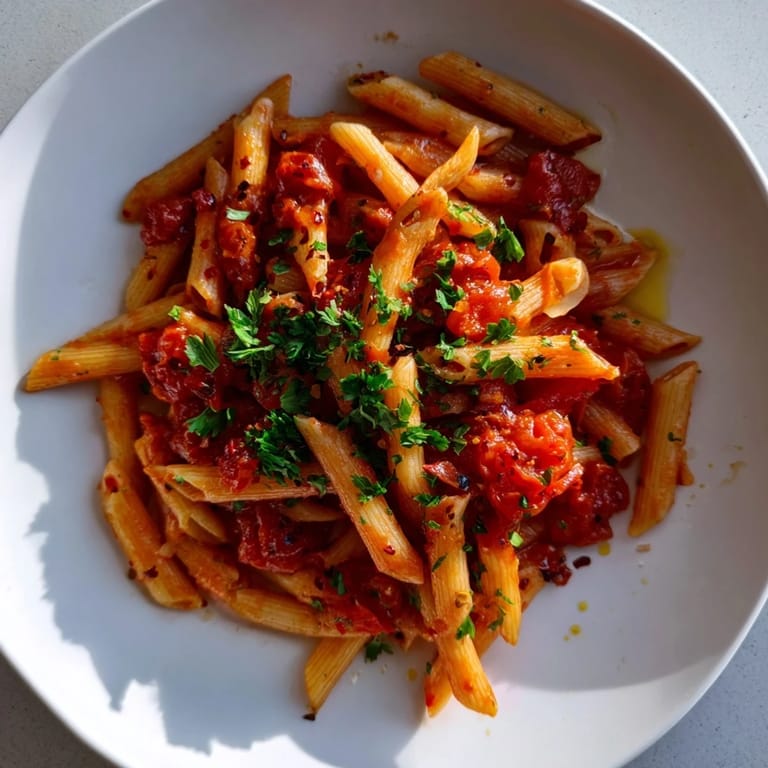
Save There's something about standing over a skillet while garlic and chili flakes crackle in olive oil that pulls me back to a tiny Roman apartment where I watched my neighbor make this dish without measuring anything. She'd slice garlic so thin it almost fell apart, toss it into shimmering oil with the kind of confidence that comes from making the same thing a thousand times, and somehow a handful of tomato cans became liquid velvet. I've never forgotten the smell or the way she'd taste the sauce on a wooden spoon, eyes half-closed, deciding if it needed more heat. This recipe is my attempt to capture that exact moment.
I made this for friends who showed up unannounced on a Thursday evening, and I watched their faces change when they took the first bite. One of them kept saying, "But where's the cream?" because she'd only ever had it smothered in heavy sauce. That's when I realized this dish doesn't need anything except what's already there—the tomatoes speaking for themselves, the chili doing its work quietly in the background.
Ingredients
- Penne rigate: The ridges catch the sauce in little pockets, and that texture matters more than you'd think—smooth pasta slides right off.
- Extra virgin olive oil: Don't skimp here; this is one of the three main flavors in the entire dish, so use something you'd actually drink.
- Garlic cloves: Slice them thin and watch them carefully because the difference between fragrant and burnt is about 30 seconds of attention.
- Red chili flakes: Start with less than you think and taste as you go, because they intensify as the sauce sits.
- Whole peeled tomatoes: Crush them by hand into the pan rather than using a blender; the texture stays brighter and fresher.
- Sea salt and black pepper: These aren't afterthoughts—taste and adjust, especially the pepper, which adds its own warmth.
- Fresh flat-leaf parsley: Added at the very end so it stays vivid and green rather than turning muddy and cooked.
Tired of Takeout? 🥡
Get 10 meals you can make faster than delivery arrives. Seriously.
One email. No spam. Unsubscribe anytime.
Instructions
- Start the pasta water:
- Fill a large pot about three-quarters full with water and salt it generously—it should taste like the sea. Bring it to a rolling boil so the pasta will cook quickly and evenly.
- Build the sauce base:
- While the water heats, pour olive oil into a large skillet over medium heat. The moment it shimmers and moves when you tilt the pan, add your garlic slices and chili flakes together.
- Toast the aromatics gently:
- Listen for a faint sizzle and watch the garlic turn golden at the very edges—this takes about one minute. You're coaxing out flavor, not browning it into bitterness.
- Add the tomatoes:
- Pour in your crushed tomatoes with their juices, salt, and pepper. The sauce will bubble and splatter slightly, so be ready with a wooden spoon to stir it down.
- Let it simmer:
- Reduce heat to medium-low and let the sauce bubble gently for 12 to 15 minutes, stirring every few minutes. You'll see it deepen in color and thicken slightly as the water reduces and the flavors marry.
- Cook the pasta:
- Once your pasta water is boiling, add the penne and stir immediately so it doesn't stick together. Cook until al dente—you want it to have a tiny bit of resistance when you bite it.
- Combine pasta and sauce:
- Drain the pasta, reserving a coffee mug of starchy water. Add the hot pasta directly to the sauce and toss everything together, adding splashes of reserved water until the sauce coats every piece evenly.
- Finish with brightness:
- Remove from heat, stir in your fresh parsley, and drizzle the whole thing with a generous glug of your best olive oil. Taste once more and adjust the salt and heat if needed.
 Save
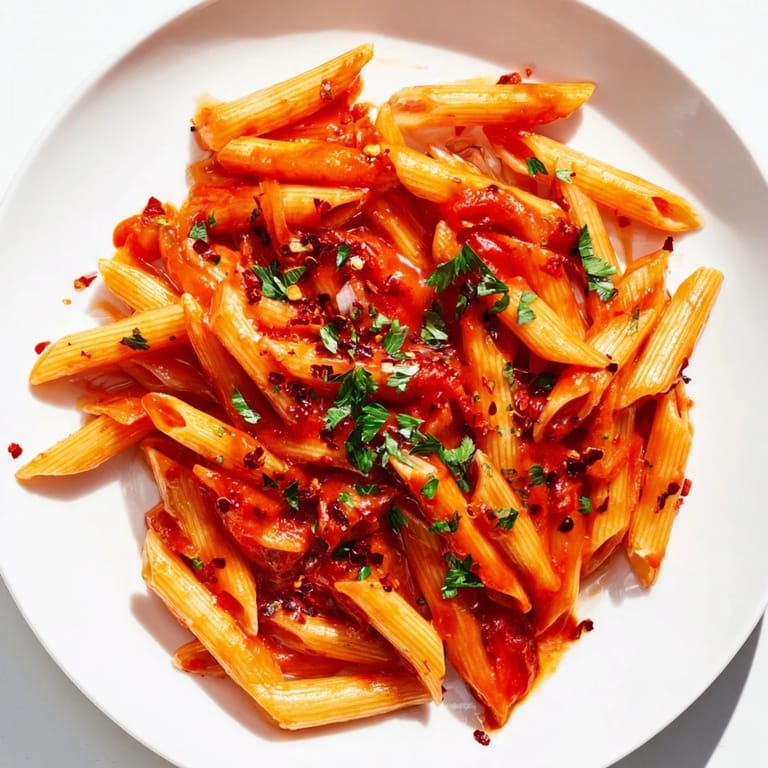
Save My best moment with this dish happened when my mother tasted it and asked for the recipe, then admitted she'd been intimidated by Italian cooking her whole life. I realized then that arrabbiata isn't fancy or mysterious—it's just the opposite. It's stripped down to its bones, which is why it asks you to care about the quality of each single thing you put into the pan.
About the Heat
The chili flakes are the soul of this dish, but they're not there to shock you into silence. They build warmth gradually and let you taste everything else first. If you're sensitive to spice, add half a teaspoon and taste after the first simmer, knowing you can always add more. If you love heat, go bold but remember that chili flakes intensify as they sit in the warm sauce, so what feels right at the stove might be fierce by the time you eat. This isn't a contest—it's about finding the heat level that makes you happy.
Choosing Your Tomatoes
I've made this with San Marzano tomatoes, generic canned varieties, and once with tomatoes I'd grown myself and frozen in August. The dish adapts gracefully because tomatoes are the main event, so grab whatever looks good at your store. Whole peeled tomatoes are essential though; crushed or puréed tomatoes create a different, heavier texture. Buy from a brand you trust, or better yet, keep a few different cans on hand and taste them side by side next time you're at the market—you'll develop your own preference within two tries.
Serving and Pairing
This pasta sings alongside crisp white wine like Verdicchio or a light red like Chianti, but honestly it's perfect with just cold water and good bread to soak up the sauce. Some people sprinkle Parmesan over the top despite its Roman roots, and I won't judge you for it, though you'll taste the dish more clearly without it. Serve it family-style in a big bowl so everyone can add parsley and olive oil to their own plate, and watch how they customize it to their taste.
- Save any leftover pasta water for soup the next day—it adds silky body to broth.
- Leftovers keep for three days and taste even better as the flavors deepen, though the pasta will absorb sauce and become softer.
- This dish demands attention while cooking but stays simple enough that you're never more than a few minutes away from dinner.
 Save
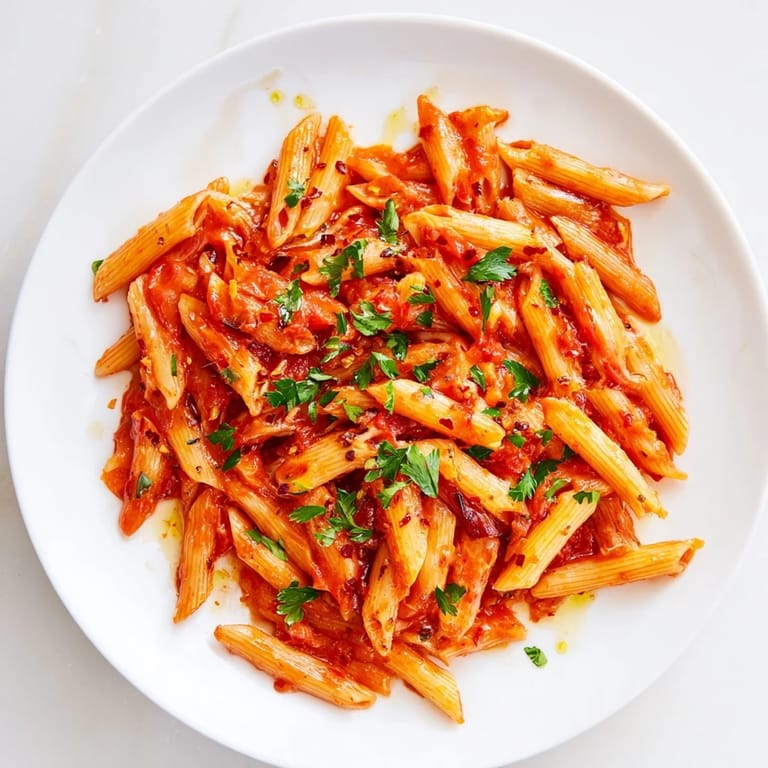
Save This is the recipe I reach for when I want to feel like I'm cooking something real, something that doesn't ask for excuses or shortcuts. It's proof that simplicity, when done with intention, becomes something people remember.
Recipe Questions & Answers
- → How can I adjust the spice level in this dish?
Modify the amount of red chili flakes used. Reduce them for a milder taste or increase for more heat, balancing according to your preference.
- → What type of pasta works best for this preparation?
Penne rigate is ideal as its ridges hold the sauce well, but other tubular pasta like rigatoni or ziti can also be used.
- → Can I use canned tomatoes for the sauce?
Yes, crushed peeled whole tomatoes from cans work perfectly, providing a fresh and natural tomato base for the sauce.
- → Why add reserved pasta water to the sauce?
Pasta water contains starch that helps loosen and bind the sauce, ensuring it coats the pasta evenly and adds smoothness.
- → What garnishes complement this dish?
Freshly chopped flat-leaf parsley and a drizzle of extra virgin olive oil brighten the flavors and add a fresh finish.