 Save
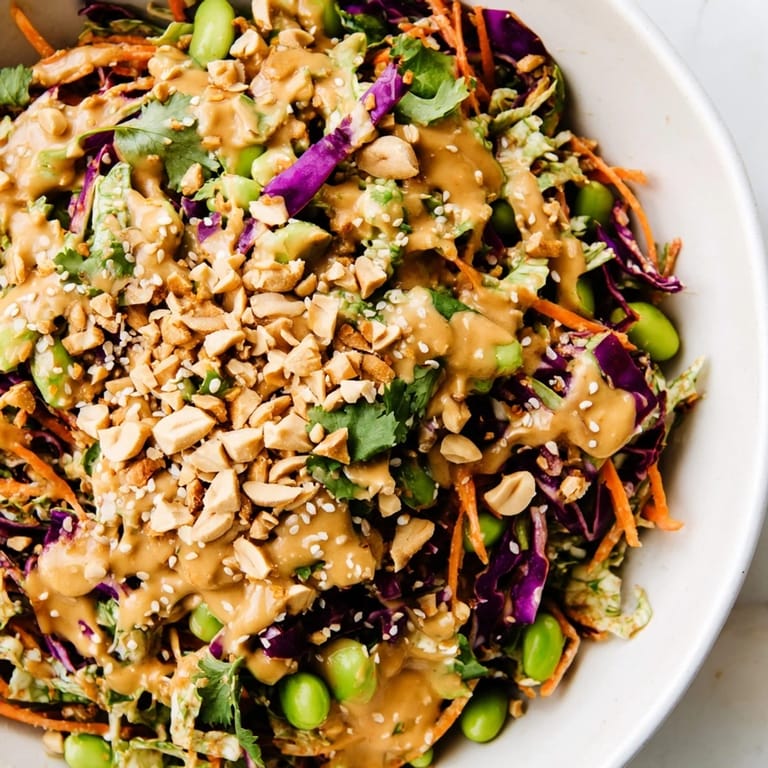
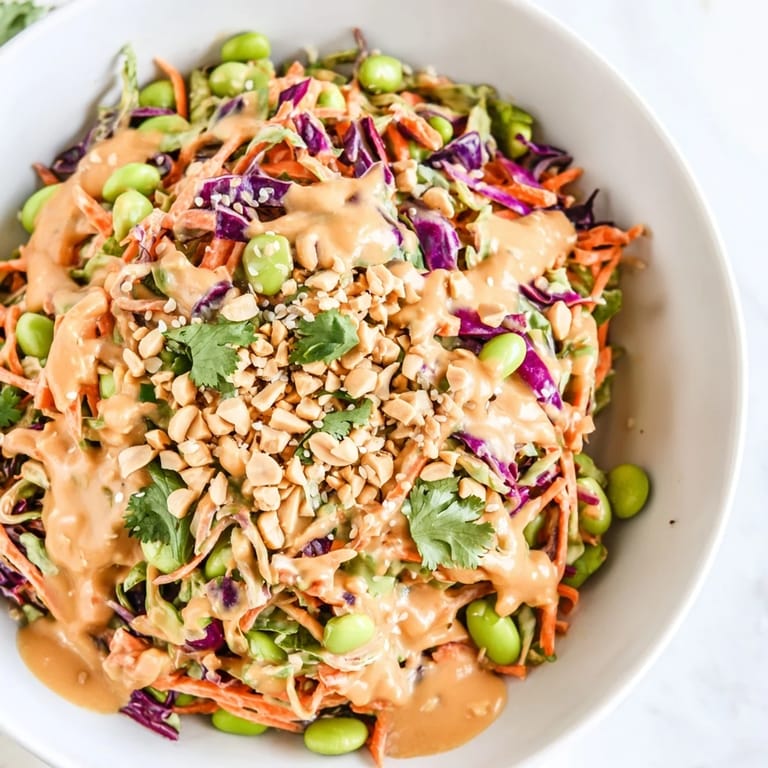
Save The crunch hit me first, loud and satisfying in a quiet kitchen on a Tuesday night when I had zero patience for complicated cooking. I had dumped half my crisper drawer into a bowl, whisked together whatever I had in the pantry, and somehow ended up with the kind of salad that made me forget I was eating vegetables. The peanut dressing clung to every shred of cabbage like it belonged there, and I ate standing at the counter, fork in hand, wondering why I had ever bothered with sad desk lunches.
I brought this to a potluck once, skeptical that anyone would get excited about salad when there were casseroles and desserts competing for attention. But the bowl came back empty, and three people asked for the recipe before I had even finished my own plate. One friend admitted she ate it straight from the fridge the next morning, standing in her pajamas, which felt like the highest compliment a salad could ever receive.
Ingredients
- Shredded green cabbage: The backbone of the crunch, it holds up to the dressing without wilting into sad mush, and you can buy it pre-shredded if your knife skills are feeling lazy.
- Shredded purple cabbage: Adds a pop of color that makes the whole bowl look like you tried harder than you did, plus a slightly peppery bite that balances the sweetness.
- Shredded carrots: Sweet, bright, and forgiving if you grate them unevenly, they soak up the dressing and add a softer texture against all that cabbage.
- Shelled edamame: These little green gems bring protein and a buttery richness that turns the salad from side dish to something more substantial.
- Red bell pepper: Slice it thin so it folds into the mix without overpowering, and it adds a juicy crunch that wakes up every bite.
- Scallions: A sharp, oniony punch that does not linger too long, and they look pretty scattered on top if you save a few for garnish.
- Fresh cilantro: Controversial, I know, but it adds a brightness that ties the whole thing together, and you can leave it out if you are one of those people who tastes soap.
- Creamy peanut butter: The heart of the dressing, it needs to be the kind that stirs easily and does not separate into oil and sadness at the bottom of the jar.
- Soy sauce or tamari: Salty, umami-rich, and the reason the dressing tastes like more than just peanut butter, use tamari if gluten is a concern.
- Rice vinegar: Milder than other vinegars, it adds tang without making your face pucker, and it plays nicely with the lime.
- Lime juice: Freshly squeezed is worth the effort, it brings a brightness that bottled lime juice just cannot match.
- Maple syrup or honey: A little sweetness to balance the salt and tang, and it helps the dressing cling to the vegetables instead of pooling at the bottom.
- Toasted sesame oil: Just a teaspoon, but it adds a nutty depth that makes the dressing taste like you know what you are doing.
- Fresh ginger: Grate it fine so it melts into the dressing, and it adds a warm, spicy note that cuts through the richness.
- Garlic: One clove is enough to add savory depth without turning the dressing into something you need a mint after eating.
- Roasted peanuts: Roughly chopped so they scatter unevenly and give you surprise bursts of crunch and salt.
- Toasted sesame seeds: Optional, but they add a nutty finish and make the whole thing look a little more elegant than it actually is.
Tired of Takeout? 🥡
Get 10 meals you can make faster than delivery arrives. Seriously.
One email. No spam. Unsubscribe anytime.
Instructions
- Prep the vegetables:
- Toss the green cabbage, purple cabbage, carrots, edamame, bell pepper, scallions, and cilantro into a large bowl, mixing them with your hands so everything gets evenly distributed. The colors should look like a farmers market exploded in the best possible way.
- Make the peanut dressing:
- Whisk together the peanut butter, soy sauce, rice vinegar, lime juice, maple syrup, sesame oil, ginger, and garlic in a smaller bowl, then add water a tablespoon at a time until it is smooth and pourable but still thick enough to cling. Taste it and adjust the lime or sweetness if it needs help.
- Toss everything together:
- Pour the dressing over the vegetables and toss with tongs or your hands until every shred is coated and glossy. Do not be shy, this salad can handle a good toss.
- Add the toppings:
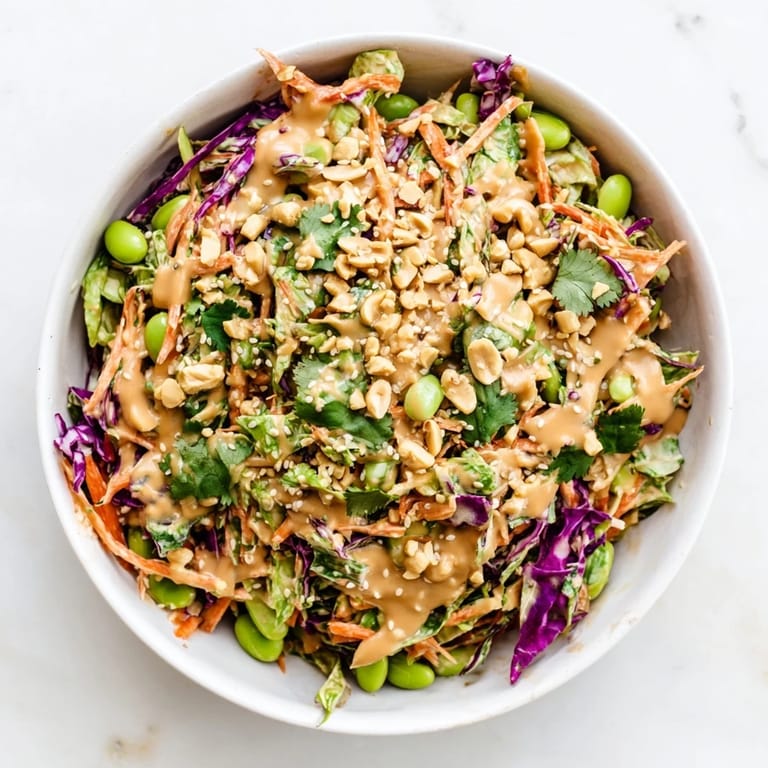
- Transfer to a serving platter or individual bowls, then scatter the chopped peanuts and sesame seeds over the top. Tuck a few lime wedges on the side so people can add extra brightness if they want it.
- Serve immediately:
- This salad is at its best right after tossing, when everything is still crisp and the dressing has not had time to settle. If you need to wait, keep the dressing separate until the last minute.
 Save
Save I made this on a night when I needed something that felt like taking care of myself without a lot of fuss, and it delivered in a way that surprised me. The colors, the crunch, the way the dressing tasted like something I would order at a restaurant, it all added up to more than the sum of its parts. I sat down with a big bowl and felt like I had done something right, even if the rest of the day had been a mess.
How to Store and Serve Leftovers
Leftovers will keep in the fridge for up to two days, though the cabbage will soften and the dressing will settle to the bottom, so give it a good stir before eating. I have eaten this cold straight from the container and it still tastes good, but if you want to revive the crunch, toss in a handful of fresh cabbage or bell pepper. If you know you will have leftovers, store the dressed salad separately from any extra toppings so the peanuts do not get soggy.
Ways to Make It Your Own
This salad is forgiving and adaptable, so if you are missing an ingredient or want to use what you have, go for it. I have swapped in snap peas, cucumber, shredded kale, and even thinly sliced radishes depending on what was in the fridge, and it always worked. For protein, grilled tofu, shredded chicken, or even a soft-boiled egg on top turns this into a full meal. If peanuts are not your thing or you have an allergy, almond butter or sunflower seed butter work just as well in the dressing.
What to Serve Alongside
This salad plays well with almost anything grilled or roasted, and I have served it next to chicken skewers, seared salmon, and even plain rice when I wanted something light but satisfying. It also works as a standalone lunch if you add a protein and maybe a piece of crusty bread on the side. On hot nights, I have made just this and called it dinner, and no one complained.
- Pair it with spring rolls or dumplings for a full Thai-inspired spread.
- Serve it alongside grilled shrimp or steak if you want something heartier.
- It is also great at barbecues where you need a side that is not mayo-based and will not wilt in the sun.
 Save
Save This salad has become one of those recipes I make without thinking, the kind that feels like muscle memory and always delivers. I hope it becomes that for you too, something easy and bright that you reach for when you want to feel good about what you are eating.
Recipe Questions & Answers
- → Can I make this salad ahead of time?
Yes, you can prep the vegetables and dressing separately in advance. Store them in separate containers in the refrigerator for up to 2 days. Toss together just before serving to maintain maximum crunchiness.
- → What can I substitute for peanut butter?
Almond butter, sunflower butter, or tahini work wonderfully as substitutes. Each brings a slightly different flavor profile while maintaining the creamy dressing consistency. Adjust water content as needed for desired thickness.
- → How do I add more protein to this salad?
Top with grilled tofu, shredded rotisserie chicken, or crispy chickpeas for added protein. Edamame already provides good plant-based protein, making this naturally protein-rich for a vegetarian option.
- → Is this salad gluten-free?
Yes, when using tamari instead of regular soy sauce. Always check ingredient labels for potential gluten cross-contamination, especially with peanut butter and sesame seeds.
- → What vegetables can I add or swap?
Snap peas, cucumber, shredded zucchini, or broccoli slaw add great texture. Swap purple cabbage for regular, or add shredded beets for earthiness. Feel free to customize based on personal preferences and seasonal availability.
- → How thick should the peanut dressing be?
The dressing should be pourable but coat vegetables well. Start with less water and add gradually until reaching desired consistency. It will thicken slightly as it sits, so aim for a medium thickness initially.