 Save
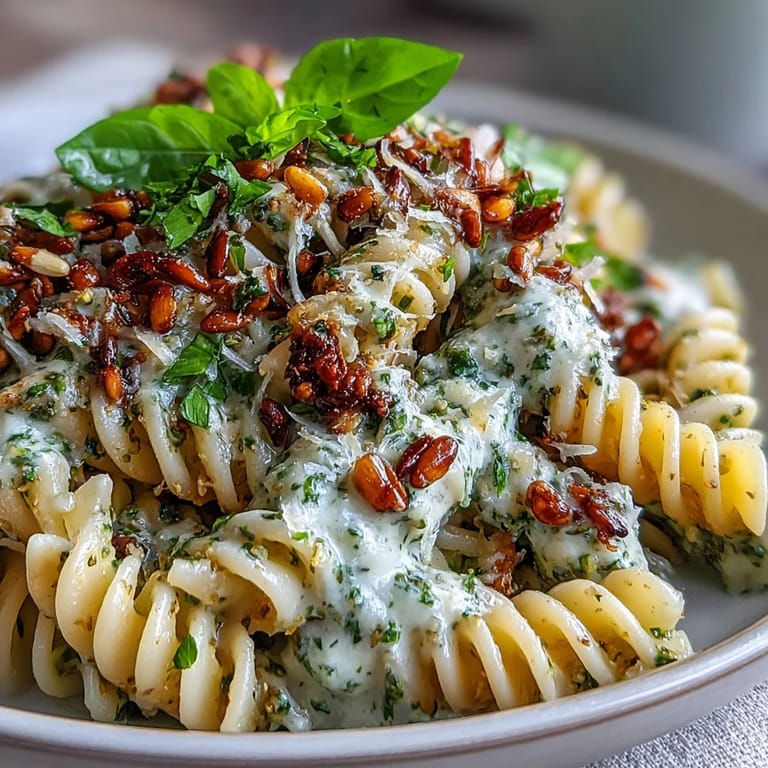
Save There's something quietly rebellious about making pesto without pine nuts. Years ago, I was standing in my tiny kitchen on a Tuesday evening, staring at a half-empty jar of basil and wondering how to stretch my grocery budget further when I spotted a bag of sunflower seeds in the cupboard. What started as improvisation turned into something I now crave regularly, and honestly, I've never looked back. The sunflower seeds bring an earthier, almost nutty depth that feels more grounded than the traditional version, and somehow the dish tastes less pretentious and more like home.
My neighbor knocked on the door one rainy afternoon while I was testing this recipe, drawn in by the smell of toasted seeds and fresh basil escaping under the door frame. She stayed for dinner, and I watched her face as she twirled that first forkful, surprised by how creamy and full it felt. She asked for the recipe before her plate was even empty, and I remember thinking that's when I knew this one was a keeper.
Ingredients
- Unsalted sunflower seeds: Toast them yourself rather than buying pre-roasted, as this gives you control over the depth of flavor and keeps them fresher.
- Fresh basil leaves, packed: Use the tender leaves near the top of the plant when you can; they blend smoother and taste brighter than the tougher outer leaves.
- Garlic: Two cloves keeps the pesto vibrant without overwhelming everything else, but taste as you go if garlic is your love language.
- Grated Parmesan cheese: Freshly grated makes a real difference in texture and melt; pre-grated versions have anti-caking agents that won't blend as smoothly.
- Extra virgin olive oil: This is worth buying decent quality since it's a starring ingredient, not a supporting actor.
- Water and lemon juice: The water thins the sauce to silkiness, while lemon juice brightens everything and prevents the pesto from tasting flat.
- Dried pasta: Any shape works, though I prefer penne or fusilli because the sauce clings better than with smooth spaghetti.
- Heavy cream or plant-based cream: This transforms the pesto into something luxuriously coating rather than a thick paste that clings unevenly.
Tired of Takeout? 🥡
Get 10 meals you can make faster than delivery arrives. Seriously.
One email. No spam. Unsubscribe anytime.
Instructions
- Get the pasta water ready:
- Bring a large pot of salted water to a rolling boil and add your pasta, cooking it until it's just tender but still has a slight resistance when you bite it. Before draining, scoop out about half a cup of that starchy water and set it aside; it's your secret weapon for making the sauce cling beautifully.
- Toast the sunflower seeds:
- While the pasta cooks, warm a dry skillet over medium heat and add your sunflower seeds, stirring occasionally for about 3 to 4 minutes until they turn golden and fill your kitchen with that toasty, almost caramel-like smell. Let them cool for a minute so they don't wilt your basil when you blend.
- Build the pesto:
- Put the cooled seeds into your food processor along with the basil, garlic, Parmesan, olive oil, lemon juice, salt, and pepper, then pulse until everything becomes a coarse, chunky paste. Add your water gradually while blending until the whole mixture loosens into something creamy and spreadable, scraping down the sides as you go.
- Bring it all together:
- Return your drained pasta to the pot over low heat, then pour in the pesto and cream, tossing everything gently and constantly so the sauce coats every piece evenly. Add that reserved pasta water bit by bit, letting it loosen the sauce to exactly the consistency you want—silky but not soup-like.
- Taste and adjust:
- This is the moment to trust your palate; a pinch more salt, a squeeze more lemon, or an extra grind of pepper can completely transform how the dish tastes. Serve it right away while the pasta is still warm and the basil flavor hasn't faded.
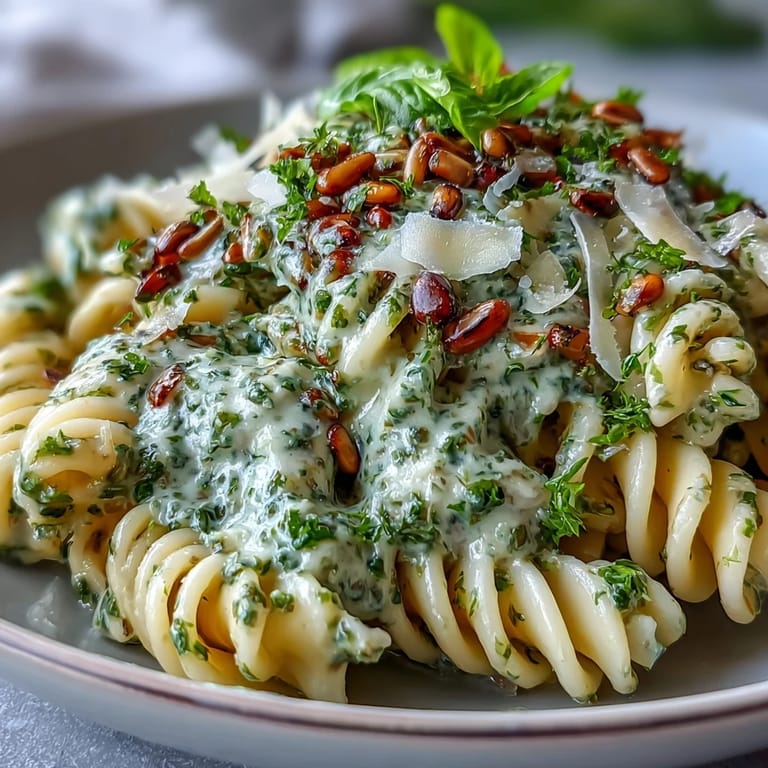 Save
Save There was one evening when I made this for my sister after a particularly long week she'd had, and she sat at my kitchen table without saying much at first, just eating quietly. Then she asked me to write it down, not just the recipe but also the story of how I discovered it, because she said she wanted to remember this feeling every time she made it. That's when I understood that food is never really just about the ingredients.
Why Sunflower Seeds Beat Pine Nuts
Pine nuts have always felt precious and a little precious, if you know what I mean, and that's part of their charm but also their limitation. Sunflower seeds are the people's nut, honestly; they're humble and accessible and they bring a warmth to pesto that feels more genuine somehow. Plus, they toast quickly and evenly, whereas pine nuts can go from barely done to burnt in the span of a breath, and I appreciate an ingredient that cooperates with me instead of playing games.
The Cream Factor
The cream is what stops this from being a sauce that separates and clings awkwardly to your pasta and turns it into something that feels like you're eating at a proper restaurant. It mellows the sharpness of the basil just enough and adds a silky mouthfeel that makes you want to keep twirling your fork until the bowl is completely clean. I've made it without cream when I was trying to eat lighter, and while it's still good, it's missing something essential.
Making It Your Own
Once you've made this a few times and it feels natural in your hands, start playing with it. Add roasted cherry tomatoes or fresh peas, scatter some crispy breadcrumbs on top, or finish it with a drizzle of truffle oil if you're feeling fancy. The foundation is solid enough to support whatever you want to add, and that's the mark of a truly good recipe.
- For a vegan version, swap the Parmesan for nutritional yeast and use cashew cream or oat cream instead of dairy.
- Make a double batch of the pesto and freeze it in ice cube trays so you have single servings ready for desperate weeknights.
- If the sauce seems too thick after a few hours, a splash of water or more pasta water will wake it right back up.
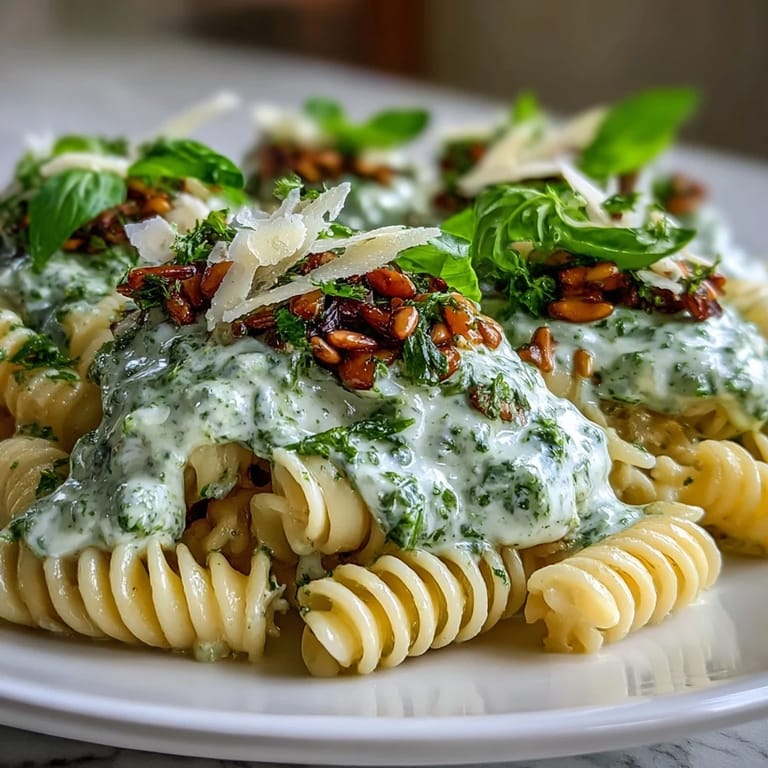 Save
Save This dish has quietly become one of my most-made recipes, the kind that lives in your hands and your muscle memory until you don't even need to think about it anymore. Make it once and I promise you'll find yourself craving it, then making it for people you care about, and then watching them ask how you made something so simple feel so indulgent.
Recipe Questions & Answers
- → Why use sunflower seeds instead of pine nuts?
Sunflower seeds are significantly more affordable than pine nuts while still providing a lovely nutty flavor and creamy texture when blended. They make this dish budget-friendly without sacrificing taste or satisfaction.
- → Can I make this dairy-free?
Absolutely. Replace the Parmesan with nutritional yeast and use unsweetened plant-based cream instead of heavy cream. The pesto will still be creamy and flavorful, just entirely dairy-free.
- → How long does the pesto keep?
Extra pesto stores beautifully in an airtight container in the refrigerator for up to one week. You can also freeze it in ice cube trays for up to three months, then thaw portions as needed for quick meals.
- → What pasta shapes work best?
The sauce coats any pasta beautifully. Try spaghetti for classic elegance, penne or fusilli to catch the sauce in ridges, or even short pasta like farfalle. Choose whatever shape your family enjoys most.
- → Can I add vegetables to this dish?
Yes, this pasta pairs wonderfully with vegetables. Try adding peas, spinach, or roasted cherry tomatoes. You can either stir them directly into the pasta or serve them alongside for a complete, colorful meal.
- → Do I really need to toast the sunflower seeds?
Toasting isn't strictly required, but it highly recommended. The dry heat brings out the seeds' natural oils and deepens their nutty flavor, making the final dish noticeably more aromatic and delicious.