 Save
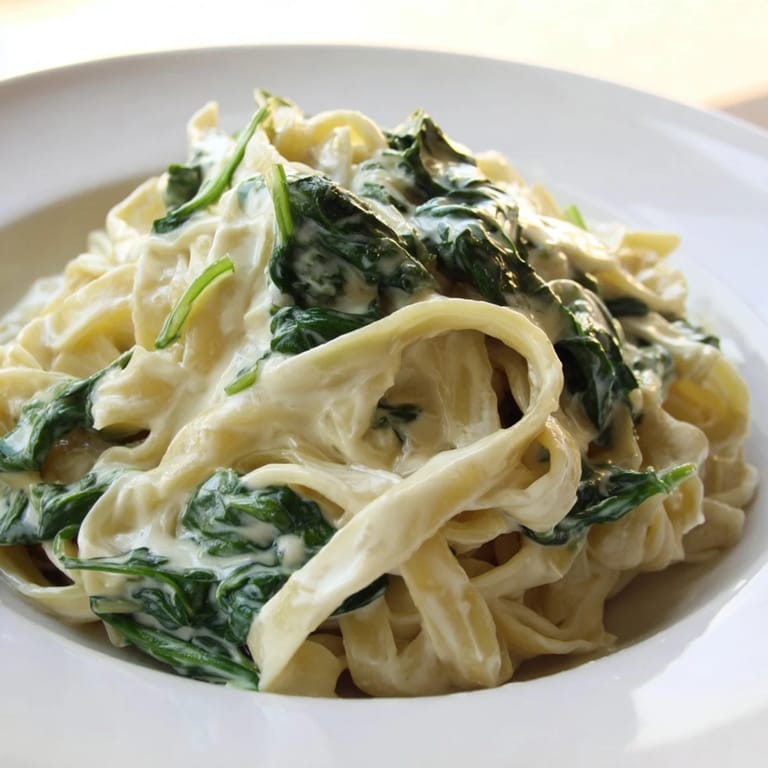
Save The kitchen was freezing that January evening, but the moment garlic hit the butter, everything changed. I was trying to salvage dinner after realizing I'd forgotten to defrost the chicken, so I stared into the fridge and spotted wilted spinach and a carton of cream about to expire. What came together in that skillet became the kind of meal I now crave on purpose, not by accident. It's been my emergency comfort ever since.
I made this for my sister the night before she moved across the country. We sat on the kitchen floor with our bowls because the table was already packed, twirling fettuccine and pretending the night wouldn't end. She still texts me every time she makes it in her new apartment. Some recipes hold more than flavor.
Ingredients
- Fettuccine: The wide, flat shape is perfect for catching all that creamy sauce, though any long pasta works if that's what you have on hand.
- Fresh baby spinach: It wilts down to almost nothing, so don't panic when you add what looks like a mountain of greens to the pan.
- Garlic: Mince it finely so it melts into the butter without burning, because burnt garlic turns the whole dish bitter.
- Yellow onion: A small one adds sweetness and depth without overpowering the garlic.
- Unsalted butter: Gives you control over the salt level and creates a silky base for the sauce.
- Heavy cream: This is what makes the sauce luscious and rich, coating every bite with creamy comfort.
- Parmesan cheese: Freshly grated melts smoothly and adds that nutty, salty punch you need.
- Cream cheese: Optional, but it thickens the sauce and makes it cling to the pasta even better.
- Salt, black pepper, and nutmeg: Simple seasonings that wake up the cream and make the spinach taste brighter.
- Fresh parsley or basil: A handful of herbs at the end makes the whole dish feel like you put in extra effort.
Tired of Takeout? 🥡
Get 10 meals you can make faster than delivery arrives. Seriously.
One email. No spam. Unsubscribe anytime.
Instructions
- Boil the pasta:
- Bring a big pot of salted water to a rolling boil and cook the fettuccine until it still has a little bite. Don't forget to save half a cup of that starchy pasta water before you drain it, because it's magic for loosening the sauce later.
- Sauté the aromatics:
- Melt the butter in a large skillet over medium heat, then add the chopped onion and let it soften for a few minutes until it turns translucent and sweet. Toss in the garlic and stir for about a minute until your kitchen smells incredible.
- Build the cream sauce:
- Pour in the heavy cream and let it come to a gentle simmer, then stir in the cream cheese if you're using it. Watch it melt into smooth, velvety pools.
- Add the cheese and seasonings:
- Stir in the Parmesan, salt, pepper, and a pinch of nutmeg, whisking until everything melts together into a glossy sauce. Taste it now, because this is your chance to adjust the seasoning.
- Wilt the spinach:
- Add all that spinach to the skillet and stir it around until it collapses into the sauce, which takes about two minutes. It'll look like way too much at first, then suddenly it's just right.
- Toss the pasta:
- Add the drained fettuccine to the skillet and toss everything together, using tongs to coat every strand. If the sauce feels too thick, add the reserved pasta water a splash at a time until it's silky and loose.
- Serve hot:
- Pile it into bowls and top with extra Parmesan and a scattering of fresh herbs. Eat it while it's steaming and the cheese is still melting.
 Save
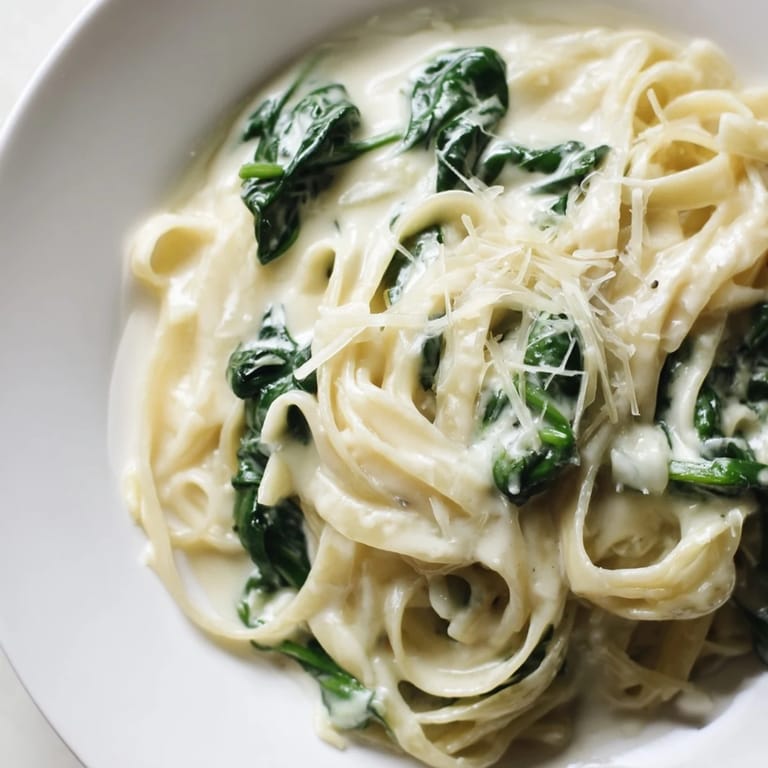
Save The first time I brought this to a potluck, someone asked if I'd ordered it from a restaurant. I just laughed and said it took less time than delivery. That's when I realized simple food, made with a little care, can feel like a gift.
Making It Your Own
This recipe is a canvas, not a rulebook. I've stirred in sautéed mushrooms when I needed something earthy, tossed in shredded rotisserie chicken when I wanted protein, and swapped in whole wheat pasta when I was pretending to be healthy. You can lighten it up with half and half instead of cream, or go the other direction and add a splash of white wine to the sauce. It adapts to whatever your fridge and your mood are offering.
Getting the Texture Right
The secret to a sauce that clings instead of pools at the bottom of the bowl is all about timing and pasta water. When you toss the fettuccine into the skillet, the sauce should look slightly too thick, because the residual heat will loosen it. If it tightens up too much, that reserved pasta water is your best friend. Add it a tablespoon at a time, tossing constantly, until the sauce becomes glossy and coats the noodles like silk. I learned this the hard way after serving a bowl of dry pasta with a puddle of cream underneath.
Storing and Reheating
Creamy pasta never reheats perfectly, but you can get close. Store leftovers in an airtight container in the fridge for up to three days. When you're ready to eat, reheat gently in a skillet over low heat, adding a splash of milk or cream to bring the sauce back to life. The microwave works in a pinch, but stir every thirty seconds and add a little liquid to keep it from drying out.
- Don't freeze this dish, the cream will separate and turn grainy when thawed.
- If the sauce breaks during reheating, whisk in a spoonful of cream cheese to bring it back together.
- Leftover pasta makes a surprisingly good cold lunch straight from the fridge if you're into that.
 Save
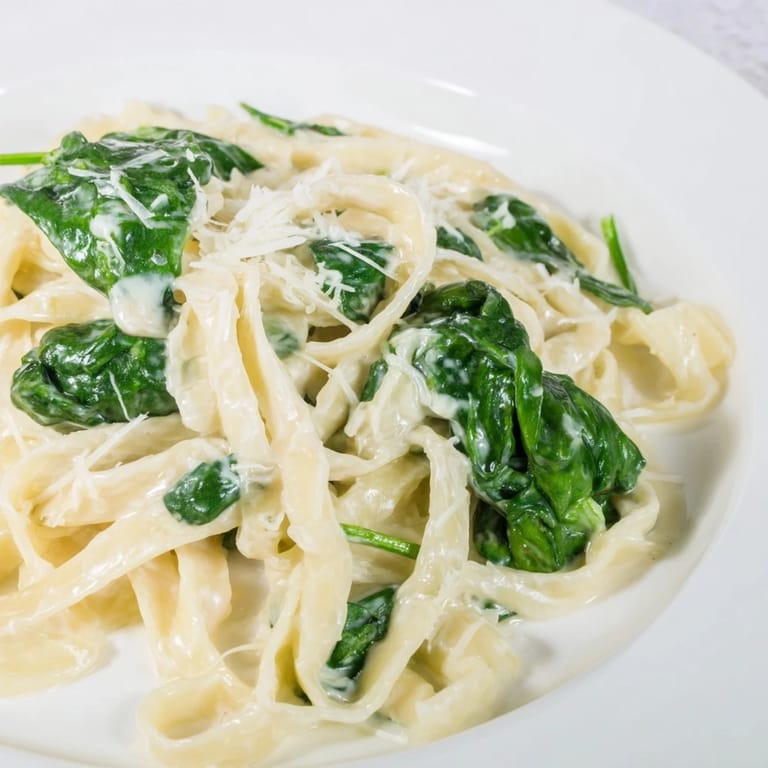
Save This is the kind of meal that feels like a small act of kindness to yourself after a long day. Make it once, and it'll become the dish you turn to when you need something easy, warm, and completely satisfying.
Recipe Questions & Answers
- → Can I prepare this pasta in advance?
This dish is best served immediately after tossing. However, you can prep components ahead: cook pasta earlier and store separately, prepare the garlic and onions, and wash spinach. Assemble and cook the sauce fresh when ready to serve for optimal creaminess and texture.
- → What's the best way to prevent the sauce from breaking?
Keep the heat at medium or medium-low once cream is added. Avoid boiling vigorously, which can cause separation. When adding cheeses, stir constantly and ensure they're fully incorporated before adding spinach. Reserved pasta water helps adjust consistency smoothly.
- → How do I make this lighter without sacrificing creaminess?
Substitute half-and-half or whole milk for part of the heavy cream. Greek yogurt mixed with a small amount of cream works well too. You can also reduce butter slightly and lean on Parmesan for flavor depth while using less cream overall.
- → Can I use frozen spinach instead of fresh?
Yes, but thaw it first and squeeze out excess moisture thoroughly to prevent watering down the sauce. Use about 150g (5 oz) frozen spinach, as it reduces significantly when cooked. Add it later in the process to avoid extending cooking time.
- → What pasta shapes work best with this sauce?
Fettuccine is ideal for its wide surface area that captures sauce beautifully. Pappardelle, linguine, or even penne work wonderfully. Avoid tiny shapes like ditalini that don't hold creamy sauces as effectively.
- → How do I store and reheat leftovers?
Store in an airtight container for up to 3 days. Reheat gently on the stovetop over low heat with a splash of milk or pasta water to restore creaminess. Avoid microwave reheating, which can cause uneven warming and sauce separation.