 Save
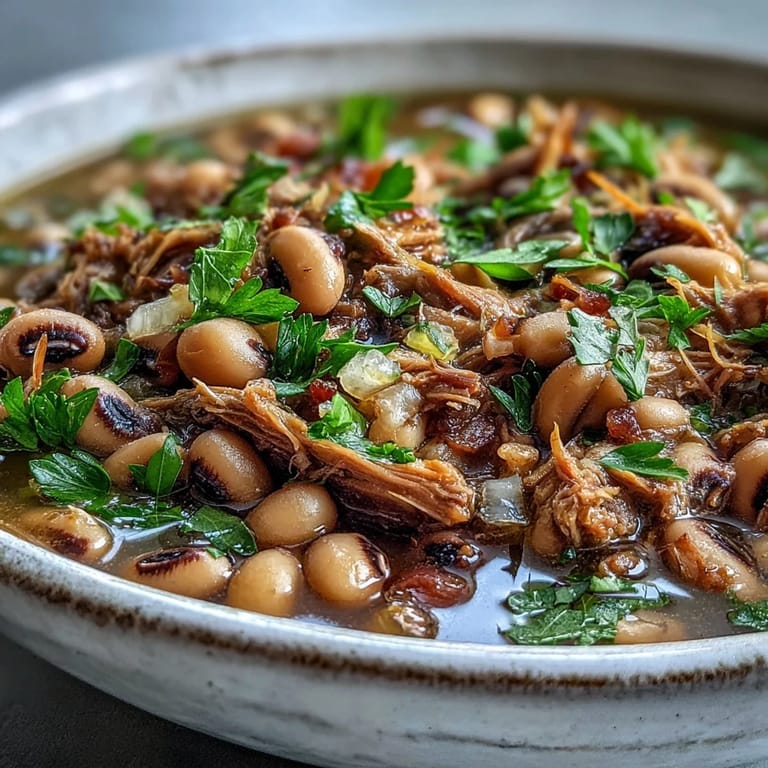
Save My grandmother always said black-eyed peas on New Year's Day weren't just about tradition—they were insurance. She'd stir that pot with such intention, like she was literally seasoning in good fortune, and honestly, watching her do it made me believe it too. Now when I make this dish, I can still hear the way the peas would click against the bottom of her Dutch oven as they softened, and smell that particular combination of smoked pork and celery that somehow means new beginnings in my kitchen.
I made this for a potluck once where I didn't know many people, feeling a bit awkward about what to bring. Someone tried a spoonful and immediately asked for the recipe, then another person did the same, and suddenly I wasn't the quiet person in the corner anymore—I was the person who brought the magic pot. That's when I realized this recipe has a way of creating conversation.
Ingredients
- Black-eyed peas (1 pound, dried): These little gems have an earthy, slightly nutty flavor that gets richer the longer they cook, and they hold their shape beautifully which matters more than you'd think.
- Smoked pork neck bones (1½ pounds): This is where the soul of the dish lives—the smoke and rendered fat create a base that no shortcut can replicate, though smoked ham hocks work just as well.
- Onion (1 large, finely chopped): The foundation of flavor that mellows and sweetens as it cooks, becoming almost invisible but absolutely essential.
- Garlic (4 cloves, minced): Added after the vegetables soften so it stays bright and doesn't turn bitter, which I learned the hard way once.
- Celery and green bell pepper (1 stalk and 1 pepper, diced): Together these create the holy trinity base that gives the dish its authentic Southern voice.
- Water or low-sodium chicken broth (7 cups): Broth adds extra depth, but water lets the pork and peas shine if that's your preference.
- Creole seasoning (1½ teaspoons): This blend of paprika, garlic, and cayenne is the heartbeat—start conservative and taste as you go since brands vary in heat.
- Bay leaf, dried thyme, smoked paprika, black pepper, and salt: These work together to layer flavor rather than overwhelm, creating complexity that builds as it simmers.
- Fresh parsley and hot sauce (optional garnish): The parsley adds brightness at the end, and hot sauce lets each person control their own heat level.
Tired of Takeout? 🥡
Get 10 meals you can make faster than delivery arrives. Seriously.
One email. No spam. Unsubscribe anytime.
Instructions
- Soak your peas the night before (or use the quick method):
- Covering dried peas with water overnight softens them gently and removes compounds that can cause digestive upset. If you're short on time, the quick soak with boiling water works too, though overnight feels less rushed and more intentional.
- Build your flavor foundation:
- Heat a splash of oil in your Dutch oven and let the onion, celery, and bell pepper soften for about 5 minutes—you want them tender but not brown, releasing their sweet aromatics into the hot oil. After a minute of garlic, the kitchen should smell like possibility.
- Layer in the main ingredients:
- Add your drained peas, smoked pork, broth, and all your seasonings at once, then bring everything to a boil. This moment matters because you're creating an environment where flavors will meld and deepen over the next hour and a half.
- Low and slow is the only way:
- Once it boils, drop the heat to low, cover, and let it simmer for about 1½ hours, stirring occasionally to prevent sticking. The peas will gradually soften, the pork will become tender enough to shred, and the broth will darken and thicken slightly with starch from the peas.
- Finish and adjust:
- Remove the pork bones, shred any meat clinging to them, and return that shredded meat to the pot while discarding the bones themselves. Taste for salt and remove the bay leaf, then serve hot with parsley scattered on top and hot sauce nearby.
 Save
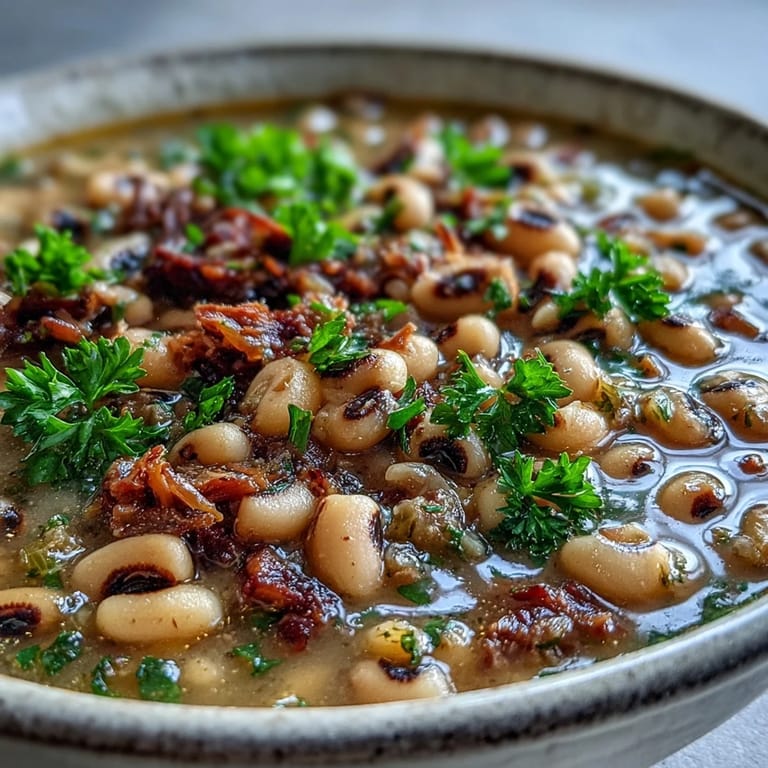
Save There's something sacred about serving this on January 1st, even if you're not particularly superstitious. My neighbor stopped by once as I was ladling it into bowls, and I offered her a portion almost without thinking—she ate it standing in my kitchen doorway with her eyes closed, then opened them and said it tasted like starting over. I've never forgotten that.
The Story Behind New Year's Peas
The tradition of eating black-eyed peas on New Year's Day comes from African American and Southern culture, where they symbolize coins and prosperity for the coming year. Over generations, this simple legume became loaded with meaning—not just nutritionally, but spiritually, marking a threshold between what was and what could be. Making this dish connects you to that lineage, whether it's your family's tradition or you're starting a new one.
Timing and Make-Ahead Options
The beauty of this recipe is that it actually tastes better the next day once all the flavors have had time to marry and deepen. You can make it up to three days ahead and refrigerate it, or freeze the whole pot for months and reheat it gently on the stove with a splash of extra broth to refresh it.
Variations and Serving Ideas
While the classic pairing is rice and cornbread, I've served this over pasta, alongside roasted sweet potatoes, and even as a base for Buddha bowls topped with fresh greens. The vegetarian version, made with liquid smoke and extra smoked paprika, is genuinely delicious and takes about the same amount of time. Some people add a splash of apple cider vinegar or hot sauce directly into the pot during the last few minutes of cooking, which brightens everything up.
- If you prefer a brothier consistency, add more liquid near the end rather than cooking it down further.
- Leftovers make an excellent filling for empanadas or a hearty addition to grain bowls throughout the week.
- Always taste before serving because the amount of salt needed depends on whether you used broth or water, and personal preference matters.
 Save
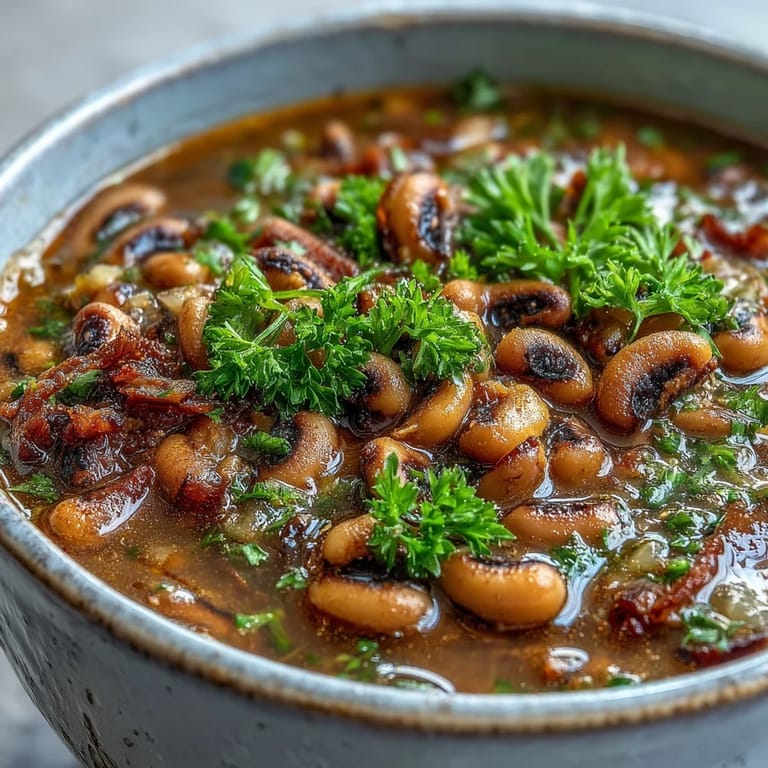
Save This is the kind of recipe that reminds you why people cook—not to show off, but to feed and welcome and say without words that you believe good things are coming. Make it on New Year's Day if you can, but honestly, any day you need a little extra luck is the right day to make this dish.
Recipe Questions & Answers
- → Why are black-eyed peas eaten on New Years?
Black-eyed peas are traditionally eaten on New Years Day in the Southern United States to bring good luck and prosperity for the coming year. The peas represent coins, and when served with collard greens (representing paper money) and cornbread (representing gold), the meal symbolizes wealth and good fortune.
- → Do I need to soak black-eyed peas before cooking?
Yes, soaking dried black-eyed peas helps them cook more evenly and reduces cooking time. Overnight soaking is preferred, but you can do a quick soak by covering them with boiling water for 1 hour. Drain and rinse before adding to the pot.
- → Can I make this dish vegetarian?
Absolutely. Simply omit the smoked pork neck bones and add extra smoked paprika along with a splash of liquid smoke to maintain that rich, smoky flavor profile. The vegetables and Creole spices will still provide plenty of depth.
- → What's the difference between Creole and Cajun seasoning?
Both are spice blends from Louisiana, but Creole seasoning typically includes paprika and tends to be milder, while Cajun seasoning often has more heat from cayenne pepper. Either works beautifully in this dish, so use what you have available or prefer.
- → How should I serve black-eyed peas?
Serve hot over steamed white rice to soak up the flavorful broth, or alongside cornbread for a classic Southern meal. Add hot sauce to taste and garnish with fresh parsley. For a traditional New Years feast, pair with collard greens and cornbread.
- → Can I freeze leftovers?
Yes, this dish freezes exceptionally well. Let it cool completely, then store in airtight containers or freezer bags for up to 3 months. Thaw overnight in the refrigerator and reheat gently on the stovetetop, adding a splash of water or broth if needed.