 Save
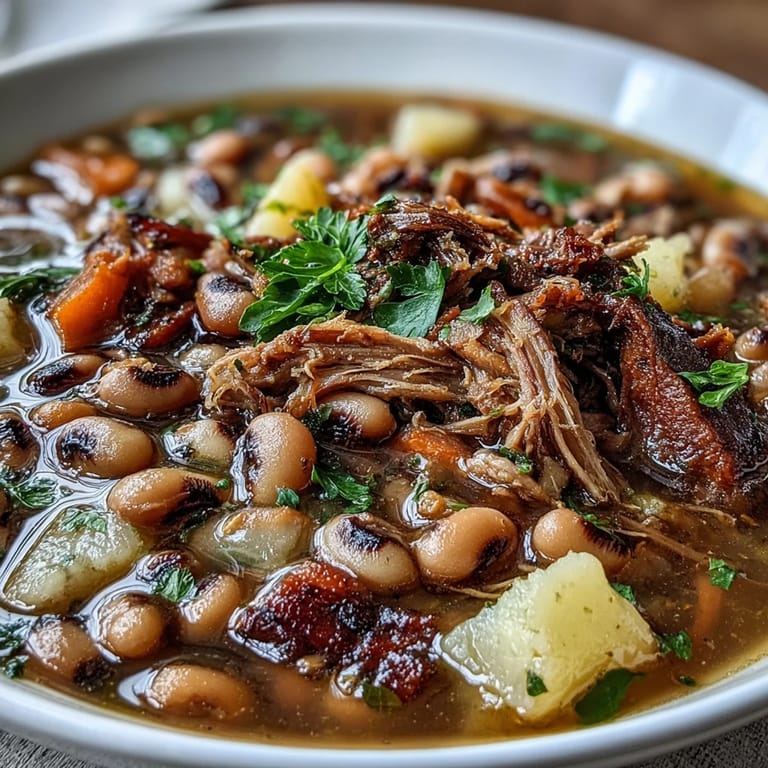
Save There's something about the smell of ham hocks hitting hot oil that pulls you straight into the kitchen, no matter what else is happening that day. My grandmother's stove always had a pot of black-eyed pea stew simmering during the cooler months, and somehow everyone knew to show up hungry without being asked. The first time I made it myself, I was skeptical about how long it needed to cook, but two hours later, when those peas had turned buttery soft and the broth had turned deep and complex, I understood why she never rushed it.
I made this for a group of friends who had just moved into a new house, and we sat in their half-empty kitchen passing bowls around while talking about how much they needed to unpack. By the third bowl, nobody was thinking about boxes anymore, just about asking for the recipe. There's a kind of magic in food that makes people stay longer than they planned, and this stew has that quality.
Ingredients
- Smoked ham hocks (2, about 1.5 lbs): These are the backbone of everything, lending a deep smoky richness that you can't fake with anything else—pick ones that still have good meat clinging to the bone.
- Dried black-eyed peas (2 cups): Soaking them overnight matters more than you'd think because it speeds up cooking and makes the final texture more tender; if you're short on time, canned work beautifully.
- Onion (1 large, diced): This is where the sweetness enters the equation, softening into almost nothing but leaving its flavor behind.
- Carrots (2, peeled and diced): They add natural sweetness and color, breaking down enough to thicken the broth without turning it murky.
- Celery (2 stalks, diced): The aromatic trio isn't complete without celery, though don't worry if you skip it—the stew still works.
- Potatoes (2 medium, cut into 1-inch cubes): These are comfort in cube form, absorbing the broth and becoming creamy as they cook.
- Diced tomatoes (1 can, 14.5 oz, with juice): The acidity brightens everything and prevents the stew from tasting one-note or heavy.
- Garlic (3 cloves, minced): Mince it fine so it melts into the aromatics rather than creating little hard pieces.
- Chicken or vegetable broth (6 cups): Use low-sodium so you can control the salt yourself as it cooks down.
- Bay leaves (2): These add a subtle earthiness that rounds out all the other flavors—always remember to fish them out before serving.
- Dried thyme (1 teaspoon): Thyme and peas are friends; it brings an herbal note that ties everything together.
- Smoked paprika (1/2 teaspoon): This is where you get that extra layer of smoke without needing more ham hocks.
- Black pepper (1/2 teaspoon, freshly ground): Fresh is crucial here because it stays bright instead of fading into the background.
- Cayenne pepper (1/4 teaspoon, optional): Add it if you want heat, skip it if you're serving people who prefer gentle flavors.
- Salt (to taste): Always taste at the end and adjust because the ham hocks already bring their own saltiness.
- Fresh parsley (2 tablespoons, chopped): This is the garnish that makes people notice the bowl is beautiful before they even taste it.
- Hot sauce (for serving): A bottle on the side lets everyone customize their own heat level.
Tired of Takeout? 🥡
Get 10 meals you can make faster than delivery arrives. Seriously.
One email. No spam. Unsubscribe anytime.
Instructions
- Soak your peas if you're using dried:
- Cover them with plenty of cold water the night before and let them sit on the counter, which hydrates them so they cook evenly and faster. In the morning, drain and rinse them well because this removes any residual starch that would make the broth cloudy.
- Build your flavor base:
- Heat a splash of oil in your Dutch oven over medium heat, then add the onion, carrots, and celery all at once, stirring occasionally for about five minutes until they soften and start to smell sweet. This is the moment where you're not rushing, just letting the vegetables release their natural sugars and start becoming the foundation of your broth.
- Wake up the garlic:
- Add the minced garlic and stir constantly for exactly one minute—any longer and it turns bitter, any shorter and it stays too sharp. You'll know it's ready when you can smell something fragrant and almost honey-like rising from the pot.
- Add everything at once and let it become:
- Dump in the ham hocks, drained peas, potatoes, tomatoes with their juice, broth, bay leaves, thyme, smoked paprika, black pepper, and cayenne if you're using it. Stir it all together so nothing sticks to the bottom, then turn up the heat just enough to get it boiling—you'll see the surface start to move and bubble.
- Settle into the long simmer:
- Once it's boiling, lower the heat to the smallest flame your stove will maintain, cover the pot, and let it go for two hours, stirring every twenty or thirty minutes. This isn't passive—you're checking on it, tasting it, watching the peas soften and the ham begin to give up everything it has to the pot.
- Shred the ham and bring it back:
- After two hours, the meat should pull from the bone with barely any effort; fish out the hocks with tongs, let them cool just enough to handle, then shred the meat, discarding skin and bone, and stir it back into the pot. This moment smells almost overwhelming in the best way—smoky and rich and homey all at once.
- Taste and adjust your seasoning:
- This is non-negotiable because the ham hocks' saltiness varies, and you need to know what you're working with. Taste a spoonful of broth on its own, and if it tastes flat, salt it slowly, stirring and tasting between additions until it tastes the way you want.
- Optional thickening step:
- If you want the stew thicker, remove the lid and simmer for another ten to fifteen minutes, which lets some liquid evaporate and concentrates everything. Pull out the bay leaves, ladle into bowls, scatter parsley over the top, and set hot sauce on the table so everyone can adjust their own heat level.
 Save
Save One winter evening, I made this for my partner who had been dealing with a genuinely bad day, and we didn't talk much while eating, just let the stew do what it does best. By the time we'd finished, the day felt smaller somehow, less sharp, and that's when I realized this isn't really about the ingredients—it's about what happens when someone sits down to food that was made with actual time and care.
Why This Stew Tastes Like Hours of Cooking
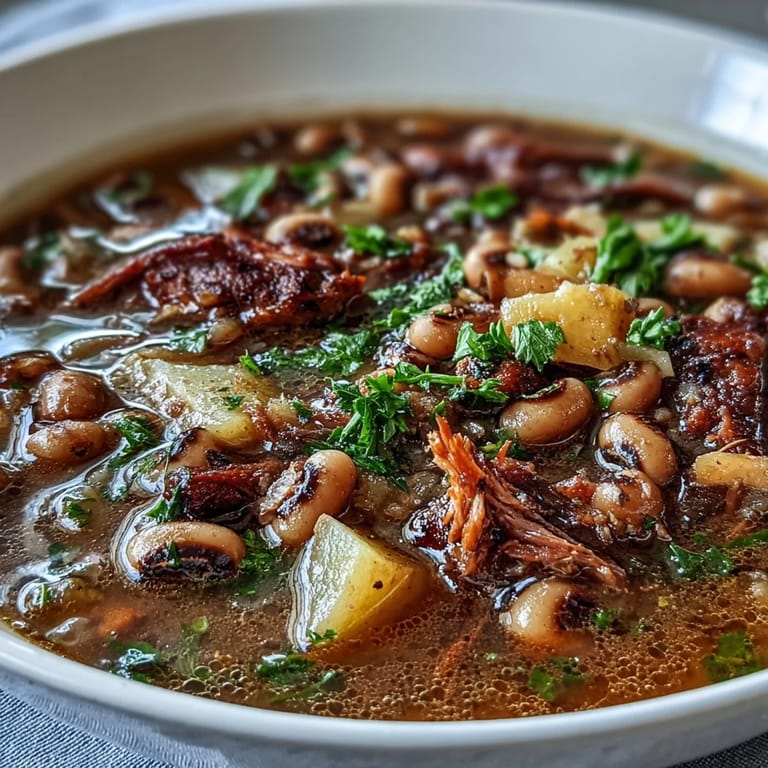
The real magic happens because nothing is rushed and everything is layered. You start with aromatics that have time to sweeten and mellow, add meat that slowly renders fat and collagen into the broth, then let peas absorb all of that while breaking down into the liquid themselves. By the time you're ready to eat, the broth has developed a body and depth that tastes like it's been simmering since morning, even though you started less than three hours ago.
Serving and Pairing Ideas
This stew is complete on its own, but it becomes something else when you serve it with something bread-like—cornbread is the traditional choice and it's the right one because the sweetness plays beautifully against the savory broth. Rice also works if you want something lighter, or you could serve it in shallow bowls with crusty bread for soaking up every last drop of broth.
Storage and the Magic of Leftovers
This is one of those rare dishes that tastes noticeably better on day two because the flavors have had time to marry and mellow into something even more cohesive. Store it in airtight containers in the fridge for up to three days, reheat it gently over low heat on the stovetop, and add a splash of broth if it's thickened too much. If you want to freeze it, it keeps beautifully for up to two months, though the potatoes will soften more than they were originally.
- Always let the stew cool completely before refrigerating so condensation doesn't dilute the flavor.
- Skim any solidified fat from the top if you want to cut the richness, or leave it for more depth.
- Add fresh parsley and hot sauce right before serving because they're better crisp and fresh than sitting in the broth.
 Save
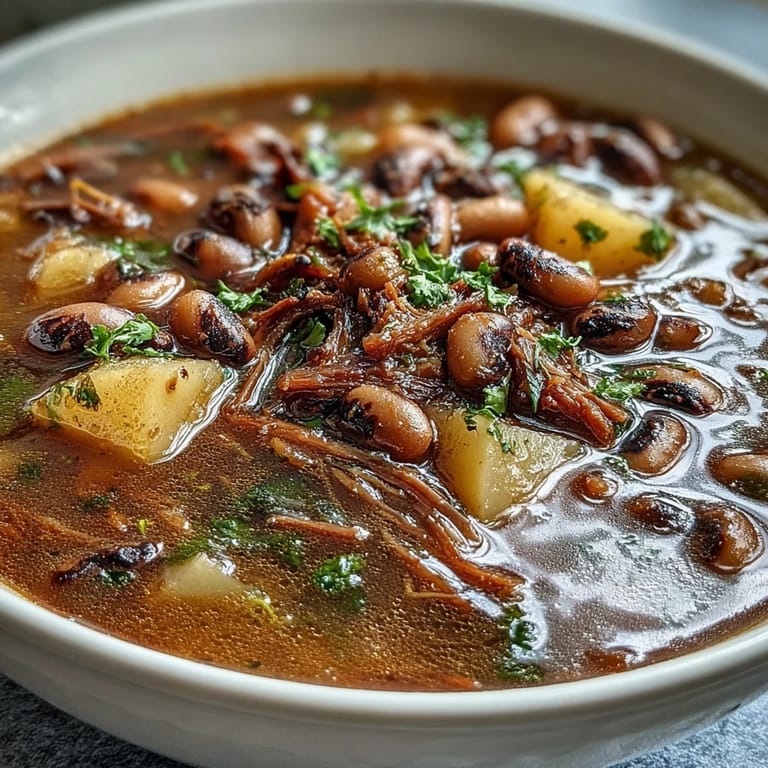
Save This stew has become my cold-weather constant, the thing I make when someone needs comfort or when the house feels too quiet. Once you make it once, you'll understand why people come back to it again and again.
Recipe Questions & Answers
- → Do I need to soak the black-eyed peas overnight?
Yes, if using dried black-eyed peas, overnight soaking ensures even cooking and tender results. Alternatively, use canned peas rinsed and drained to save time.
- → Can I make this in a slow cooker?
Absolutely. Sauté vegetables first, then add all ingredients to your slow cooker. Cook on low for 7-8 hours or high for 4-5 hours until peas are tender.
- → What can I serve with this stew?
Cornbread is the classic Southern pairing. It also pairs beautifully over steamed rice or with crusty bread for soaking up the flavorful broth.
- → How long do leftovers keep?
This stew actually improves after a day or two. Store in an airtight container in the refrigerator for up to 3 days, or freeze for up to 3 months.
- → Can I make this vegetarian?
Simply omit the ham hocks and add extra smoked paprika or a few drops of liquid smoke to maintain that characteristic smoky depth of flavor.